How to Propagate a Jade Plant: Stem Cuttings, Leaves and Where to Cut
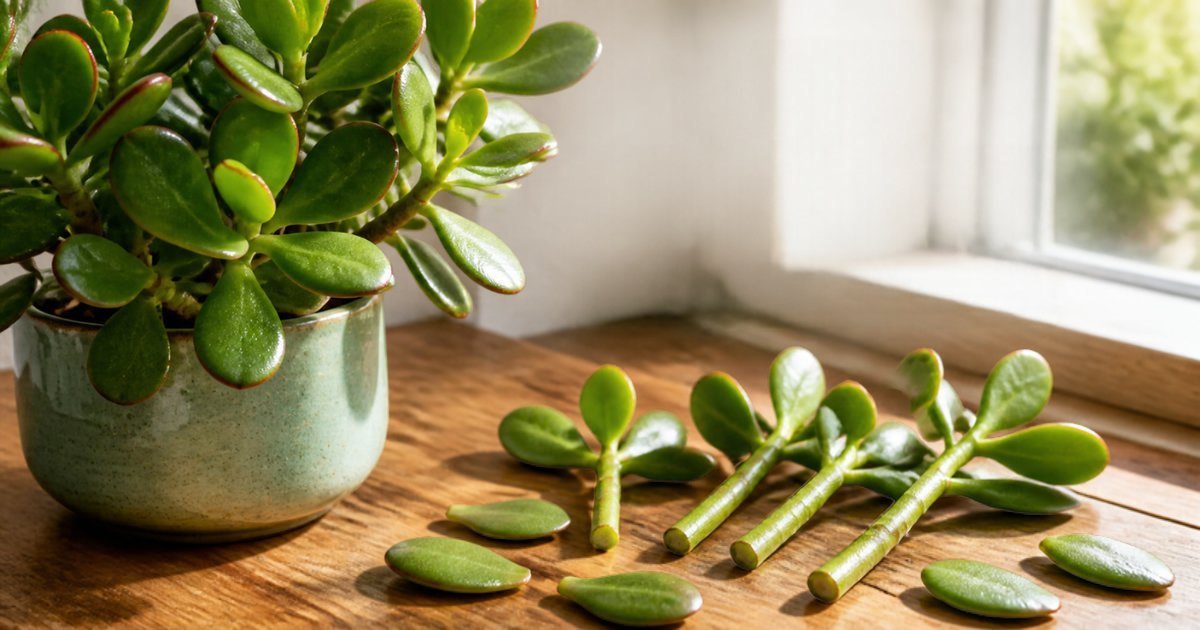
The easiest way to propagate a jade plant is to cut a 3 to 5 inch stem tip just below a leaf, let the cut end dry for 2 to 3 days, then push it about an inch deep into barely damp succulent mix. You can also grow new plants from single leaves or root stems in water. Stem cuttings usually root in a few weeks, while leaves take a couple of months to turn into a real little plant.
This guide covers exactly where to cut jade plant for propagation, how long each method takes, why cuttings shrivel or rot, and how to care for them in the first month. Everything here works on a windowsill, so you don’t need a greenhouse or any special kit.
What you need before you start
- A healthy mother plant. Pick firm, plump stems with no soft spots, pests or mushy leaves. Skip stems that are flowering.
- Clean, sharp snips or a knife. Wipe the blades with rubbing alcohol so you don’t spread disease into the fresh cut.
- Succulent or cactus potting mix. A gritty, fast-draining mix is the single biggest help against rot. You can also mix regular potting soil with perlite or coarse sand.
- Small pots with drainage holes. Little terracotta pots (2 to 4 inches) work well because the clay dries out faster than plastic.
- Rooting hormone (optional). Jade roots fine without it, but a light dusting on stem cuttings can help a slow or older cutting along.
- A paper towel or tray to let cuttings dry out of direct sun.
Spring and summer are the best time to propagate because the plant is actively growing and roots form faster. The University of Wisconsin-Madison Extension notes that jade cuttings root most easily in summer but can be taken at any time of year.
Where to cut a jade plant for propagation
This is the part most guides gloss over. Where you cut makes a real difference to how fast a cutting roots and how good the mother plant looks afterwards.
- Choose a stem tip that is 3 to 5 inches long with several pairs of leaves at the top.
- Cut just below a leaf node. A node is the slightly swollen ring on the stem where a pair of leaves grows out. New roots form from the nodes, so cutting just below one gives the cutting the best start.
- On the mother plant, leave at least one node below your cut. New branches will sprout from that node, so a careful cut actually makes the parent bushier.
- Strip the bottom leaves so you have 1 to 2 inches of bare stem to push into the soil. Keep 3 or 4 leaves at the top. Don’t throw away the leaves you remove, they can become leaf cuttings.
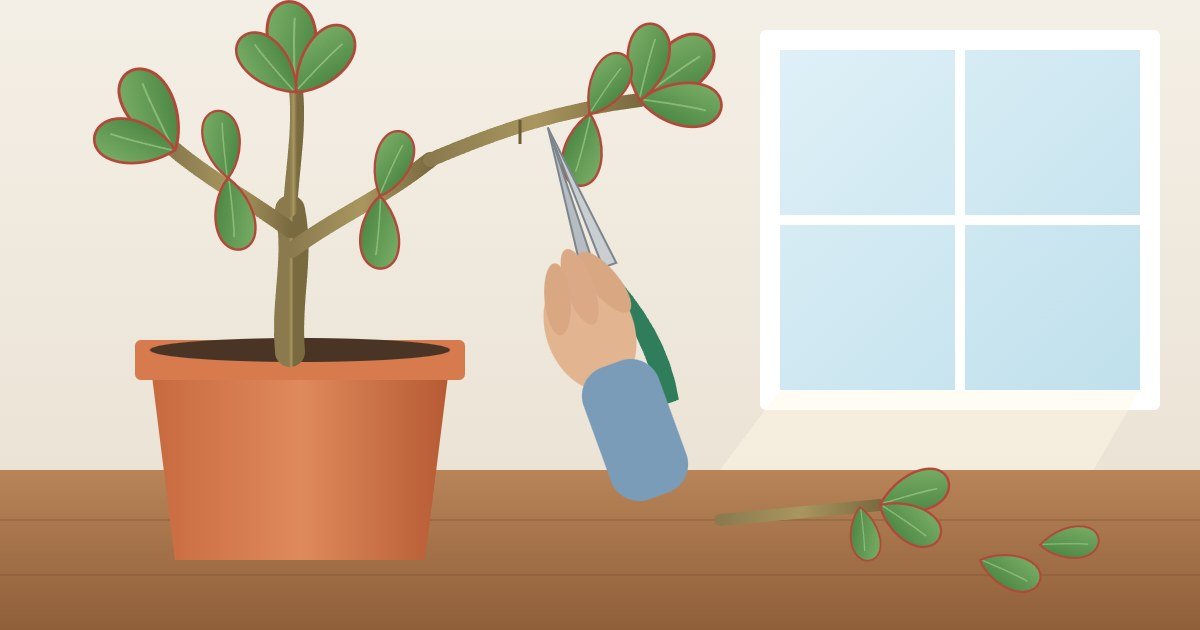
If a branch has snapped off by accident, you can still use it. Trim the broken end cleanly just below the nearest node and treat it like any other stem cutting.
How to propagate a jade plant from stem cuttings
Stem cuttings are the fastest way to get a plant that already looks like a small jade. Here is the step by step method.
- Take the cutting as described above, 3 to 5 inches long, cut just below a node.
- Let it callus. Lay it on a paper towel somewhere bright but out of direct sun for 2 to 3 days, longer for thick stems. The cut end should look dry and sealed, not wet. This step is the main defense against rot.
- Dip in rooting hormone if you are using it. Tap off the excess.
- Plant it. Fill a small pot with lightly moistened succulent mix and push the stem about 1 inch deep. Firm the mix around it so it stands up. A tall cutting can be propped against a pencil or chopstick.
- Place it in bright, indirect light. A spot near an east or west window is ideal. Harsh midday sun can scorch a cutting that has no roots to replace lost water.
- Water sparingly. Wait until the top of the mix is dry, then give a light drink. Damp, never soggy.
- Check for roots after 3 to 4 weeks with a very gentle tug. If you feel resistance, roots have formed. New leaves at the tip are another good sign.
Don’t cover jade cuttings with a plastic bag or humidity dome. That trick helps leafy cuttings like pothos, but jade stores water in its leaves and stem, and trapped humidity mostly encourages rot.
Jade plant leaf propagation
Leaf propagation is slower but lets you make lots of plants from a small amount of material. It is also the best use for leaves that fall off or get knocked loose.
- Twist off a plump, healthy leaf from the stem with a gentle side to side wiggle. You want the whole leaf, including the base where it joined the stem. A leaf that is cut or torn across the middle usually won’t root.
- Let it callus for 2 to 4 days on a paper towel out of direct sun.
- Lay the leaf on top of dry or barely damp succulent mix, or tuck just the callused end slightly into the surface at an angle. Don’t bury the whole leaf.
- Mist or lightly water the surface only when it is completely dry. Leaves live off their own stored water at first.
- Wait for roots and a tiny rosette. Small pink or white roots usually show within 2 to 4 weeks. A baby plant follows from the base after that.
- Leave the old leaf attached until it shrivels up on its own. It is feeding the new plant.
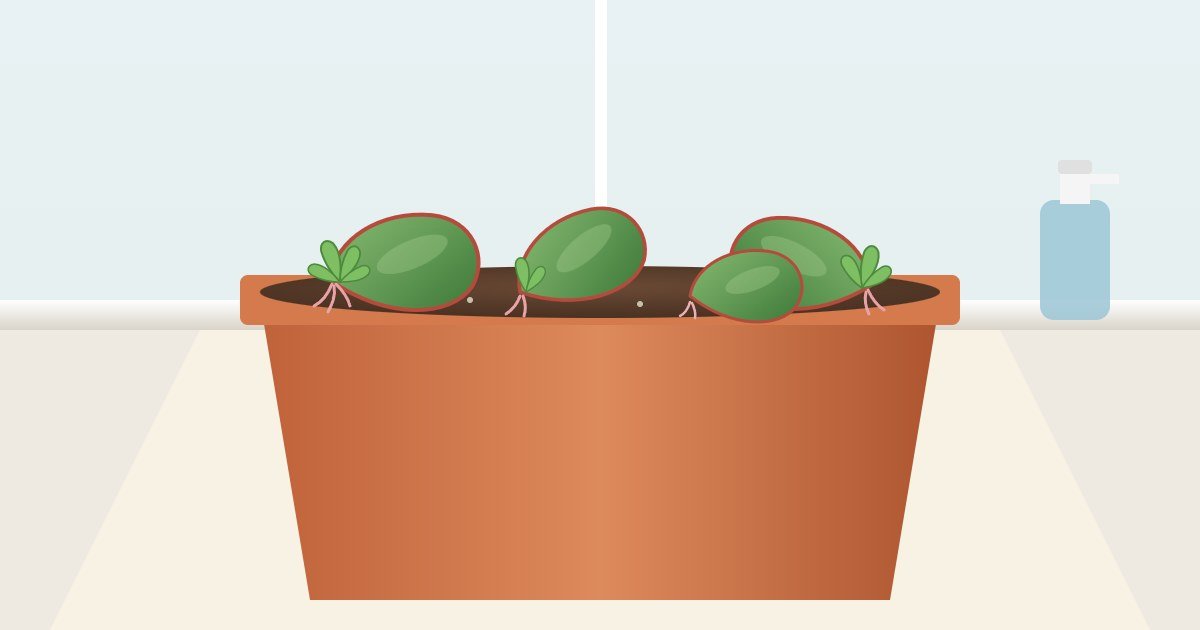
Expect some leaves to fail. That is normal, which is why it’s worth setting out several at once.
Can you propagate a jade plant in water?
Yes. Water propagation works well for stem cuttings and lets you see the roots form, which many beginners find reassuring. It is less reliable for single leaves, which tend to rot when submerged.
- Callus the stem cutting for 2 to 3 days first, just as you would for soil.
- Suspend it so only the bottom inch or so of bare stem sits in water. No leaves should touch the water.
- Keep the jar in bright, indirect light and change the water every week.
- Move the cutting into succulent mix once the roots are 1 to 2 inches long. Water roots are more fragile, so keep the soil lightly damp for the first week or two while they adjust, then switch to normal dry-out watering.
If you have tried water propagation with spider plant babies, the setup is the same idea. The main difference is that jade needs that callus step first.
Stem vs leaf vs water: which method should you use?
| Method | Best for | Roots in | Looks like a small plant in | Success rate |
|---|---|---|---|---|
| Stem cutting in soil | Fast results, a fuller plant | About 2 to 4 weeks | 1 to 2 months | High |
| Stem cutting in water | Watching roots form | About 2 to 3 weeks | 2 to 3 months (after potting) | High |
| Leaf in soil | Making many plants from little material | About 2 to 4 weeks | 3 months or more | Medium, some leaves fail |
| Leaf in water | Experimenting | Variable | Several months | Low, prone to rot |
These are typical ranges. Warm rooms and longer days speed things up, while cool winter windowsills slow everything down.
Jade plant cuttings rooting timeline
| Time after cutting | Stem cutting | Leaf cutting |
|---|---|---|
| Days 1 to 3 | Callusing on a paper towel | Callusing on a paper towel |
| Week 1 | Planted, no visible change | Laid on soil, no visible change |
| Weeks 2 to 4 | Roots forming, slight resistance to a gentle tug | Tiny roots appear at the base |
| Weeks 4 to 8 | New leaves at the tip | A small rosette starts to show |
| Months 2 to 3 | Ready for a slightly bigger pot if roots fill the pot | Baby plant growing, mother leaf shrinking |
| Months 3 to 6 | Treat as a normal young jade | Ready to pot on once the old leaf has dried up |
First month care for new jade cuttings
- Light: bright, indirect light while rooting. Once there is new growth, ease the plant into a sunnier spot. Mature jade does best with several hours of direct sun.
- Water: let the mix dry out between drinks. Overwatering is the most common way to lose a cutting.
- Temperature: normal room temperature is fine. Keep cuttings away from cold drafty windows in winter.
- No fertilizer yet: wait until you see steady new growth, then feed lightly with a diluted cactus fertilizer in the growing season.
- Don’t repot too soon: a small pot that dries out quickly is safer than a big pot full of wet soil.
Common mistakes and troubleshooting
Why is my jade cutting shriveling?
A little wrinkling is normal. The cutting is using its stored water to grow roots. If leaves get badly wrinkled and the stem stays firm, give a slightly deeper drink. If the leaves are shriveling and the stem is soft or black at the base, that’s rot, not thirst.
Why is my jade cutting rotting?
Rot almost always comes from planting before the cut has callused, soil that stays wet, or a pot with no drainage. Cut above the soft section to healthy green tissue, let it callus again, and replant in fresh, dry mix. Our root rot rescue guide explains how to spot and cut away rotten tissue.
Why isn’t my jade cutting rooting?
The usual causes are cool temperatures, low light or a leaf that was cut instead of twisted off. Move it somewhere warmer and brighter and give it time. Jade can be slow in winter.
Why are the leaves falling off my cutting?
A cutting may drop a leaf or two while it settles in. Lots of leaf drop usually means too much water. Let the soil dry out completely before the next drink.
Is a jade plant safe for pets?
No. The ASPCA lists jade plant as toxic to cats, dogs and horses, with signs including vomiting, depression and incoordination. Keep your cuttings and propagation jars somewhere pets can’t reach, and call your vet or the ASPCA Animal Poison Control Center at (888) 426-4435 if you think your pet has eaten some.
Stem cuttings work for leafy houseplants too. If you have a tall indoor tree, see how to propagate a fiddle leaf fig for where to cut and how to root it in water, soil or by air layering.
FAQ
How long does it take to propagate a jade plant?
Stem cuttings usually root in about 2 to 4 weeks and look like a small plant within a couple of months. Leaf cuttings form roots in a few weeks but take three months or more to grow a decent rosette.
Can you root a jade plant from a single leaf?
Yes, as long as you twist off the whole leaf including its base. Let it callus, lay it on succulent mix and keep the surface barely damp. Not every leaf will take, so start several.
Should I use rooting hormone on jade cuttings?
It’s optional. Jade roots readily on its own, but rooting hormone can speed up thicker or older stem cuttings. Use it only on the cut end.
Do jade cuttings need sun?
They need bright light but not harsh direct sun until they have roots. Once you see new growth, move them gradually into a sunnier spot.
Can I put a jade cutting straight into soil?
You can, but letting it callus for a few days first greatly lowers the risk of rot. Fresh, wet cuts in damp soil are the most common reason cuttings fail.
When should I water a new jade cutting?
Give a light drink after planting only if the mix is bone dry, then water whenever the top of the mix has dried out. Wet soil is far more dangerous to a cutting than dry soil.
Want more easy plants to multiply? Browse our houseplant care guides for more step by step propagation tips.