How to Fix Root Rot in Indoor Plants (Pothos Root Rot Rescue Guide)
To fix root rot in indoor plants, take the plant out of its pot, wash the roots, cut away everything brown and mushy, and repot what is left in fresh, well-draining mix in a pot with a drainage hole. Then water far less often. Pothos root rot follows the same steps, with one bonus: if the roots are too far gone, a healthy vine cutting can still root and give you a new plant.
Not every plant can be saved, and this guide will tell you when to stop trying. You will also see how to confirm the problem before you start cutting, what the first four weeks of recovery look like, and how to stop it happening again. For more plant troubleshooting, browse the houseplant problems section.
What Causes Root Rot in Indoor Plants
Root rot is mainly an overwatering problem. Iowa State University Extension says organisms such as Pythium, Phytophthora, Rhizoctonia and Fusarium thrive in wet, poorly drained potting mix and go after stressed plants. It also calls root rot the most common indoor plant disease its clinic sees in winter, when many plants use less water but keep getting the same amount.
In plain terms, soil that stays wet is the real trigger. That can come from watering too often, a pot with no drainage hole, heavy mix that never dries, or a saucer full of water that the pot keeps sitting in.
Signs of Root Rot in Indoor Plants
Most signs above the soil can have other causes, so use this table to narrow things down. The roots give you the final answer.
| Sign | What it looks like | What else it could be |
|---|---|---|
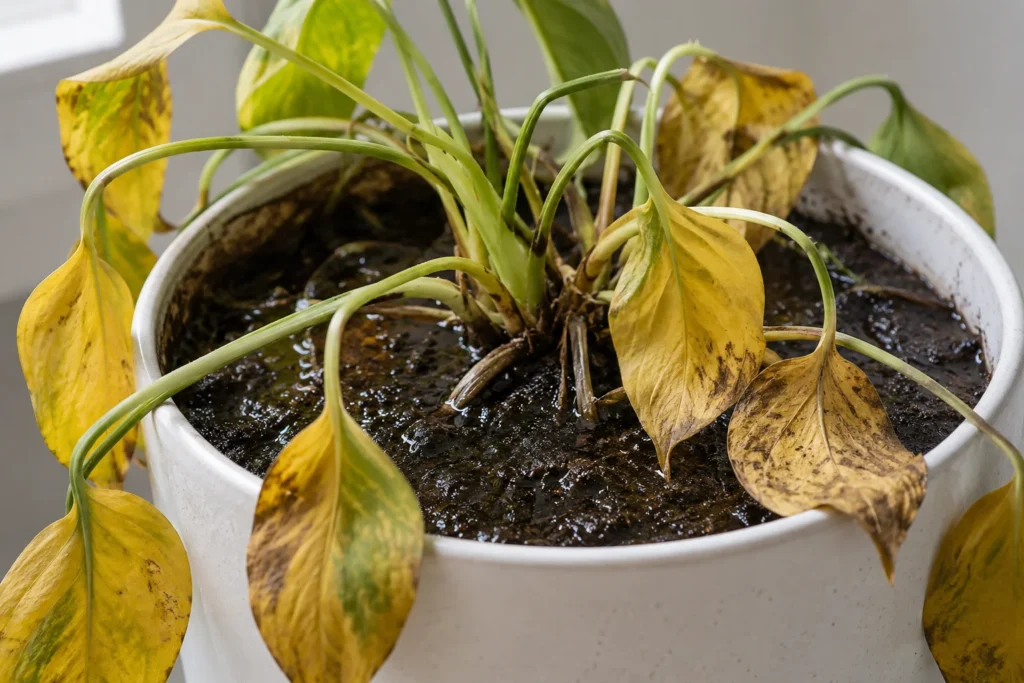
| Wilting in wet soil | Limp leaves even though the mix is damp, often starting with the lower leaves | Underwatering, but then the soil will be dry |
| Yellow leaves | Yellowing that can look like a nutrient shortage | Normal aging of old leaves, or low nutrients |
| Slow or stunted growth | Few new leaves during the growing season | Low light or a cold room |
| Mushy stems | Soft, dark stems at the soil line, which usually means an advanced case | Physical damage |
| Bad smell | A sour or rotten odor from the soil or roots | Stale water in the saucer |
| Fungus gnats | Small flies around soil that stays wet | Wet soil alone, since gnats do not prove rot on their own |
How to Confirm Root Rot (The Unpot Test)
Before you water a wilted plant, check the mix and the roots. Iowa State points out that wilting is easily mistaken for thirst, and extra water only makes rot worse.
- Spread out newspaper or work outside.
- Hold the base of the stems between your fingers, with your hand over the soil.
- Tip the pot sideways and slide the plant out. Tap the pot if it sticks, and never pull by the stems.
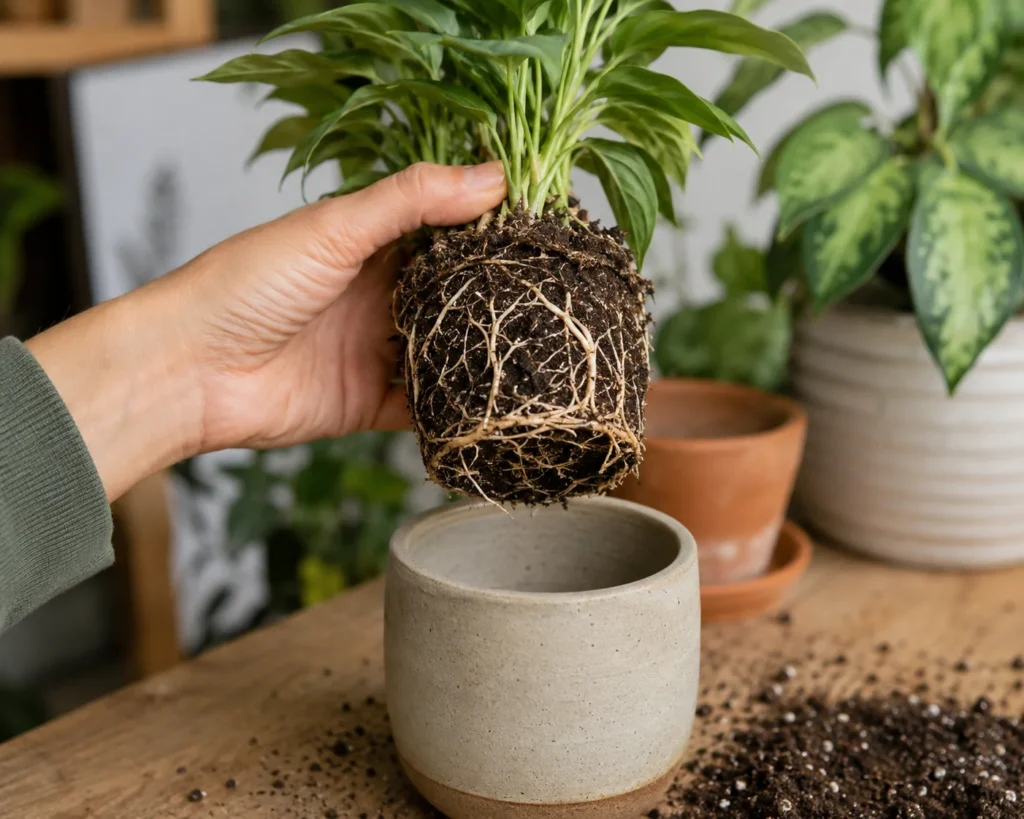
- Loosen the soil and look at the roots, rinsing them if you need a clearer view.
| Healthy roots | Rotted roots | |
|---|---|---|
| Color | White or pale | Brown, reddish or black |
| Feel | Firm, with plenty of fine feeder roots | Mushy or slimy |
| Pull test | Stay attached | The outer layer can slide off and leave a thin strand behind |
| Smell | Earthy or neutral | May smell bad |
The root descriptions come from Iowa State and the University of Wisconsin, and the sliding outer layer is described in Purdue Extension guidance on Pythium, which was written for greenhouse growers but describes the same type of damage.
What You Need Before You Start
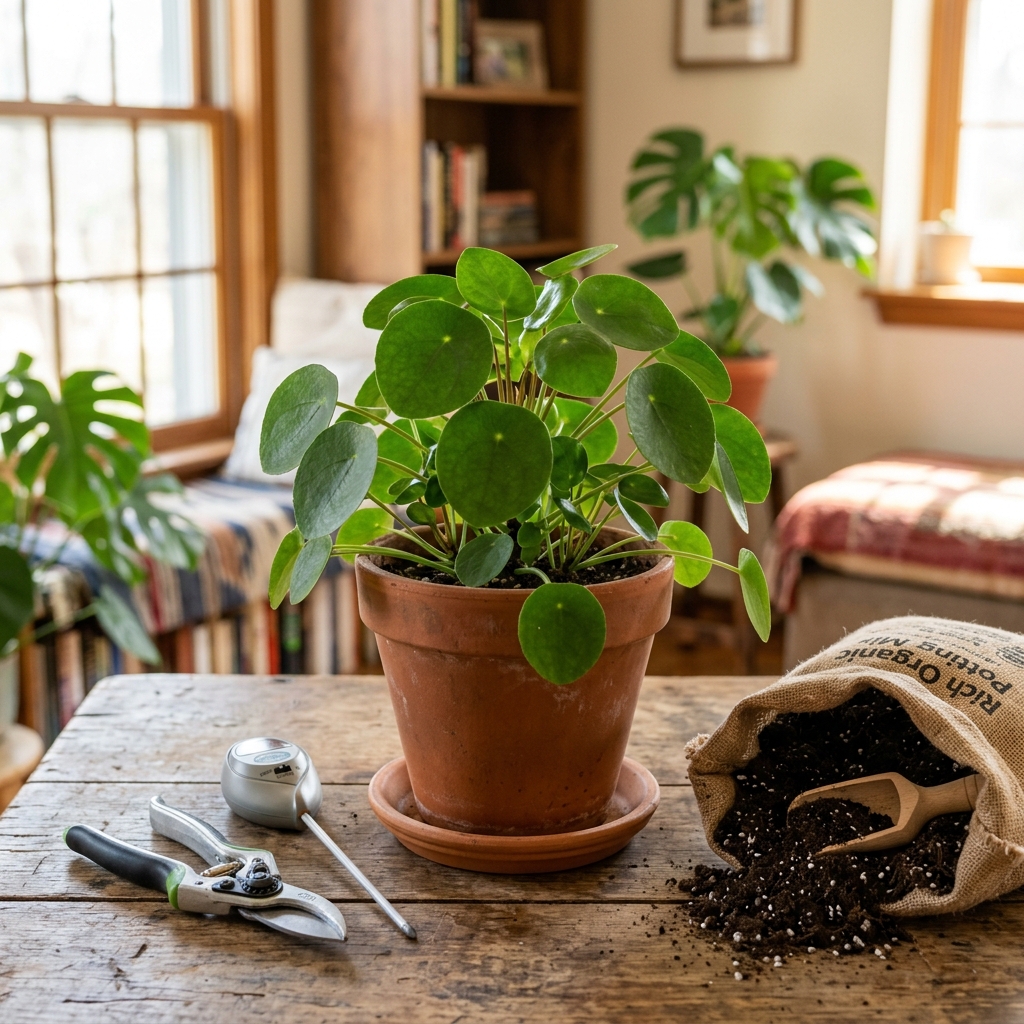
- Clean, sharp scissors or shears, plus rubbing alcohol to wipe them.
- Fresh indoor potting mix. Never reuse the old mix.
- Perlite to open up the mix, if your bag does not already contain plenty.
- A pot with a drainage hole, ideally only big enough to hold the remaining roots. An unglazed terracotta pot is a good pick for heavy waterers because it dries faster than plastic.
- A soil moisture meter is optional, but handy if you tend to water by habit.
How to Fix Root Rot, Step by Step
Step 1: Remove the plant and wash the roots
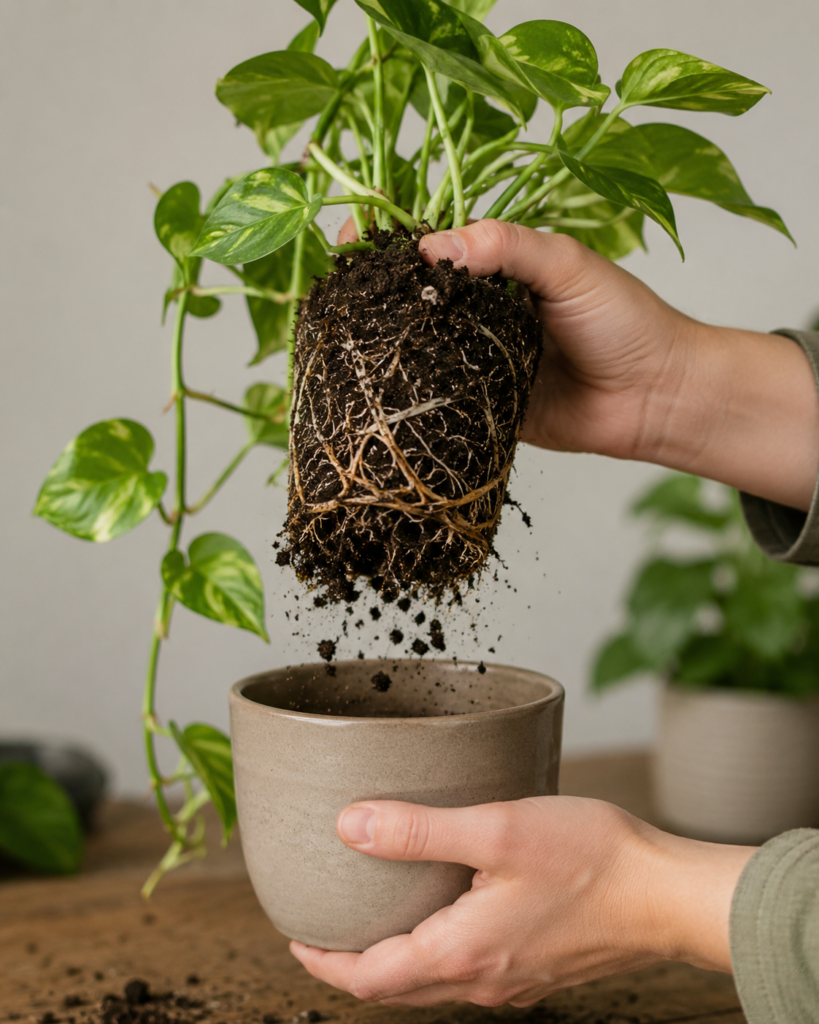
Shake off as much old mix as you can over a trash can, then rinse the roots gently under room-temperature water. Clean roots are much easier to judge. Keep drainage water and old mix away from your other plants, since Wisconsin Extension advises against reusing either one.
Step 2: Trim the rotted roots
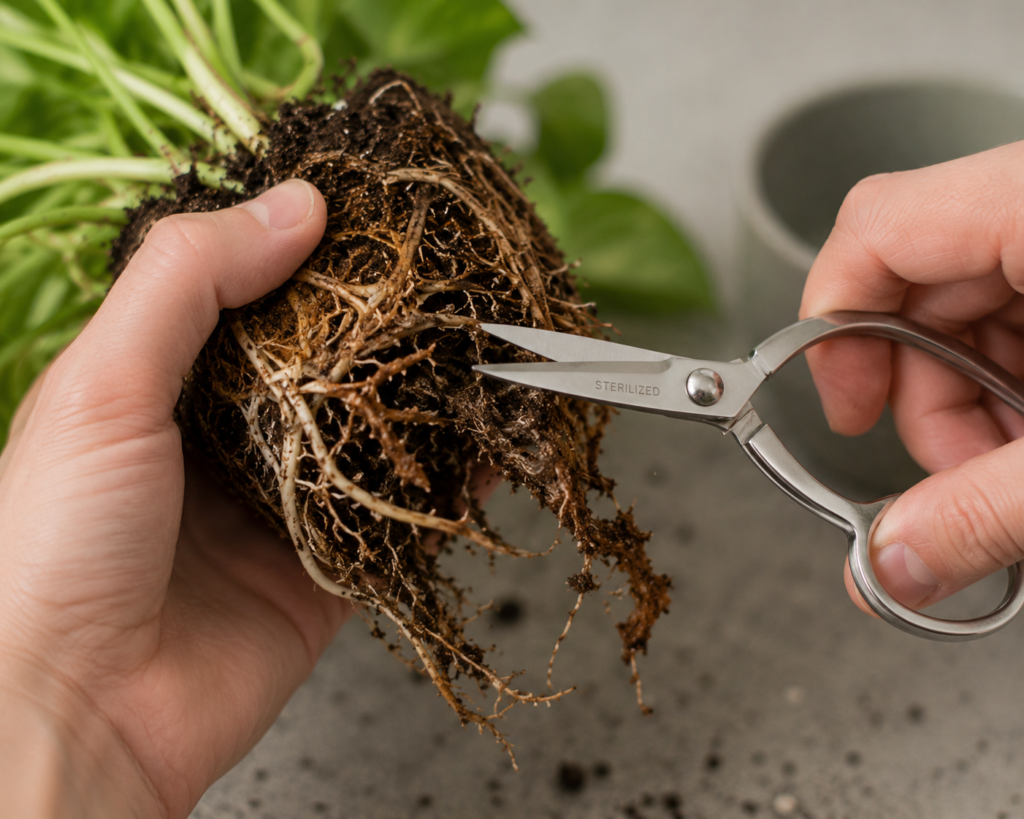
Wipe your scissors with rubbing alcohol. Cut off every root that is brown, black or mushy, cutting back into firm tissue. Wipe the blades again when you finish, and between plants if you are treating more than one.
If you lost a large share of the roots, trim some older leaves or long vines as well. A smaller root system has less leaf area to support, which makes the next few weeks easier on the plant.
Step 3: Clean up and repot
Throw away the old mix. Wisconsin Extension recommends disinfecting clay pots, tools and work surfaces with a 10% bleach solution (1 part bleach to 9 parts water), a detergent solution or alcohol, and throwing out plastic pots that held an infected plant because they are hard to clean well. Rinse after using bleach, and never mix it with other cleaners.
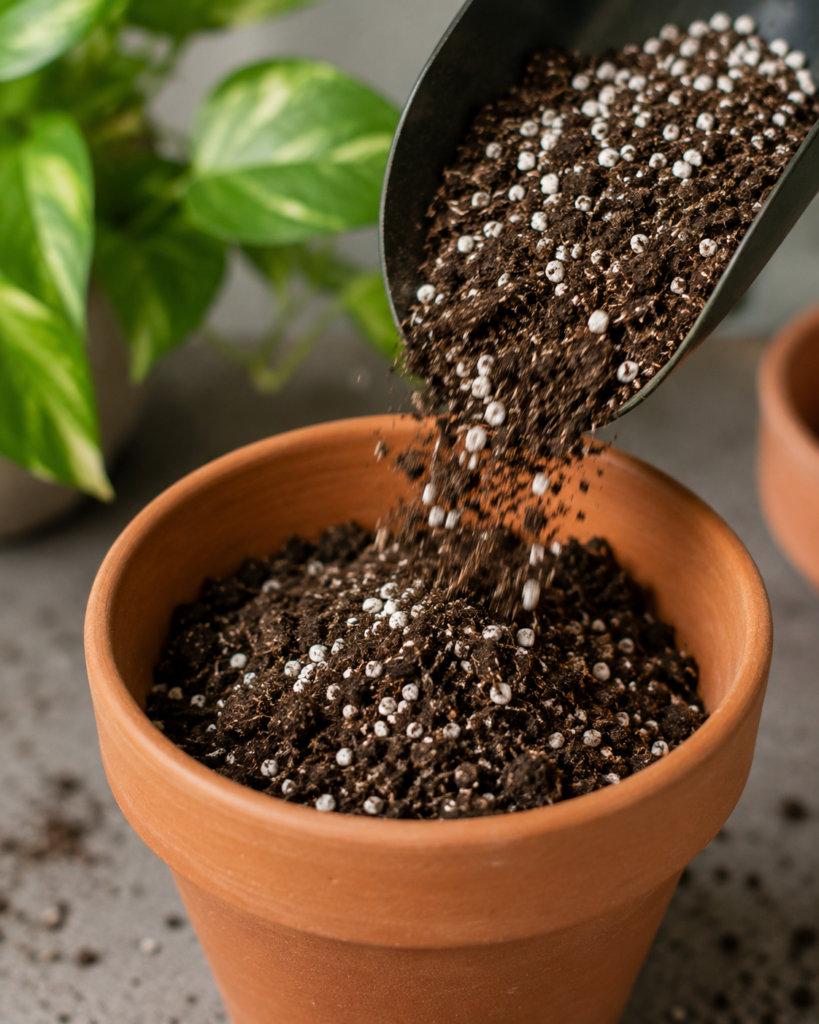
Fill the pot partway with fresh mix, adding a handful or two of perlite if the mix looks dense. Set the plant at its old depth, fill in around the roots and firm lightly. Skip the layer of gravel at the bottom. It does not improve drainage, and it leaves less room for roots.
Step 4: Water lightly and move it to bright, indirect light
Give a small drink to settle the mix, let it drain, and empty the saucer. Then leave it alone until the top inch or two feels dry. Keep the plant away from harsh direct sun, heating vents and cold drafts while it regrows roots.
Pothos Root Rot: What Is Different for Pothos
Pothos are sold as very easy plants, so they often get more water than they need. NC State Extension advises letting the well-drained mix dry out between waterings and warns that overwatering can cause root rot and blackened leaf margins. Pothos tolerate low light, but a plant in a dim corner dries out slowly, so it needs less frequent watering than one near a bright window.
The rescue steps above work the same way, with a few pothos-specific points:
- Vines give you a backup. NC State notes that pothos vines root easily in water. Before you repot, cut a few healthy vine tips as insurance using our guide on how to propagate pothos.
- Water-grown pothos can rot too. If roots in a jar turn brown and slimy, trim them, wash the jar and refill it with fresh water.
- Keep the trimmings away from pets. The ASPCA lists golden pothos as toxic to cats and dogs, so clear up cut vines right away. Our guide on whether pothos are toxic to cats covers what to do if your cat chews some.
Recovery Care for the First 4 Weeks
Recovery takes weeks, not days, and there is no exact schedule because it depends on the plant and how many roots survived. Use this as a rough guide.
| When | What to do | What to expect |
|---|---|---|
| Week 1 | Keep in bright, indirect light. Do not fertilize. Water only if the top inch or two is dry. | Some wilting or a dropped leaf is common. |
| Weeks 2 to 4 | Check the mix before every watering and empty the saucer each time. | Top growth may barely change while new roots form. |
| After week 4 | A gentle tug should meet some resistance. Unpot and look if the plant keeps declining. | New leaves are the best sign it worked. |
| Once it is growing again | Go back to light feeding with a houseplant fertilizer at half strength during the growing season. | Normal growth returns over the following months. |
Hold off on fertilizer until then. Purdue lists overfertilizing and high salts as factors that raise the risk of Pythium infection, and damaged roots have little use for extra feed.
When It Is Too Late to Save the Plant
If every root is mushy, or the base of the stem is soft, the plant has little chance. Wisconsin Extension is blunt about this: it says throwing out an infected plant is often the best and most cost-effective choice. That is especially true of a cheap plant that could carry the problem to your others.
Before you bin it, look for healthy stems with firm green leaves. Vining plants and many other houseplants can be started again from clean cuttings, using fresh water or fresh mix and never the old soil. A spider plant with healthy offshoots is an easy case, so see our guide on rooting spider plant babies.
Common Mistakes When Treating Root Rot
- Watering a wilted plant without checking. Wet soil plus wilting points to roots, not thirst.
- Going up to a much bigger pot. Extra mix holds extra water around a smaller root system.
- Reusing the old mix or an unwashed pot. Wisconsin Extension notes that some of these organisms produce spores that can survive for long periods in soil and plant debris.
- Feeding to perk the plant up. Wait until it is clearly growing again.
- Relying on a product instead of fixing the watering. Wisconsin Extension does not recommend chemical fungicides for houseplant root rot. Soil moisture is what you need to change.
- Using a decorative pot with no hole. If you love the look, keep the plant in a nursery pot inside it and lift it out to drain.
How to Prevent Root Rot Next Time
- Check first, water second. Push a finger or a moisture meter into the mix and water based on what you find, not on a fixed day of the week. Iowa State also recommends watering by each plant’s needs rather than a set schedule.
- Use a well-drained mix and a pot with a hole. Terracotta helps if you tend to overwater.
- Empty the saucer. Plants should not sit in drainage water.
- Water less in winter. Many houseplants use water more slowly when days are short.
- Learn each plant’s habits. Our guide on how often to water a peace lily shows how to read a thirsty plant, and the easiest indoor plants to keep alive are a good place to start if watering is your weak spot.
Root Rot FAQ
Can a plant recover from root rot?
Often, yes, if you catch it while some firm roots remain and you fix the watering. A plant with a soft stem base or no healthy roots is unlikely to recover, so take cuttings if you can.
Can a pothos recover from root rot?
Yes, provided some healthy roots or vines remain. Trim the rot, repot in fresh mix and let it dry between waterings. If the roots are gone, healthy vine tips can be rooted in water to start again.
Should I water right after repotting a plant with root rot?
Give only a light watering to settle the fresh mix, then wait until the top inch or two feels dry before watering again.
Does hydrogen peroxide cure root rot?
Many blogs suggest it, but the Wisconsin and Iowa State guides linked above do not list it as a treatment. Trimming, fresh mix and less water are the steps that matter, because peroxide will not fix the wet soil that caused the problem.
Can root rot spread to my other plants?
It can move through shared mix, drainage water, pots and tools. Keep the affected plant apart while you treat it, clean your tools, and do not reuse its mix or drainage water.
How long does root rot take to heal?
Expect several weeks before you see new growth, and longer for a plant that lost most of its roots. A new leaf is the best sign that the roots have recovered.