Philodendron Burle Marx Care (Plus Variegated and Flame)
Philodendron Burle Marx care comes down to bright indirect light, a chunky mix that drains fast, and watering only when the top 2 inches of soil are dry. Keep it warm (65 to 80°F), give it average or better humidity, and it will push out a steady stream of glossy, heart-shaped leaves with very little fuss.
Below you will find the full care routine, how to propagate it, what changes with the variegated Burle Marx, and why the “Burle Marx Flame” you see in shops is actually a different plant with slightly different needs.
What is Philodendron Burle Marx?
Philodendron Burle Marx is a compact, climbing aroid from Brazil with shiny, elongated heart-shaped leaves on long stems. It is named after Roberto Burle Marx, the Brazilian landscape architect who helped popularize tropical plants in garden design.
There is some naming confusion worth knowing before you buy. The plant sold in most US garden centers is the cultivar Philodendron ‘Burle Marx’. A separate wild species, Philodendron burle-marxii, has narrower, lance-shaped leaves. Some growers also link the cultivar to Philodendron imbe, but that has never been confirmed. For care purposes it makes no difference: all of them like the same conditions.
Indoors it usually stays around 2 feet tall and 2 to 4 feet wide, which makes it a good fit for a shelf, a plant stand or a corner of a small apartment. If you are new to tropical houseplants, our houseplant care guides cover the basics that apply here too.
Philodendron Burle Marx care at a glance
| Need | What it likes | Quick tip |
|---|---|---|
| Light | Bright, indirect light | A few feet from an east or west window, or behind a sheer curtain |
| Water | When the top 2 inches are dry | Usually every 1 to 2 weeks in summer, less in winter |
| Soil | Chunky, fast-draining aroid mix | Potting mix plus orchid bark and perlite |
| Humidity | 40% or higher | Normal home humidity works; more gives bigger leaves |
| Temperature | 65 to 80°F | Keep it above 55°F and away from cold drafts |
| Fertilizer | Balanced liquid feed | Half strength, about monthly in spring and summer |
| Support | Optional moss pole or stake | Climbing growth produces larger leaves |
| Pets | Toxic to cats and dogs | Contains calcium oxalate crystals |
Light
Bright, indirect light is the single biggest factor in how full and glossy your Burle Marx looks. Place it a few feet from an east or west window, or right next to a north window. Direct midday sun through glass can scorch the leaves and leave pale or brown patches.
In low light the plant will survive, but stems stretch, gaps open up between leaves, and new growth gets smaller. If your space is dim, a basic LED grow light set 12 to 18 inches above the plant for 10 to 12 hours a day makes a clear difference.
Watering
Water when the top 2 inches of soil feel dry. Push a finger into the mix to check rather than watering on a fixed schedule, because drying time changes with season, pot size and light.
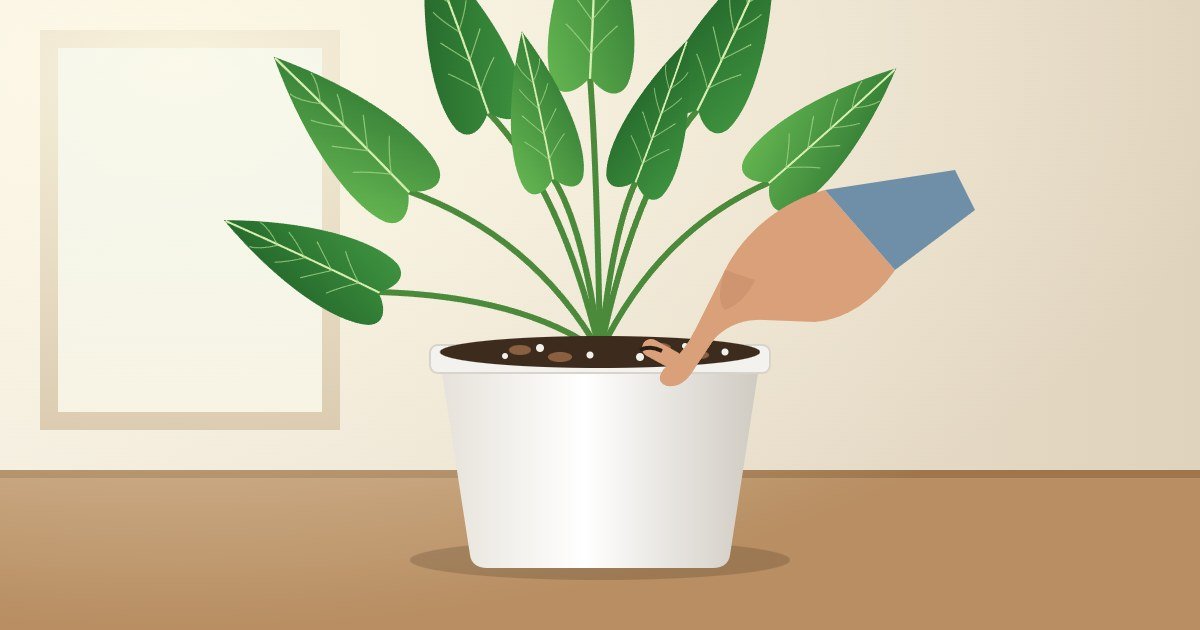
- Water slowly until it runs out of the drainage holes, then empty the saucer.
- In spring and summer that often means every 1 to 2 weeks.
- In fall and winter growth slows, so expect to water about half as often.
- Never let the pot sit in standing water. Soggy roots are the most common way this plant dies.
If the leaves droop and the soil is wet, check the roots before watering again. Our guide to fixing root rot in indoor plants walks through how to rescue a plant that has been overwatered.
Soil and potting
Use an airy aroid mix that holds some moisture but drains quickly. A simple home blend is:
- 2 parts quality indoor potting mix
- 1 part orchid bark
- 1 part perlite or pumice
- Optional: a handful of worm castings for slow nutrients
Always use a pot with drainage holes. Repot every 2 to 3 years, or when roots circle the bottom of the pot, and go up only one size (about 2 inches wider). A pot that is too large stays wet for too long.
Humidity and temperature
Average home humidity of 40 to 50% is enough for healthy growth. Higher humidity, around 60%, usually gives larger leaves and fewer crispy tips. Grouping plants together, using a small humidifier, or setting the pot on a pebble tray all help in dry winter air.
Keep temperatures between 65 and 80°F. Growth stalls when it stays below the low 60s, and long periods under 55°F can damage the leaves. Keep it away from heating vents, air conditioners and drafty doors.
Fertilizer
Feed with a balanced liquid houseplant fertilizer at half strength about once a month from spring through late summer. Skip feeding in winter when growth slows. If you see white crust on the soil surface, flush the pot with plain water to clear salt buildup.
Moss pole, support and pruning
Burle Marx is a natural climber. Without support it grows as a loose, bushy clump that can get leggy. Give it a moss pole, coir pole or sturdy stake and it tends to produce bigger leaves as the stems climb.
Pruning is simple. Cut back long, leggy stems just above a node to keep the plant compact, and remove yellow or damaged leaves at the base of the leaf stem. Those trimmings are perfect for propagation.
How to propagate Philodendron Burle Marx
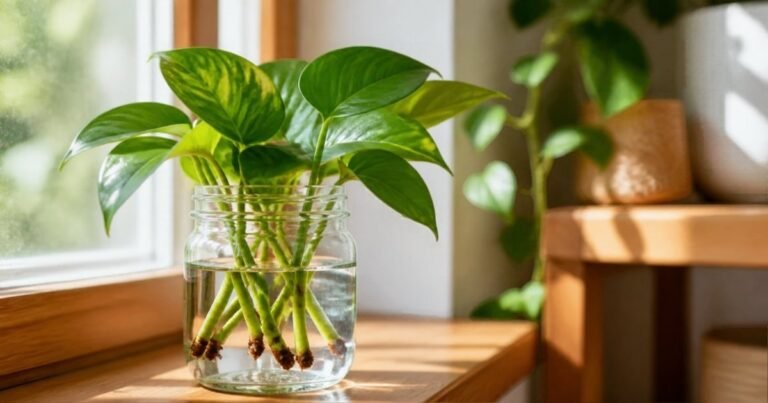
Stem cuttings are the easiest method, and they root readily in water or moist soil. Spring and summer give the fastest results.
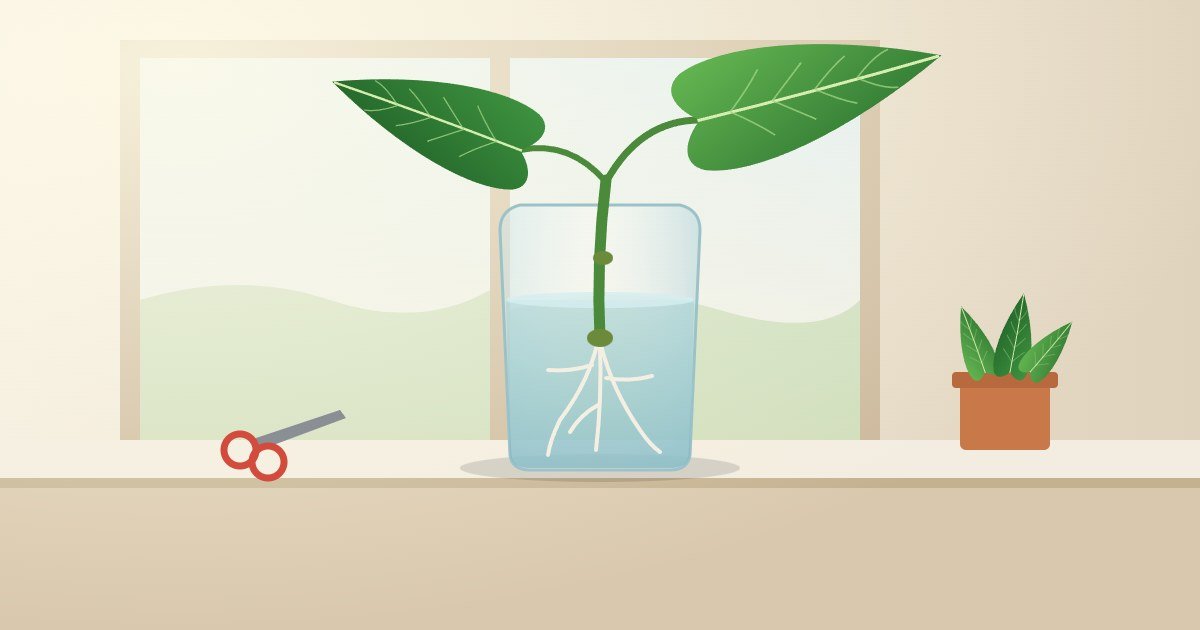
- Choose a healthy stem with at least one node (the small bump where the leaf and roots grow) and one or two leaves.
- Use clean, sharp scissors to cut just below the node.
- Place the cutting in a jar of room temperature water so the node is under water and the leaves stay dry.
- Set the jar in bright, indirect light and change the water every few days.
- Once the new roots are 1 to 2 inches long, pot the cutting into the aroid mix above and keep it lightly moist for the first couple of weeks.
The process is almost identical to propagating pothos, so if you have rooted pothos cuttings before, you already know the routine. Air layering also works well on older, climbing stems.
Variegated Burle Marx care
The variegated Burle Marx has the same leaf shape with cream, white or pale yellow streaks and patches. Its care is the same as the green form, with a few adjustments:
- More light: pale sections cannot photosynthesize, so the plant needs brighter indirect light to grow well. In low light the variegation can fade and new leaves turn mostly green.
- Gentler sun protection: white areas scorch faster than green ones, so keep it out of strong direct sun.
- Watch for reversion: if a stem starts producing fully green leaves, cut it back to the last node with good variegation to keep the pattern going.
- Slower growth: with less green tissue it grows more slowly, so it needs less water and fertilizer than a green plant of the same size.
Burle Marx Flame care
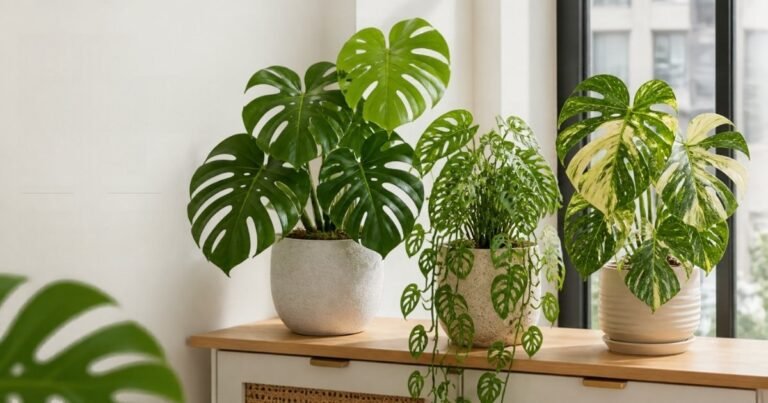
Here is the part most care guides skip. The plant sold as “Burle Marx Flame” is usually labeled Monstera ‘Burle Marx Flame’, not a philodendron. Young leaves are long and narrow, and as the plant matures they widen and develop deep, wavy splits that look like flickering flames.
Burle Marx Flame care is close to the philodendron version: bright indirect light, water when the top couple of inches dry out, and humidity of 50% or more. The main differences are that it gets much larger (it can climb past 6 feet over time), so it needs a sturdy pole early on, and it shows its flame-shaped leaves only when it has strong light and something to climb.
| Burle Marx (green) | Variegated Burle Marx | Burle Marx Flame | |
|---|---|---|---|
| Genus | Philodendron | Philodendron | Monstera (as usually sold) |
| Leaf shape | Glossy, elongated heart | Elongated heart with cream streaks | Narrow, then deeply lobed and wavy |
| Indoor size | About 2 ft tall | About 2 ft tall, slower | Can climb past 6 ft |
| Light | Bright indirect | Brighter indirect | Bright indirect |
| Support | Optional | Optional | Needed as it matures |
| Difficulty | Easy | Moderate | Moderate |
Is Philodendron Burle Marx toxic to pets?
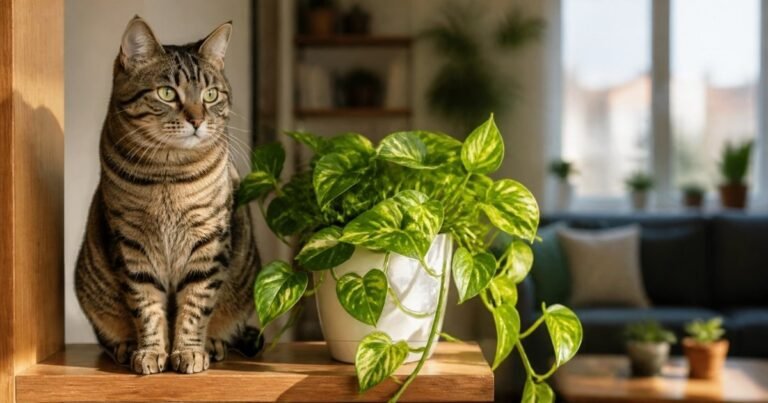
Yes. Philodendrons contain insoluble calcium oxalate crystals. The ASPCA lists philodendron as toxic to dogs and cats, with signs such as mouth irritation, drooling, vomiting and trouble swallowing. Iowa State University Extension notes the same crystals affect people too, so keep the plant away from children and pets.
Monsteras, including the Flame, contain the same type of crystals. If you share your home with a cat, our article on whether monstera plants are toxic to cats explains what to watch for. If a pet chews the leaves, call your vet or a pet poison hotline.
Common problems and mistakes
| Problem | Likely cause | Fix |
|---|---|---|
| Yellow lower leaves | Overwatering or old leaves aging out | Let the top 2 inches dry; one old leaf at a time is normal |
| Brown, crispy tips | Low humidity or salt buildup | Raise humidity and flush the soil |
| Leggy stems, small leaves | Not enough light | Move closer to a window or add a grow light |
| Pale, bleached patches | Direct sun scorch | Move out of harsh midday sun |
| Drooping with wet soil | Root rot | Check roots, trim mushy ones, repot in fresh mix |
| Sticky leaves or webbing | Mealybugs, thrips or spider mites | Wipe leaves and treat with insecticidal soap or neem |
The biggest mistakes are watering on a schedule instead of checking the soil, using dense garden soil or a pot without drainage, and keeping a variegated plant in a dim corner. You can find more fixes in our houseplant problems section.
FAQ
Does a Philodendron Burle Marx need a moss pole?
No, but it helps. Without support it grows as a bushy clump. With a moss pole or stake it climbs and usually produces larger leaves.
How big does Philodendron Burle Marx get?
Indoors it typically reaches about 2 feet tall and 2 to 4 feet wide. With a pole and good light it can climb a little taller.
Why are my Burle Marx leaves turning yellow?
The most common cause is overwatering. Check that the top 2 inches of soil dry out between waterings and that the pot drains. A single old leaf yellowing at the base now and then is normal.
Is Philodendron Burle Marx easy to care for?
Yes. The green form is one of the easier philodendrons for beginners. It tolerates average humidity and forgives the odd missed watering. The variegated form is a little fussier about light.
How fast does Philodendron Burle Marx grow?
It grows steadily in spring and summer when it has bright indirect light and warmth, and slows down a lot in winter. Variegated plants grow more slowly.
Is Burle Marx Flame a philodendron?
It is usually sold as a Monstera, not a philodendron, even though the names are often mixed up online. Its care is similar, but it grows larger and needs sturdy support.