Are Pothos Toxic to Cats? Symptoms, What to Do and Safer Swaps
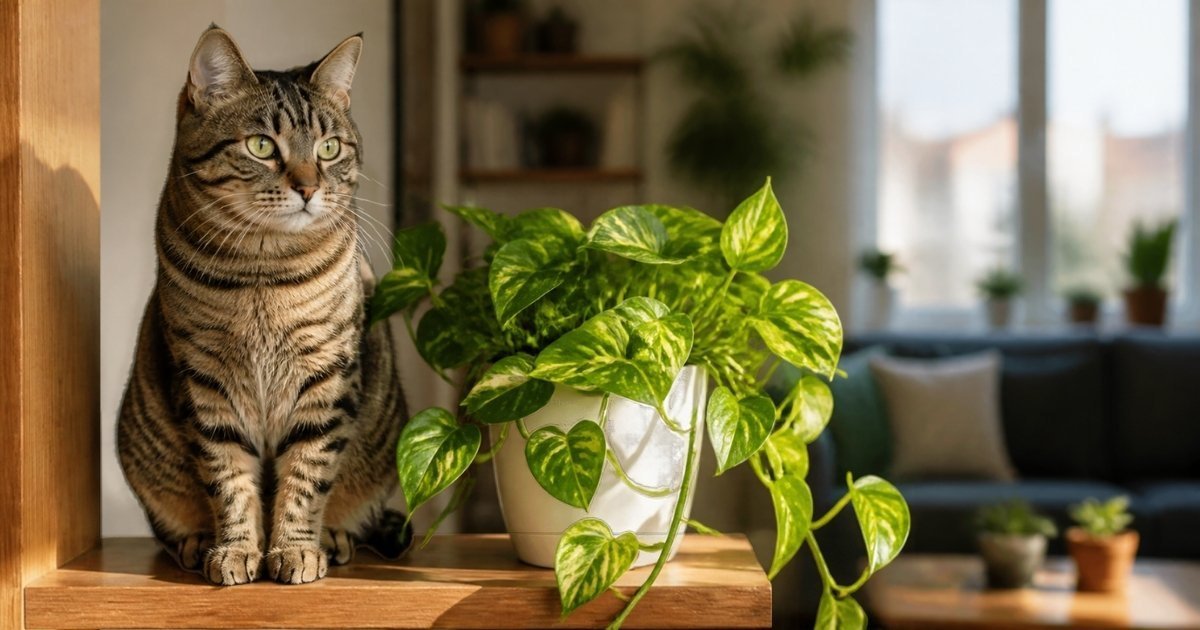
Are pothos toxic to cats? Yes. Every part of the plant contains insoluble calcium oxalate crystals that cause instant mouth pain, heavy drooling, pawing at the face and sometimes vomiting, according to the ASPCA’s golden pothos entry. The good news is that serious poisoning is rare, because the burning starts on the first bite and most cats stop chewing straight away.
Below you will find exactly what happens when a cat bites a pothos, a symptom timeline, step-by-step instructions for the moment you catch your cat chewing one, how to cat-proof the plant you already own, and five pet-safe plants that give you the same leafy look.
Are pothos toxic to cats? The short answer
Pothos (Epipremnum aureum), also sold as devil’s ivy, golden pothos, ivy arum or taro vine, is listed as toxic to both cats and dogs by the ASPCA. The plant is part of the aroid family (Araceae), the same family as monstera, philodendron and peace lily, and like many of its relatives it is packed with needle-shaped calcium oxalate crystals called raphides.
Here is what that means for your cat in plain English:
- The leaves, stems and roots all contain the crystals. There is no “safe” part of the plant.
- Every pothos variety counts. Golden, Marble Queen, Neon, Pearls and Jade, N’Joy and Manjula are all cultivars of the same species, so they carry the same risk.
- The reaction is mostly local. The crystals irritate whatever they touch: lips, tongue, mouth and throat. The Merck Veterinary Manual notes that chewing any part of golden pothos causes immediate, intense mouth pain, and that most insoluble oxalate exposures have a good to excellent prognosis.
- It is not usually fatal, but it is not harmless. The rare serious danger is swelling in the throat that makes breathing or swallowing hard. That is why any exposure deserves a call to your vet.
Why pothos hurts cats: calcium oxalate crystals explained
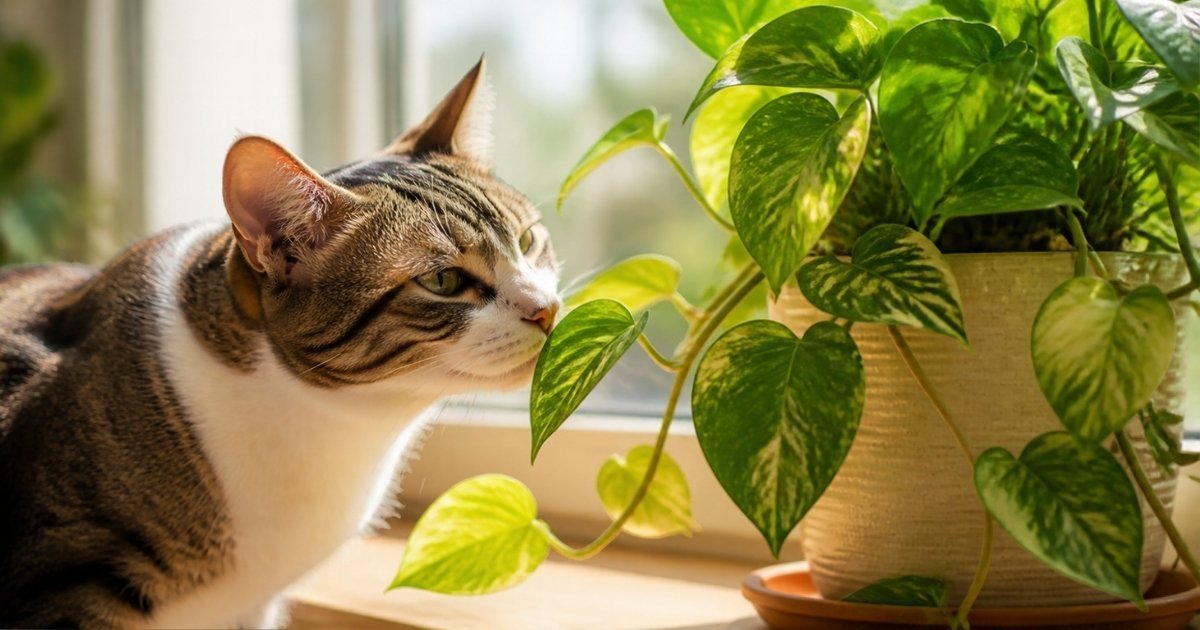
Think of a pothos leaf as holding thousands of microscopic glass needles. When a cat bites down, special cells in the leaf fire those needles into the soft tissue of the mouth. They do not dissolve in saliva, so they keep stinging until they are rinsed away.
This is different from plants with soluble oxalates (like rhubarb leaves), which can damage the kidneys. The Merck Veterinary Manual explains that insoluble oxalates, the kind in pothos, are not a concern for kidney injury. The harm comes from pain and swelling, not from a poison spreading through the body.
Pothos poisoning symptoms in cats (with timeline)
Because the crystals act on contact, signs usually show up within seconds to minutes of chewing. The ASPCA and Clemson Cooperative Extension list the same core signs: oral irritation, pain and swelling of the lips, mouth and tongue, excessive drooling, vomiting and difficulty swallowing.
| When | What you may see | How worried to be |
|---|---|---|
| Seconds to minutes after chewing | Head shaking, pawing at the mouth, sudden drooling or foaming, dropping the leaf | Expected reaction. Call your vet or a poison line now. |
| First 1 to 2 hours | Vomiting, licking lips, red or swollen gums, lips or tongue, hiding | Common. Follow your vet’s advice and watch closely. |
| Same day | Refusing food or water, reluctance to swallow, quieter than usual | Needs a vet check, especially if your cat will not drink. |
| Any time | Noisy or labored breathing, open-mouth breathing, a swollen face or neck, collapse | Emergency. Go to the nearest vet or emergency clinic immediately. |
Most cats that only nibbled a leaf improve within a few hours once the mouth is rinsed and the crystals are gone. A cat that is still drooling heavily, not eating or vomiting repeatedly the next day needs to be seen.
My cat just ate pothos: what to do right now
If you catch your cat chewing a pothos, stay calm and work through these steps:
- Move your cat away from the plant and take any leaf pieces out of its mouth if you can do so safely. Do not force the mouth open if your cat is fighting you.
- Check the plant. Note roughly how much is missing and keep a leaf or snap a photo. Your vet will want to confirm it is pothos and not a lookalike.
- Call your vet or a pet poison line. The ASPCA Animal Poison Control Center is open 24 hours a day, 365 days a year at (888) 426-4435 (a consultation fee may apply). Have your cat’s weight and the time of the bite ready.
- Do not make your cat vomit unless a vet tells you to. Vomiting can drag the crystals back across the throat and make the irritation worse.
- Offer fresh water if your cat will drink, and only follow other home steps (such as gently wiping the mouth with a damp cloth or offering a small amount of a calcium-containing food) if your vet recommends them. Many adult cats do not digest lactose well, so do not reach for a bowl of milk on your own.
- Watch the breathing closely for the next few hours. Any wheezing, noisy breaths or open-mouth breathing means go to an emergency vet now.
At the clinic, treatment is mostly supportive. Vets typically flush the mouth, give pain relief, and may add anti-nausea medicine or fluids if your cat is dehydrated from drooling and not drinking. There is no blood test for pothos exposure, which is why the plant photo you took in step 2 is so useful.
How to keep a pothos in a home with cats
Pothos plants and cats can share a home if you plan the layout. Some cats ignore houseplants forever. Others treat anything dangling as a toy. If you want to keep your pothos, these changes lower the risk a lot:
- Hang it high. A ceiling hook or a wall-mounted hanging planter is the single best fix. Keep trailing vines well above jumping height and away from shelves, bookcases and cat trees your cat can use as a launch pad.
- Trim the trails. Long vines that sway are irresistible. Prune them back so nothing hangs within reach. You can turn the cuttings into new plants with our guide on how to propagate pothos and give them to a pet-free friend.
- Use a plant-only room. A spare room or home office with a closed door is the safest spot for a collection of toxic plants.
- Try a cat deterrent spray. A bitter or citrus-scented deterrent spray on the leaves makes the plant less tempting. Test it on one leaf first and reapply as the label says.
- Offer something better to chew. Many cats chew plants out of boredom or because they like grass. A pot of cat grass (usually wheat or oat grass) in their favorite spot gives them a safe outlet.
- Clean up dropped leaves. Fallen or trimmed pieces on the floor are an easy snack. Sweep them up the same day.
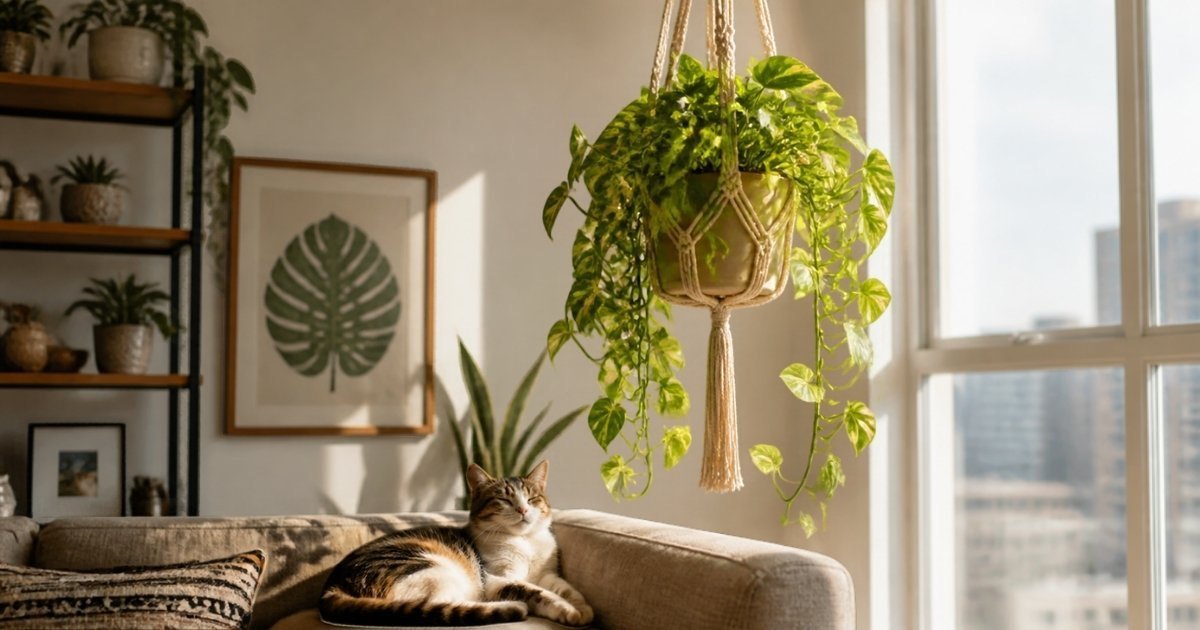
If your cat keeps going back to the plant no matter what you do, rehoming the pothos is the kindest choice for both of you.
5 cat-safe alternatives to pothos
Want the same easy, leafy look without the worry? These five plants are all listed as non-toxic to cats by the ASPCA. Even safe plants can cause a mild upset stomach if a cat eats a lot of them, so it is still best to discourage heavy chewing.
| Plant | Why it works as a pothos swap | Light | ASPCA listing |
|---|---|---|---|
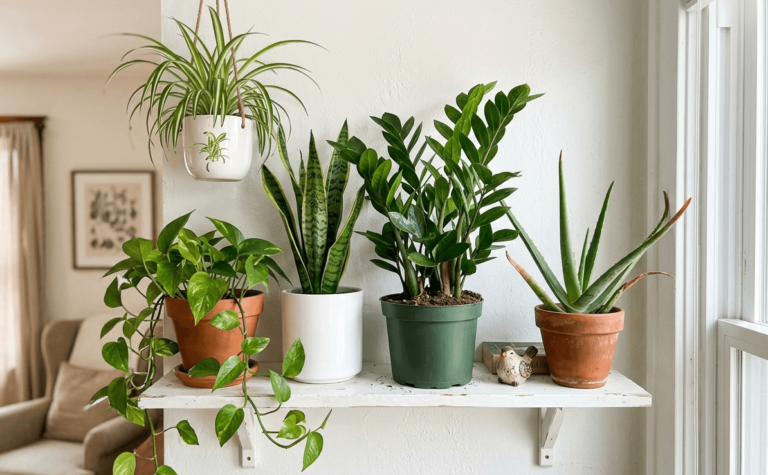
| Spider plant (Chlorophytum comosum) | Arching leaves and hanging “babies,” just as forgiving as pothos | Bright, indirect | Non-toxic to cats |
| Wax plant, hoya (Hoya carnosa) | Trailing vine with thick leaves, looks great in a hanging basket | Bright, indirect | Non-toxic to cats |
| Swedish ivy (Plectranthus) | Fast-growing trailer with rounded leaves, the closest match to a pothos vine | Medium to bright | Non-toxic to cats |
| Parlor palm (Chamaedorea elegans) | Copes with lower light, adds height instead of trails | Low to medium | Non-toxic to cats |
| Prayer plant (Calathea insignis, Maranta) | Patterned leaves for color, stays compact on a table | Medium, indirect | Non-toxic to cats |
Before you buy any new plant, check its botanical name on the full ASPCA toxic and non-toxic plant list for cats. Common names get mixed up at garden centers, and “ivy” can mean several very different plants. For more low-fuss options, see our list of the easiest indoor plants to keep alive (check each one against the ASPCA list if you have pets) or browse all our houseplant care guides.
Common mistakes cat owners make with pothos
- Assuming a “tiny bite” is fine without calling anyone. Most small bites end well, but a quick call costs you nothing and catches the rare cat that swells up.
- Inducing vomiting at home. It can make throat irritation worse. Let a vet decide.
- Thinking variegated or “rare” pothos are safer. Marble Queen, Neon and every other cultivar contain the same crystals.
- Putting the plant on a high shelf instead of hanging it. Cats jump. A shelf is only safe if there is truly no route up to it.
- Leaving cuttings in a jar of water on the counter. Propagation jars on low counters and windowsills are an easy target, and cats may drink the water too. Root cuttings in a closed room.
- Mixing up pothos and philodendron. Both are toxic, so whichever you have, the same safety rules apply.
FAQ: pothos and cats
Is pothos toxic to cats if they just lick it?
Licking an intact leaf releases far fewer crystals than chewing, so it usually causes little or no reaction. The crystals are released when the leaf is broken, which is why chewing causes the pain. If you see drooling or pawing at the mouth after any contact, call your vet.
How long does pothos poisoning last in cats?
Mouth pain starts within minutes. In mild cases, drooling and discomfort usually settle within a few hours once the mouth is rinsed. A cat that is still not eating, still drooling or vomiting the next day needs a vet exam.
Are golden pothos toxic to cats?
Yes. Golden pothos is the exact plant the ASPCA lists as toxic to cats (Epipremnum aureum). Marble Queen, Neon, N’Joy and other varieties are the same species and carry the same risk.
Can pothos kill a cat?
Deaths are very rare. The burning taste usually stops a cat after one bite, and the Merck Veterinary Manual describes the prognosis for insoluble oxalate plants as good to excellent. The serious risk is throat swelling that affects breathing, so treat any breathing change as an emergency.
Why does my cat keep eating my pothos?
Cats chew plants out of boredom, curiosity, to get fiber, or because a swaying vine looks like prey. Offer cat grass, add play sessions, hang the pothos out of reach, and use a deterrent spray on the leaves.
Are pothos toxic to dogs too?
Yes. The ASPCA lists pothos as toxic to dogs as well, with the same mouth irritation, drooling and vomiting. The same cat-proofing steps protect dogs too.
This article is for general information and is not a substitute for veterinary advice. If you think your cat has eaten any plant, contact your vet or the ASPCA Animal Poison Control Center at (888) 426-4435.