How Often Should You Water a Peace Lily Indoors? (Reading the Droop)
If you’ve ever walked into your living room to find your peace lily collapsed like it’s auditioning for a soap opera — leaves limp, stems sagging, the whole plant looking deeply offended — congratulations. You own the most expressive houseplant on earth.
The good news: peace lilies aren’t actually dying when they droop. They’re talking. Once you learn to read them, how often you should water a peace lily indoors stops being a schedule and starts being a conversation. This guide will walk you through exactly how to listen.
The Peace Lily Drama, Explained
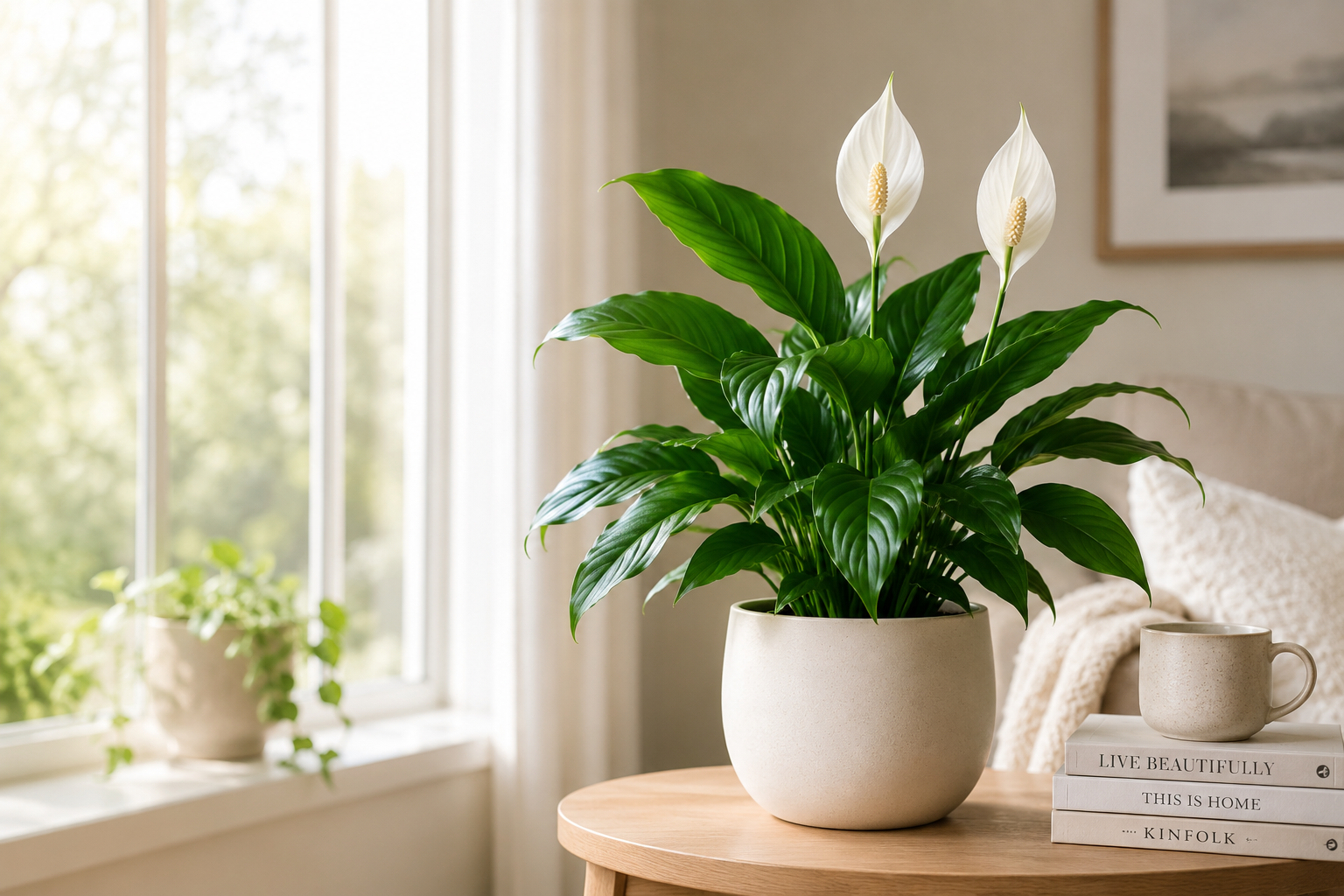
Peace lilies (Spathiphyllum wallisii) come from the humid understory of tropical rainforests in Central and South America. In the wild, they get steady moisture, dappled light, and warm, stable temperatures. Indoors, they tolerate a lot of neglect — but they let you know about it.
Unlike most houseplants, which quietly suffer until it’s too late, the peace lily wilts dramatically the moment its soil gets too dry. Within hours of being watered, it perks right back up. That’s not weakness — it’s a built-in moisture meter you got for free.
The short answer: Most peace lilies indoors need water roughly once every 7 to 10 days, but the frequency depends entirely on pot size, light, humidity, and season. Skip the calendar. Read the plant.
The Visual Cue Most Beginners Miss
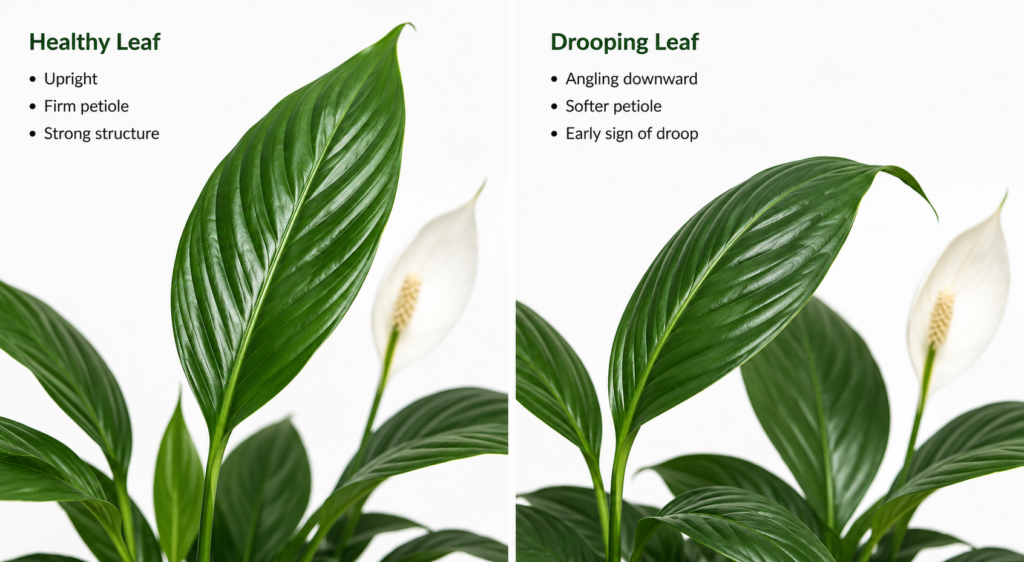
Before the full dramatic droop, your peace lily gives you a subtler signal — and almost no one notices it.
Look at the leaf tips in the morning. A well-hydrated peace lily has leaves that point slightly upward and outward, glossy and firm. A thirsty peace lily’s leaves start to angle downward at the petiole (the stalk connecting the leaf to the stem) about 12–24 hours before a full collapse. The leaves themselves still look fine — it’s the angle that changes.
If you catch the droop at this early stage, you can water before the plant goes into full crisis mode. Repeated dramatic wilting stresses the roots over time, even if the plant bounces back each time.
Water by Weight, Not by Schedule
Here’s the single most useful trick experienced plant people use: lift the pot.
Right after a thorough watering, pick up your peace lily and feel its weight. Mentally label that “full.” A few days later, lift it again. When it feels noticeably lighter — almost suspiciously light, like the soil has nothing left to give — it’s time to water.
This works because:
- Soil moisture varies wildly between plastic, terracotta, and ceramic pots
- A fixed schedule ignores seasonal humidity changes
- Surface soil dries faster than root-level soil, so the “finger test” lies
- Weight tells you what’s happening at the roots, where it matters
Peace Lily Watering Frequency by Season
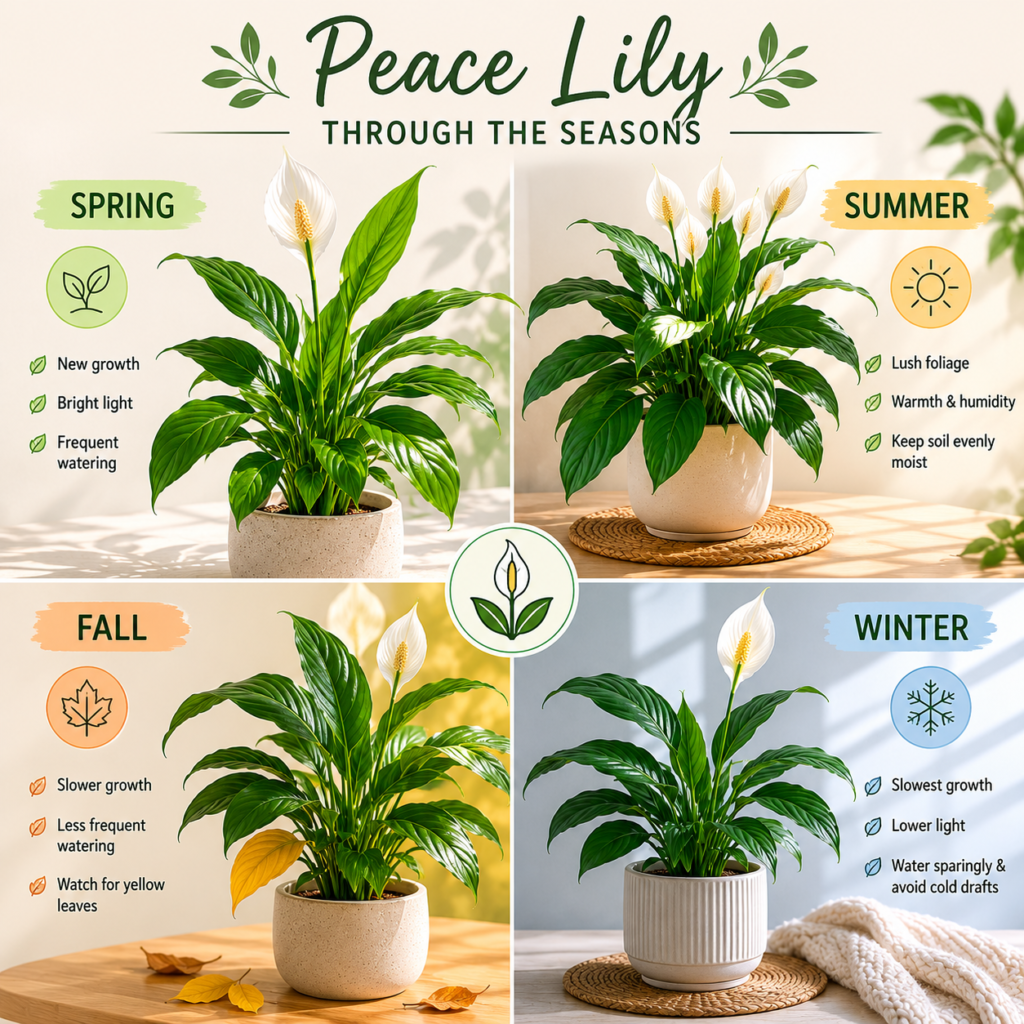
Indoor conditions change more than people realize. Heating in winter dries the air; summer humidity slows soil evaporation. Here’s a realistic range based on a 6-inch potted peace lily in average indoor conditions (65–75°F, moderate light):
| Season | Watering Frequency | Why |
|---|---|---|
| Spring (Mar–May) | Every 5–7 days | Active growth, longer days, rising temps |
| Summer (Jun–Aug) | Every 4–6 days | Peak transpiration, possible AC dryness |
| Fall (Sep–Nov) | Every 7–10 days | Growth slows as light decreases |
| Winter (Dec–Feb) | Every 10–14 days | Dormancy + heating systems dry foliage but soil stays wet longer |
Adjust up or down based on pot material (terracotta dries faster), pot size (bigger = less often), and light level (more light = more water needed).
What Kind of Water to Use (Tap vs Filtered)
Peace lilies are mildly sensitive to chlorine, chloramine, and fluoride — common in municipal tap water. You’ll often see this damage as crispy brown leaf tips, even when the watering schedule is perfect.
Your options, ranked from easiest to best:
- Tap water, left out overnight — Lets chlorine evaporate. Doesn’t remove chloramine or fluoride, but works for most city water.
- Filtered water (Brita-style carbon filter) — Reduces chlorine and some contaminants. A solid middle ground.
- Distilled or rainwater — The gold standard for sensitive plants. Distilled gallons are cheap and worth it if your tap water is heavily treated.
Always water at room temperature. Ice-cold water shocks tropical roots and can trigger drooping that looks identical to thirst.
Signs of Underwatering vs Overwatering
This is where most peace lily owners get confused — because both problems can cause drooping. Here’s how to tell them apart:
Underwatering Signs
- Dramatic, uniform wilt across the whole plant
- Soil pulls away from the edges of the pot
- Pot feels light when lifted
- Leaves recover within 2–4 hours of watering
- Leaf tips may turn crispy brown
Overwatering Signs
- Droop that does not recover after watering
- Soil stays wet for many days
- Yellowing of multiple leaves (especially lower ones)
- A sour or musty smell from the soil
- Black, mushy roots if you check (a sure sign of root rot — see our Root Rot Recovery Guide)
The deciding factor: how the plant responds to water. A dry peace lily bounces back fast. A waterlogged one keeps drooping, because the rotting roots literally can’t absorb moisture anymore.
The Yellow-Leaf Decoder
Yellow leaves on a peace lily aren’t one problem — they’re a vocabulary. Where the yellowing appears tells you what’s wrong:
- Lower leaves only, slowly yellowing → Natural aging. Trim and move on.
- Multiple lower leaves at once, soft and yellow → Overwatering or root rot.
- New leaves yellow with green veins → Nutrient deficiency (usually iron or magnesium); time to fertilize.
- Random leaves yellow with brown crispy tips → Inconsistent watering — long dry spells followed by drenching.
- Sudden yellow on many leaves after repotting → Transplant shock; reduce water for 1–2 weeks.
If yellowing is paired with droop and wet soil, treat it as overwatering first. That’s the most common — and most fixable — cause.
When the Droop Won’t Come Back
Sometimes you water a wilted peace lily, wait the usual two hours, and… nothing. The leaves stay limp. This is the moment to act fast.
Step 1: Slide the plant out of its pot. Healthy roots are white or pale tan and firm. Rotten roots are dark brown or black and mushy.
Step 2: If most roots are still healthy, trim away the rotten ones with clean scissors, rinse the root ball, and repot into fresh dry soil in a clean pot with proper drainage. A ceramic pot with a real drainage hole makes a huge long-term difference.
Step 3: Hold off on watering for 3–5 days to let the trimmed roots callus over. Then water lightly. Move the plant to medium, bright, indirect light — no direct sun while recovering.
Step 4: If more than 70% of the roots are rotten, take stem cuttings of any healthy growth and try to propagate. The original plant may not survive, but the genetics can.
Final Word: Stop Watering, Start Listening
The biggest shift in caring for a peace lily indoors is small: stop asking how often to water, and start asking what the plant is telling you.
Lift the pot. Check the leaf angle. Watch for the early droop. Use room-temperature filtered water. Adjust with the seasons. Within a few months, you’ll know your specific plant’s rhythm better than any blog post — including this one — could ever capture.
The peace lily is dramatic on purpose. It’s the only houseplant that wants you to read it. All you have to do is look.
Frequently Asked Questions
How often should you water a peace lily indoors in winter? About every 10 to 14 days, depending on indoor heating and pot size. Reduce frequency as growth slows, but watch for crispy leaf tips from dry winter air.
Can you water a peace lily with tap water? Yes, but let it sit out for 24 hours first to release chlorine. For sensitive plants showing brown tips, switch to filtered or distilled water.
Why is my peace lily drooping even after watering? Likely overwatering or root rot. If the droop doesn’t recover within a few hours and the soil is consistently wet, inspect the roots immediately.
Should I mist my peace lily? Misting helps with humidity but doesn’t replace watering. A pebble tray or nearby humidifier is more effective for tropical plants.
How do I know if my peace lily needs water? Lift the pot — if it feels light, water it. Check the leaf angle — early-stage drooping means it’s thirsty. Don’t wait for the full dramatic collapse.