How to Propagate a Fiddle Leaf Fig: Where to Cut and 3 Rooting Methods
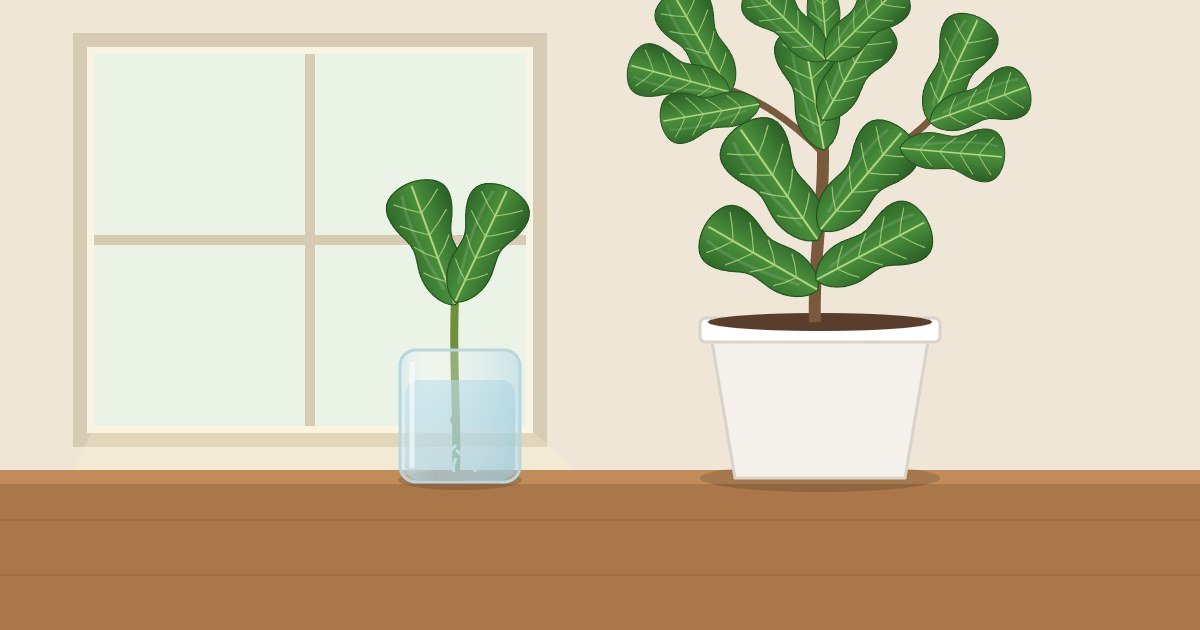
Here is how to propagate a fiddle leaf fig: cut a 6 to 12 inch piece of healthy stem just below a leaf node, keep one to three leaves on top, and root it in water, moist potting mix, or by air layering on the parent plant. Roots usually show up in a few weeks in warm, bright conditions, and the cutting can go into soil once the roots are 1 to 2 inches long.
The part most guides skip is where exactly to cut and why a single leaf will root but never turn into a tree. Both are covered below, along with a rooting timeline table, the best season, and what to do in the first month after potting.
Can you propagate a fiddle leaf fig?
Yes. Fiddle leaf figs (Ficus lyrata) root well from stem cuttings, and propagating a fiddle leaf fig is one of the easiest ways to turn one leggy tree into two or three plants. It also gives you a use for the top you cut off when pruning a tall plant to make it branch.
What you cannot do is grow a new tree from a leaf on its own. More on that in the single leaf section, because it is the most common reason people end up with a jar of rooted leaves that never grow.
When is the best time to propagate a fiddle leaf fig?
Late spring through early summer is the best window. The plant is actively growing, days are long, and warm rooms help cuttings root faster. You can take cuttings at other times of year, but in a cool winter room rooting slows down a lot and the cut end sits wet for longer, which raises the chance of rot.
If you only have winter, give the cutting the warmest bright spot you have and consider a seedling heat mat under the jar or pot.
What you need
- Sharp, clean pruning shears or a sharp knife (wipe the blades with rubbing alcohol first)
- A clear glass jar or a propagation station for water rooting
- A small pot (4 to 6 inches) with drainage holes and a light mix, such as 3 parts potting mix to 1 part perlite
- Rooting hormone powder or gel (optional for water, helpful for soil and air layering)
- Sphagnum moss and plastic wrap if you want to try air layering
- Gloves and a paper towel, because the stem bleeds a milky white sap
Where to cut a fiddle leaf fig for propagation
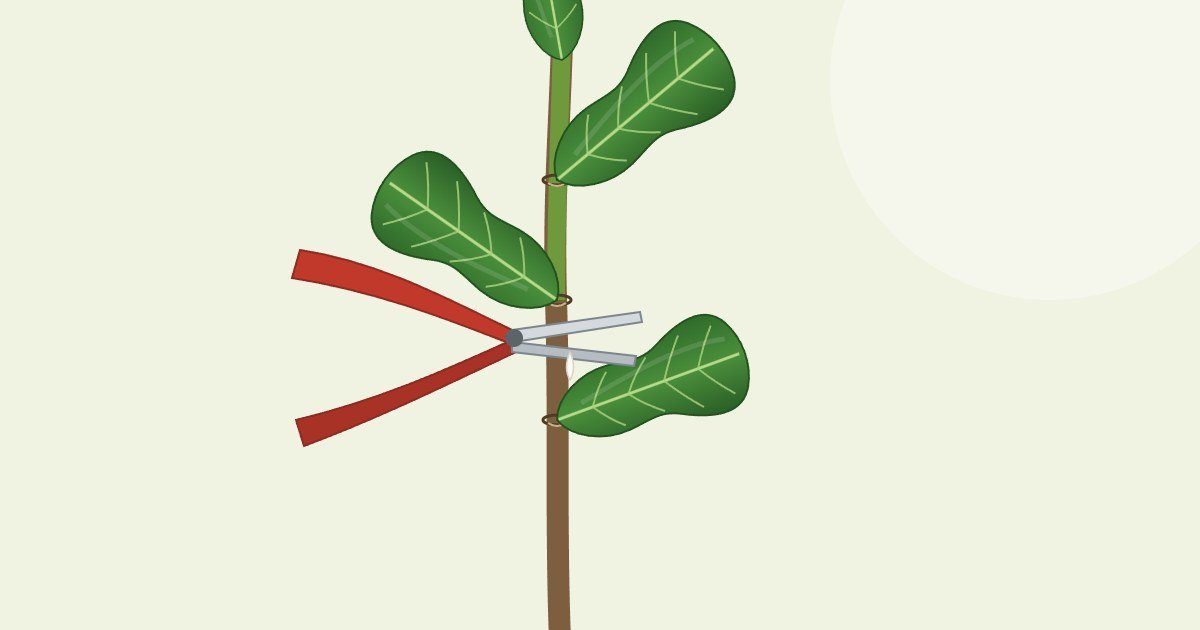
A node is the slightly raised ring on the stem where a leaf is (or was) attached. Roots and new shoots grow from nodes, so every cutting needs at least one node that will sit in water or soil.
- Pick a healthy stem. Choose a branch or the top of the main stem with green, firm growth and no pests. Avoid stems with brown spots or yellowing leaves.
- Measure 6 to 12 inches. Count down from the top so the cutting has one to three leaves and at least one or two bare nodes below them.
- Cut just below a node. Make a clean cut about a quarter inch below the node. Angled or straight both work, but it must be clean, not crushed.
- Leave the parent a node too. On the parent plant, the stem below your cut will usually push new growth from the node just under the cut, which is how pruning makes a fiddle leaf fig branch.
- Blot the sap. Hold a paper towel on both cut ends for a minute. Rinse your shears with soapy water afterward because the sap turns sticky.
Keep the number of leaves low. A cutting with no roots cannot drink much, so one to three leaves is plenty. If the leaves are very large, you can cut them in half across the blade to reduce water loss. It is optional, but it often helps cuttings that wilt.
How to propagate a fiddle leaf fig: 3 methods compared
Here is how the three methods compare, so you can pick the one that fits your space and patience.
| Method | First roots (typical) | Ready to pot | Best for | Main risk |
|---|---|---|---|---|
| Water | 3 to 6 weeks | Roots 1 to 2 inches long | Beginners who want to watch roots form | Stem rot if water is not changed |
| Soil | 4 to 8 weeks | When it resists a gentle tug and puts out a new leaf | Skipping the water to soil switch | Overwatering before roots form |
| Air layering | 6 to 8 weeks or more | Roots visible through the moss | Large trees, big woody branches | Moss drying out |
These are typical ranges, not promises. Warmth, light and the age of the stem change them a lot. Green, newer stems root faster than old brown woody ones.
Method 1: Fiddle leaf fig propagation in water
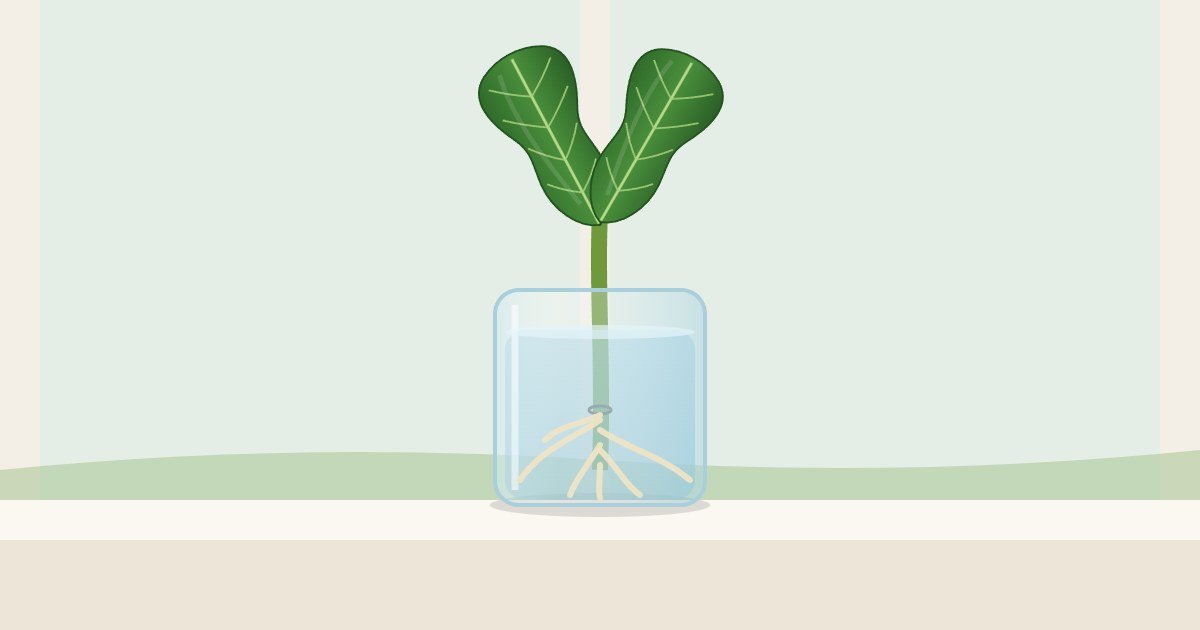
- Fill a clear jar with room temperature water. Tap water is fine for most homes, and filtered or distilled water works if your tap water is very hard.
- Stand the cutting in the jar so one or two nodes are under water and no leaves touch the water.
- Place it in bright, indirect light, such as near an east window. A few hours of gentle morning sun is fine, but hot afternoon sun through glass can scorch the leaves.
- Change the water every week, or sooner if it looks cloudy. Rinse the jar too.
- Watch for small white bumps on the submerged stem. These turn into roots.
- Pot the cutting when the roots are about 1 to 2 inches long. Waiting much longer makes the switch to soil harder, because water roots are fragile.
A propagation station is handy here because it holds the stem upright and lets you see the roots clearly, but any clear glass jar works. If you have propagated before, this is the same idea as how to propagate pothos, just slower because fiddle leaf fig stems are thicker.
Method 2: Propagating a fiddle leaf fig in soil
- Fill a small pot with a light, well draining mix and water it so it is evenly moist, not soggy.
- Dip the cut end in rooting hormone, tapping off the extra.
- Poke a hole with a pencil and set the cutting about 2 inches deep, so at least one node is buried. Firm the mix around it.
- Cover it loosely with a clear plastic bag held up by a couple of sticks so the bag does not touch the leaves. Open it for a few minutes every day or two for fresh air.
- Keep the pot in bright, indirect light and somewhere warm. Water only when the top inch of mix starts to feel dry.
- After about a month, give the stem a very gentle tug. Resistance means roots are holding. A new leaf at the top is the clearest sign of success.
Soil rooting skips the water to soil transition, which some cuttings struggle with. The tradeoff is that you cannot see what is happening, so patience matters. The same light mix and small pot approach works for propagating a jade plant, although jade cuttings need much less water.
Method 3: Air layering a fiddle leaf fig
Air layering roots a branch while it is still attached to the parent, so the branch keeps getting water the whole time. It is the best choice for a tall tree where you want a big, ready made plant, or for thick woody stems that rot easily as cuttings.
- Choose a sturdy branch and pick a spot 12 inches or more below the tip, just below a node.
- Make a shallow upward cut about 1 to 2 inches long into the stem, going no more than a third of the way through. Wedge a toothpick in the cut to hold it open.
- Dust the wound with rooting hormone.
- Soak a handful of sphagnum moss, squeeze it until it is damp but not dripping, and pack it around the cut.
- Wrap the moss tightly in plastic wrap and tie or tape both ends.
- Check every week and add a little water to the moss if it is drying out.
- When you can see a good mass of roots through the plastic, cut the branch off below the moss ball and pot it, moss and all.
Can you propagate a fiddle leaf fig from a single leaf?
A single leaf can grow roots in water, and it can even stay green for months. But a leaf on its own has no bud that can make a new stem, so it will never grow into a tree. To get a new plant, the cutting must include a piece of stem with a node, because that is where the new shoot comes from.
If you have a leaf that fell off or snapped, enjoy it as a rooted leaf in a jar, but do not count it as a new plant.
First month aftercare for a new cutting
| Care area | What to do in the first month |
|---|---|
| Light | Bright, indirect light. Avoid moving it around, since fiddle leaf figs dislike sudden changes. |
| Water | Water when the top inch of mix is dry. Small pots dry faster than big ones, so check often. |
| Temperature | Keep it above 60°F and away from cold drafts, heating vents and AC units. |
| Humidity | Normal home humidity is fine. A clear bag or a tray nearby helps if leaves droop. |
| Feeding | Skip fertilizer until you see a new leaf, then feed lightly with a diluted houseplant fertilizer during spring and summer. |
| Repotting | Leave it in the small pot until roots fill it. Moving to a large pot too early keeps the soil wet for too long. |
It is normal for a freshly potted cutting to droop for a few days while water roots adjust to soil. Keep the mix evenly moist (not wet) during that first week, then go back to watering when the top inch dries.
Common mistakes and troubleshooting
- Cutting without a node. A piece of stem with no node below the leaves has nowhere to root. Always cut just below a node.
- Too many leaves. A cutting with five or six big leaves loses more water than it can take in and wilts. Trim it to one to three.
- Stem turns black or mushy. This is rot. Cut above the soft part to clean, firm tissue, rinse the jar, and start again with fresh water. If it happens in soil, the mix is too wet. See our root rot guide for how to spot it early.
- No roots after two months. The room is probably too cool or dim. Move it somewhere warmer and brighter, or try a heat mat.
- Leaves dropping. Losing one leaf is common. Losing all of them usually points to cold, a draft, or too much direct sun.
- Potting too late. Roots left in water for months become long and stringy and struggle in soil. Pot them at 1 to 2 inches.
Is fiddle leaf fig sap safe?
Wear gloves when you cut. According to NC State Extension, fiddle leaf fig is toxic to people, cats and dogs if eaten, and the sap can irritate skin. The ASPCA also lists fig (Ficus) plants as toxic to cats and dogs, with stomach upset and skin irritation as the signs. Keep cuttings in jars out of reach of pets, and wash your hands after handling the stems.
FAQ
How long does it take for a fiddle leaf fig cutting to root?
In warm, bright conditions, roots usually start to show in water within about 3 to 6 weeks. Soil cuttings and air layers often take longer, around 1 to 2 months. Cool rooms slow everything down.
Do you need rooting hormone to propagate a fiddle leaf fig?
No, cuttings can root without it, especially in water. Rooting hormone tends to help most with soil cuttings, air layering and older woody stems.
Can you root a fiddle leaf fig cutting directly in soil?
Yes. Use a light, well draining mix, bury at least one node, keep the mix lightly moist and cover the pot loosely with a clear bag to hold in humidity.
What happens if you cut the top off a fiddle leaf fig?
The parent plant will usually grow one or more new shoots from the nodes just below the cut, which helps it branch, and the top you removed can be rooted as a new plant.
Why is my fiddle leaf fig cutting not rooting?
The most common causes are no node in the water or soil, a cool or dim spot, or rot at the base. Check the stem, trim any soft tissue, and move it somewhere warmer and brighter.
Can I propagate a fiddle leaf fig in winter?
You can, but rooting is slower and rot is more likely. Spring and early summer give the best results. If you try in winter, use the warmest bright spot you have.
For more plant care help, browse our houseplant care guides.