Monstera Varieties: 12 Types and How to Tell Them Apart
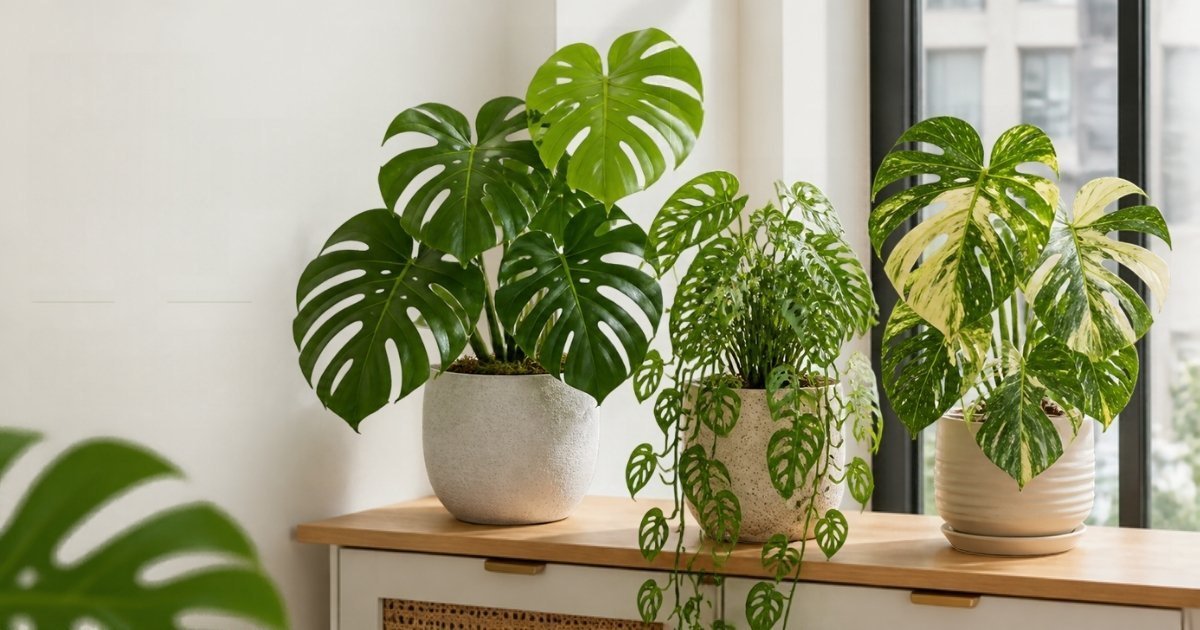
There are roughly 50 known Monstera species, but only a dozen or so monstera varieties turn up in plant shops, and they range from cheap garden center staples to collector plants with eye-watering prices. Most beginners should start with Monstera deliciosa, Monstera adansonii or Monstera ‘Peru’. The variegated monsteras, like Thai Constellation and Albo, are the same easy plants with fussier needs and much bigger price tags.
Below are 12 monstera types you can actually buy, how to tell them apart, how rare and pricey each one is, and which one suits your space.
Monstera varieties at a glance
The cost column is relative, not a price list. Monstera prices swing a lot with plant size, season and how many growers are selling them, so treat it as a guide to what to expect.
| Variety | Leaf look | Growth habit | Rarity | Relative cost | Best for |
|---|---|---|---|---|---|
| Monstera deliciosa | Huge, split and holey | Climber, big | Common | $ | Beginners with floor space |
| Monstera ‘borsigiana’ | Like deliciosa, a bit smaller | Climber, faster | Common | $ | Smaller rooms |
| Monstera adansonii | Oval leaves full of holes | Vine, trailing or climbing | Common | $ | Shelves and hanging pots |
| Monstera ‘Peru’ | Thick, bumpy, no holes | Compact vine | Common | $ | Low humidity homes |
| Monstera standleyana | Long, solid leaves | Vine | Uncommon | $$ | Trailing displays |
| Monstera siltepecana | Silvery leaves, dark veins | Vine | Uncommon | $$ | Shelves and terrarium shelves |
| Monstera dubia | Small leaves that lie flat | Shingling climber | Uncommon | $$ | A plank or wall climber |
| Monstera pinnatipartita | Solid when young, deeply split later | Climber | Rare | $$$ | Patient collectors |
| Monstera Thai Constellation | Cream speckles on green | Climber, big | Uncommon | $$$ | A first variegated monstera |
| Monstera Albo | Bold white patches, half moons | Climber, big | Rare | $$$$ | Experienced growers |
| Monstera Aurea | Yellow patches and sectors | Climber, big | Very rare | $$$$ | Collectors |
| Monstera obliqua | Paper thin, more hole than leaf | Tiny vine | Very rare | $$$$ | Greenhouse or cabinet growers |
The easy green monsteras (best for beginners)
1. Monstera deliciosa (Swiss cheese plant)
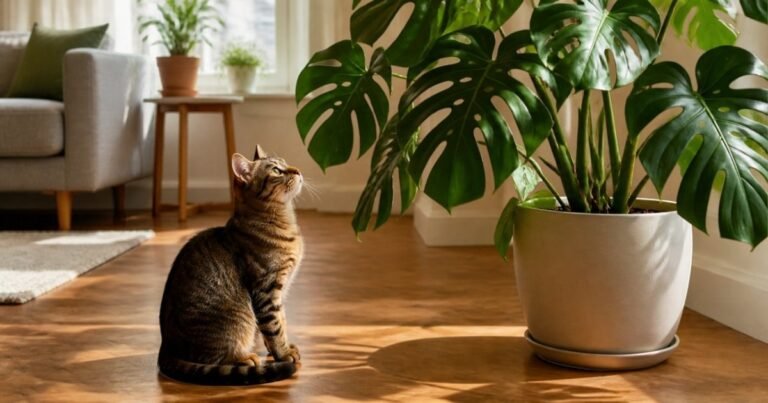
This is the monstera most people picture. Young plants have solid, heart-shaped leaves. As the plant matures, the leaves develop both splits from the edge and holes near the midrib. According to NC State Extension, it is native from Mexico to Panama and usually stays around 6 to 8 feet tall indoors, even though it can climb far higher in the wild. You will also see it sold as split-leaf philodendron, though it is not a philodendron.
How to spot it: the leaf stalk has a wrinkled, ruffled joint (the geniculum) right where it meets the leaf.
Good to know: it is the most forgiving monstera. It handles average home humidity, recovers from a missed watering and grows quickly in bright, indirect light. Give it a moss pole or stake early, because the stems get heavy.
2. Monstera ‘borsigiana’
Many nurseries sell a smaller, faster growing form of Monstera deliciosa as ‘borsigiana’. Most botanists no longer treat it as a separate species, so think of it as a lighter, leggier deliciosa. Leaves stay a little smaller and the spaces between leaves are longer.
How to spot it: the leaf joint is smooth, not ruffled. Many variegated Albo plants are sold as “Albo borsigiana” for this reason.
3. Monstera adansonii (Swiss cheese vine)
Adansonii is the vining cousin. It has thinner, oval leaves with pointed tips and lots of holes, but no splits reaching the edge. It trails nicely from a hanging pot or climbs a small pole, which makes it one of the best monsteras for apartments and small rooms.
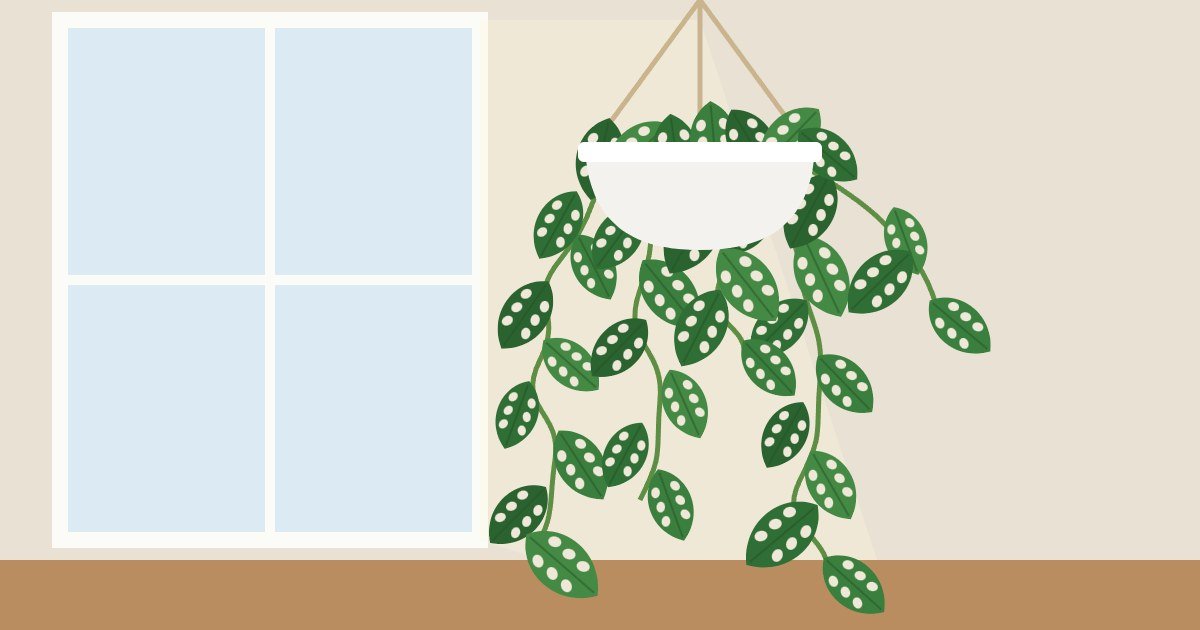
Good to know: the thinner leaves dry out faster than deliciosa leaves, so it appreciates a bit more humidity. It roots easily from node cuttings in water, using the same method we show in our pothos propagation guide.
4. Monstera ‘Peru’
Monstera ‘Peru’ (often identified as Monstera karstenianum) looks nothing like the classic monstera. The leaves are small, thick, deep green and covered in raised ridges, with no holes at all. Costa Farms notes that its thick leaves make it more tolerant of drought and below average humidity than the thin-leaved types.
Good to know: it stays compact and works well on a desk or shelf. Let the top inch or two of soil dry before watering.
Uncommon monsteras for collectors on a budget
5. Monstera standleyana
Standleyana has long, narrow, solid leaves with no holes. Plain green plants are uncommon, and most sold today are variegated with white or yellow streaks (often labeled ‘Albo’ or ‘Aurea’). It vines and trails, so it suits a shelf edge or a short pole.
6. Monstera siltepecana
Juvenile siltepecana leaves are silvery blue-green with dark green veins, and they look a lot like a Scindapsus or a silver philodendron. On a pole, with time and bright light, mature leaves can turn green and develop holes. It is a good pick if you like silver foliage and have limited space.
7. Monstera dubia
Young dubia leaves are small, heart-shaped and patterned in light and dark green. Instead of growing outward, they press flat against whatever they climb, like shingles on a roof. Give it a wooden plank or a flat moss board and keep the humidity up. The large, split adult leaves rarely appear indoors, so buy it for the shingling look.
8. Monstera pinnatipartita
Pinnatipartita starts with plain, slightly glossy leaves. Once it climbs and matures, the leaves split deeply into narrow segments, almost like a palm frond. It needs a tall pole, bright light and patience, which is why it is mostly a collector plant.
Variegated monsteras (Thai Constellation, Albo and Aurea)
Variegated monsteras have patches of cream, white or yellow where the leaf has little or no chlorophyll. Those pale areas cannot make food, so variegated plants grow more slowly, need brighter light and are easier to sunburn. They are also where the big prices are.
9. Monstera Thai Constellation
Thai Constellation is a cultivar of Monstera deliciosa with creamy speckles and splashes spread across every leaf. It is produced in labs by tissue culture, and its variegation is stable, so new leaves keep their pattern and reverting to plain green is uncommon. It has become easier to find and cheaper than it was a few years ago, which makes it the most sensible first variegated monstera.
Good to know: it grows slower than a green deliciosa. Put it in the brightest indirect light you have.
10. Monstera Albo (variegated monstera albo and half moon leaves)
Monstera Albo has bright white variegation in bold blocks, streaks and marbling. Its variegation comes from a chimera, meaning the plant carries a mix of green and non-green cells. That makes it unstable: a new leaf can come out mostly green (reverting) or almost completely white.

A “Monstera albo half moon” is a single leaf that is white on one side of the midrib and green on the other. Collectors love them, but a half moon leaf is a random event, not a separate variety, and a plant that throws one may not do it again. Fully white leaves look stunning but cannot feed the plant and usually brown off.
Good to know: Albo is propagated from cuttings, not mass produced in labs, which keeps supply low and prices high. Only buy one if you are comfortable with bright light, steady watering and occasional pruning to keep the variegation.
11. Monstera Aurea
Aurea is like Albo but with yellow to lime variegation instead of white. It is also chimeric and unstable, and there are far fewer plants in circulation, so it sits near the top of the price range. Care is the same as for Albo.
Other variegated names you may see include Monstera ‘Mint’ (pale mint green variegation) and variegated Monstera standleyana.
The rarest monstera: Monstera obliqua
12. Monstera obliqua
True Monstera obliqua is one of the rarest monsteras in cultivation. The best known form from Peru has paper thin leaves that are often more hole than leaf, and it grows very slowly. It needs high, steady humidity, so most owners keep it in a greenhouse cabinet or a large terrarium.
Many plants sold online as “obliqua” are actually Monstera adansonii. Real obliqua leaves are much thinner, smaller and more delicate. If a cheap listing says obliqua, assume it is adansonii.
Honorable mention: Monstera epipremnoides ‘Esqueleto’ has huge leaves with very large holes, and is another collector plant you may see in specialty shops.
Which monstera variety should you get?
Pick based on your space and how much effort you want to put in.
- Big, bright living room: Monstera deliciosa. Fast, tough and dramatic.
- Small apartment or a shelf: Monstera adansonii or Monstera ‘Peru’.
- Hanging basket: Monstera adansonii or Monstera standleyana.
- Dry air, forgetful watering: Monstera ‘Peru’ or Monstera deliciosa.
- First variegated plant: Thai Constellation, because its pattern is stable.
- Experienced collector with a grow light: Albo, Aurea or obliqua.
If you are still building your plant skills, our list of the easiest indoor plants to keep alive has more low-effort picks.
Basic care for all monstera types
Every monstera on this list is a tropical climber, so the basics are the same.
- Light: bright, indirect light, close to an east, west or south window. Variegated types need the brightest spot or a grow light.
- Water: water thoroughly, then let the top part of the soil dry before watering again. NC State Extension suggests letting the top quarter to third of the soil dry.
- Soil: a chunky, fast draining aroid mix (potting soil with orchid bark and perlite).
- Humidity: average home humidity is fine for deliciosa and Peru. Thin-leaved types like adansonii, dubia and obliqua like it higher.
- Temperature: keep them above about 60°F and away from cold drafts.
- Support: add a moss pole, stake or plank. Climbing plants make bigger, more mature leaves.
Common mistakes when buying and growing monsteras
- Buying “variegated monstera seeds.” Variegation like Albo is not reliably passed on through seed, and many of these listings are scams. Buy a rooted plant or a cutting with a node.
- Paying obliqua prices for adansonii. Ask for photos of the exact plant and compare leaf thickness.
- Thinking a mini monstera is a monstera. The plant sold as “mini monstera” is Rhaphidophora tetrasperma, a different genus with a similar split leaf look.
- Keeping variegated plants in low light. They slow down, lose variegation and can rot.
- Overwatering. Monsteras hate soggy soil. If leaves yellow and the soil smells sour, check the roots and follow our root rot rescue guide.
Are monsteras safe for pets?
No. The ASPCA lists Monstera deliciosa as toxic to cats and dogs because it contains insoluble calcium oxalates. Chewing the leaves can cause mouth irritation, heavy drooling, vomiting and trouble swallowing. Treat every monstera variety as unsafe for pets, and read our guide on whether monstera is toxic to cats for what to do if your cat takes a bite.
Where to buy monstera varieties
- Garden centers and big box stores: the best place for Monstera deliciosa, adansonii and ‘Peru’, and increasingly Thai Constellation.
- Specialty houseplant shops and online plant stores: best for standleyana, siltepecana, dubia and pinnatipartita.
- Trusted collectors and plant swaps: where Albo, Aurea and obliqua usually change hands.
Whatever you buy, ask for photos of the actual plant, check for at least one healthy node and aerial root on cuttings, and order live plants when the weather is mild so they are not shipped through freezing temperatures. A moss pole and a bag of chunky aroid mix are the two supplies worth buying along with any new monstera.
For more care guides, browse our houseplant care section.
Monstera varieties FAQ
How many types of monstera are there?
Botanists recognize roughly 50 Monstera species, plus named cultivars like Thai Constellation. Only around a dozen are commonly sold as houseplants.
What is the rarest monstera?
Monstera obliqua (the Peru form) is generally considered the rarest in cultivation. Among variegated plants, Monstera Aurea is usually the hardest to find.
What is the difference between Monstera deliciosa and adansonii?
Deliciosa grows large, thick leaves with both splits and holes and becomes a big floor plant. Adansonii is a smaller vine with thin, oval leaves that have holes but no splits to the edge.
Is Thai Constellation better than Albo?
For most people, yes. Thai Constellation’s variegation is stable and the plant is easier to find. Albo has bolder white variegation but can revert or throw all-white leaves, and it costs more.
Can a variegated monstera turn green?
Yes. Chimeric types like Albo and Aurea can produce mostly green leaves. Pruning back to a node with good variegation can help. Thai Constellation rarely reverts.
Which monstera is best for beginners?
Monstera deliciosa is the easiest if you have floor space. For small spaces, Monstera adansonii or Monstera ‘Peru’ are good starter plants.