Prayer Plant Care for Beginners: Light, Water, Humidity and Soil
Prayer plant care comes down to four things: bright indirect light, soil that stays lightly moist (never soggy), humidity around 50% or higher, and soft water that won’t burn the leaf tips. Get those right and a Maranta will put out new leaves all through spring and summer and fold them up every evening like hands in prayer.
This guide covers how to care for a prayer plant indoors, season by season, plus a quick fix list for curling, crispy and yellow leaves. It is written for beginners, so every step is something you can do in a normal apartment without special equipment.
Prayer plant care at a glance
If you only read one section, read this table. It is the short version of everything below.
| Need | What a prayer plant wants |
|---|---|
| Light | Bright, indirect light. An east window is ideal. No harsh afternoon sun. |
| Water | Keep the soil evenly moist in spring and summer. Let the top inch dry a little more in winter. |
| Water type | Filtered, distilled or rainwater, or tap water left out overnight. |
| Humidity | Around 50% or higher. Dry winter air is the main cause of crispy edges. |
| Temperature | 60 to 80°F. Keep it away from drafts and anything below 55°F. |
| Soil | Light, well-draining potting mix that still holds some moisture. |
| Fertilizer | Balanced liquid fertilizer at half strength, about once a month in spring and summer. |
| Repotting | Every 1 to 2 years in spring, only 1 to 2 inches bigger. |
| Size | Usually about 12 inches tall, spreading or trailing wider. |
| Pets | Listed as non-toxic to cats and dogs by the ASPCA. |
What is a prayer plant? Maranta vs Calathea
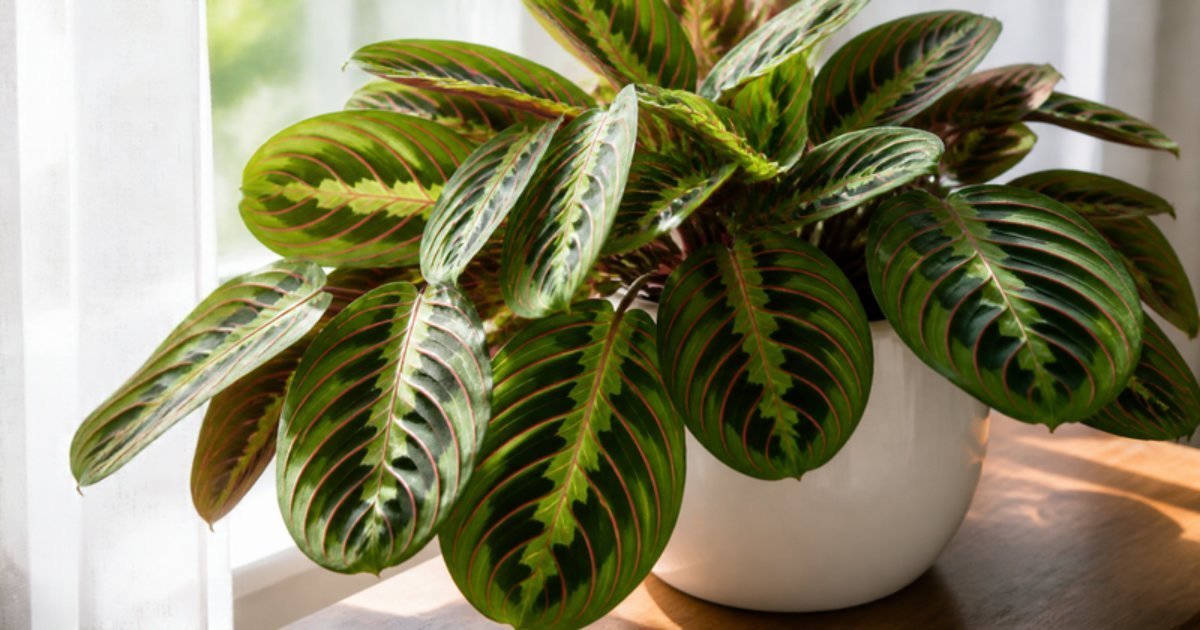
The true prayer plant is Maranta leuconeura, a low, spreading plant from the tropical forest floor of Brazil. Its oval leaves have bold patterns: the popular red prayer plant has bright red veins, ‘Lemon Lime’ has neon green stripes, and ‘Kerchoveana’ (often called rabbit’s foot) has dark green blotches on a pale leaf.
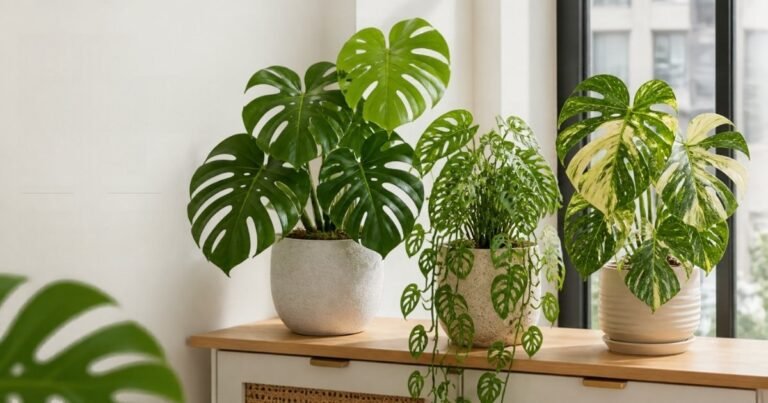
A lot of shops and even some big care guides also call Calathea “prayer plants”. They are cousins in the same family (Marantaceae), and their leaves move too, but they are not the same plant. This matters because the care is close but not identical.
| Feature | Maranta (true prayer plant) | Calathea |
|---|---|---|
| Growth habit | Low and spreading, stems may trail over the pot edge | Upright clumps of leaves on long stalks |
| Leaf movement | Leaves fold up almost vertically at night | Leaves lift slightly at night |
| Size indoors | Usually around 12 inches tall | Often 1 to 3 feet tall |
| Difficulty | Moderate, recovers well from mistakes | Fussier, especially about water quality and humidity |
| Propagation | Stem cuttings or division | Division only |
If your plant has long stems that flop over the sides of the pot and small leaves with a herringbone vein pattern, you almost certainly have a Maranta. Everything in this guide is written for Maranta, though most of it will also keep a Calathea happy.
Why prayer plant leaves fold up at night
This is the question most new owners ask first. Prayer plant leaves move on a daily rhythm. During the day they lie flat to catch light. In the evening they fold upward and stand almost straight up, which is where the name comes from. In the morning they open again.
The movement happens in a small swollen joint at the base of each leaf called a pulvinus. Cells in the joint take on and release water, which bends the leaf up or down. The University of Illinois Extension notes simply that a prayer plant “folds up its leaves in darkness” (Illinois Extension).
A few things are useful to know about this:
- Leaves that stay folded during the day can mean the plant is too dry, too cold or getting too much direct sun.
- Leaves that never fold at night usually mean the room never gets properly dark, for example a lamp on all evening next to the plant. It is not dangerous, just a clue about its light.
- A little rustling or movement when you look at it in the evening is normal and a sign of a healthy plant.
Light: where to put a prayer plant
Prayer plants grow under taller trees in the wild, so they like bright light that is filtered, not direct. Illinois Extension recommends “diffused sun, bright, indirect light” for this plant.
Good spots indoors:
- A few feet back from an east-facing window, where it gets gentle morning sun.
- Near a north window in a bright room.
- Beside a south or west window but out of the direct beam, or behind a sheer curtain.
Signs the light is wrong:
- Too much sun: leaf colors fade, red veins look washed out, and you may see dry, scorched patches.
- Too little light: long bare stems, small new leaves and dull patterns. It will survive in lower light but it won’t look its best. If your room is dim, a small LED grow light for a few hours a day helps a lot.
If you are working with a really dark apartment, a prayer plant is not the easiest choice. Our list of the easiest indoor plants to keep alive in low light has tougher options.
How to water a prayer plant
Watering is where most prayer plants go wrong, in both directions. They hate drying out completely, but they also rot quickly if the soil stays wet.
How often to water
There is no fixed schedule because it depends on your pot, soil, light and season. Use this check instead:
- Push a finger about one inch into the soil.
- If the top inch feels dry, water. If it still feels damp, wait a day or two and check again.
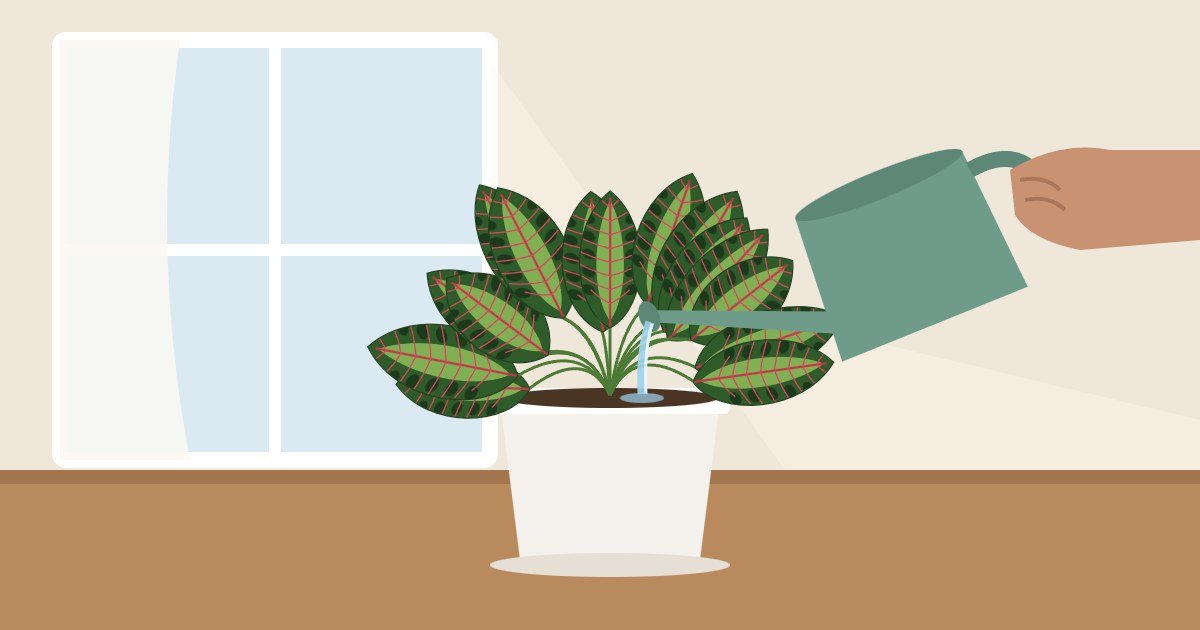
- Water slowly over the soil until it runs out of the drainage holes.
- Empty the saucer after 10 to 15 minutes so the roots never sit in water.
In practice that often works out to about once a week in summer and less often in winter, but always check the soil first. A cheap moisture meter is handy if you find the finger test hard to judge.
Water on the soil, not the crown
Aim the water at the soil and keep it off the center of the plant where stems join. Illinois Extension warns: “Do not allow water to stand on the crowns; the stems rot easily.” Water sitting on leaves can also encourage leaf spot.
Use soft water
Prayer plants are sensitive to chemicals in some tap water, especially fluoride and chlorine, and to hard water. These can build up in the soil and show up as brown, burnt-looking leaf tips. Easy fixes:
- Use filtered, distilled or collected rainwater.
- Or fill your watering can the night before so some of the chlorine can escape. (This does not remove fluoride, so switch to filtered water if tips keep browning.)
- Every few months, water heavily and let it run through to flush out built-up salts.
Watering by season
| Season | What to do |
|---|---|
| Spring and summer | Keep the soil evenly moist. Water as soon as the top inch is dry. |
| Fall | Growth slows. Start checking the soil more before watering. |
| Winter | Let the soil dry a little more between waterings, as Illinois Extension advises, but don’t let the pot dry out completely. |
Humidity: the secret to green, uncurled leaves
Prayer plants come from humid forests, and dry indoor air is the main reason leaves curl and edges go crispy, especially in winter when the heating is on. Aim for around 50% humidity or higher. A cheap digital hygrometer will tell you what you actually have.
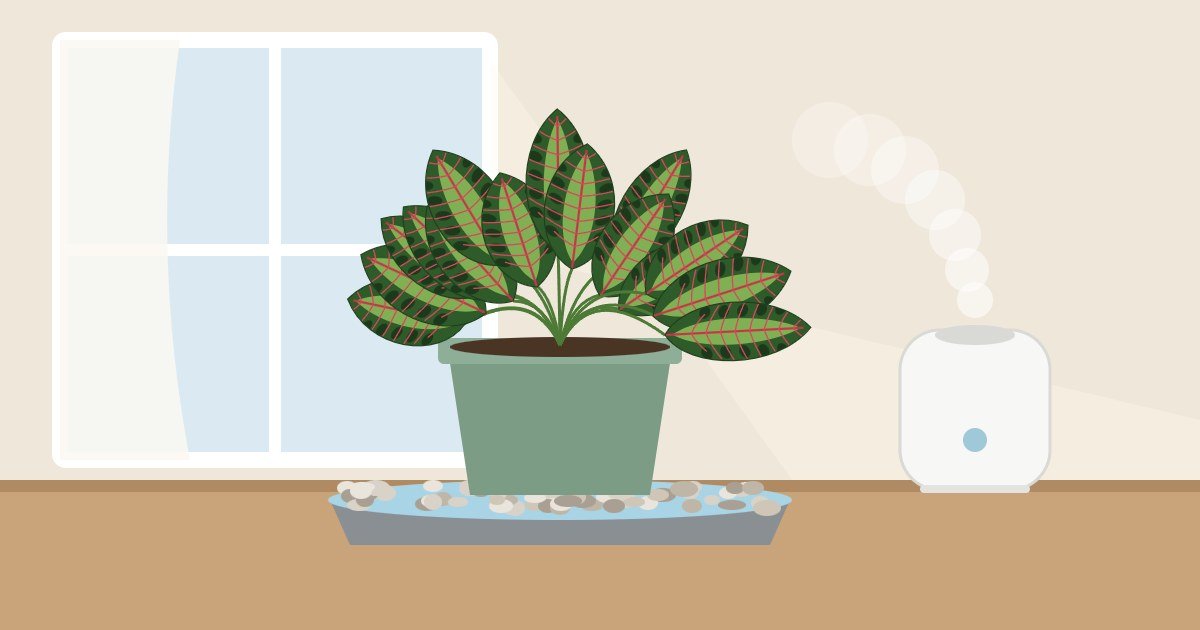
Ways to raise humidity, from most to least effective:
- A small humidifier near the plant. This is the most reliable fix, especially in winter.
- Group plants together. They release moisture and create a more humid pocket of air.
- A pebble tray: a shallow tray filled with pebbles and water, with the pot sitting on the pebbles above the waterline.
- A naturally humid room such as a bright bathroom or kitchen.
Should you mist a prayer plant?
Misting raises humidity for only a few minutes, and water that sits on the leaves can encourage leaf spot problems. It won’t hurt occasionally, but it is not a real fix for dry air. A humidifier or pebble tray does much more.
Temperature
Prayer plants like the same temperatures most people do: roughly 60 to 80°F. Keep them away from:
- Cold drafts from windows and doors in winter.
- Heating vents and radiators, which dry the air and the leaves.
- AC vents blowing directly on them.
Temperatures below about 55°F can damage the leaves, so bring any plant you summered outdoors back in well before fall nights get cold.
Best soil for a prayer plant
A prayer plant needs soil that holds some moisture but drains quickly enough that the roots get air. Plain regular potting mix works, which is what Illinois Extension recommends, but many growers loosen it up a little.
A simple mix you can make at home:
- 2 parts regular indoor potting mix
- 1 part perlite
- 1 part orchid bark or coco coir
Always use a pot with drainage holes. Plastic or glazed ceramic pots hold moisture longer, which suits this plant better than unglazed terracotta in most homes.
Fertilizing
Prayer plants are light feeders. Use a balanced liquid houseplant fertilizer diluted to half strength about once a month in spring and summer. Stop feeding in fall and winter when growth slows.
Too much fertilizer causes salt buildup, which burns leaf tips and edges just like hard tap water does. If you see crusty white deposits on the soil surface or pot rim, flush the soil with plenty of plain water.
Repotting and pruning
Prayer plants have shallow roots and are happy slightly snug in their pot. Repot every one to two years in spring, or when roots circle the bottom or come out of the drainage holes.
- Water the day before so the root ball slides out easily.
- Choose a pot only 1 to 2 inches wider than the old one. A pot that is too big holds extra wet soil and invites rot.
- Loosen the outer roots gently and set the plant at the same depth it was growing.
- Fill around it with fresh mix, firm lightly and water well.
For pruning, snip off any fully yellow or brown leaves at the base of the stalk. If stems get long and leggy, cut them back just above a leaf node (the small joint where a leaf meets the stem). New growth will usually appear from that node, giving a bushier plant.
How to propagate a prayer plant
The easiest time to propagate is spring or early summer.
Stem cuttings
- Find a healthy stem and locate a node, the slightly swollen joint where a leaf attaches.
- Cut about a quarter inch below the node with clean scissors. Keep two or three leaves on the cutting.
- Put the cutting in a glass of filtered water, or in a small pot of moist potting mix with perlite.
- Keep it in bright, indirect light and warm. Change the water every few days.
- Once roots are an inch or two long, pot it up in soil.
Division
When you repot a large plant, you can gently pull the root ball into two or three sections, each with its own stems and roots, and pot them separately. This gives you full-size plants straight away.
Prayer plant problems: quick fix index
Most prayer plant problems trace back to water, humidity or light. Use this table to match the symptom to the likely cause.
| Symptom | Most likely cause | What to do |
|---|---|---|
| Leaves curling inward | Dry soil or low humidity | Check soil moisture, then raise humidity with a humidifier or pebble tray. |
| Crispy brown edges or tips | Low humidity, fluoride or chlorine in tap water, or too much fertilizer | Switch to filtered water, flush the soil, raise humidity. |
| Yellow leaves, soggy soil | Overwatering | Let the top inch dry before watering again. Check the roots if it continues. |
| Yellow lower leaves, dry soil | Underwatering or natural aging | Water more consistently. One old leaf yellowing now and then is normal. |
| Faded, washed-out leaves | Too much direct sun | Move it back from the window or add a sheer curtain. |
| Leggy stems, small leaves | Not enough light | Move closer to a bright window or add a grow light. |
| Drooping, mushy stems at the base | Root or crown rot | Stop watering, check roots, trim rotten parts and repot in fresh mix. |
| Fine webbing, speckled leaves | Spider mites | Shower the leaves, then treat with insecticidal soap and raise humidity. |
If you suspect rot, our guide on how to fix root rot in indoor plants walks through checking and trimming the roots step by step.
Pests to watch for
Spider mites love warm, dry air, so they are the most common pest on prayer plants in winter. Mealybugs (white, cottony spots in leaf joints) and aphids also turn up. Check under the leaves when you water. Wipe off small infestations with a cotton swab dipped in rubbing alcohol, and treat bigger ones with insecticidal soap or neem oil, repeating every week until they are gone.
Common prayer plant care mistakes
- Letting it dry out completely. One bone-dry spell is often enough to curl and crisp the leaves.
- Watering on a schedule instead of checking the soil.
- Putting it in direct afternoon sun to “help it grow”.
- Using a pot without drainage holes.
- Repotting into a much bigger pot.
- Ignoring humidity in winter, when the heating dries the air most.
- Using hard or heavily treated tap water when tips keep browning.
Are prayer plants safe for cats and dogs?
Yes. The ASPCA lists the prayer plant as non-toxic to dogs, cats and horses (ASPCA). That makes it a good choice for homes with curious pets. Eating a lot of any plant can still upset a pet’s stomach, so it is best to keep it out of easy reach of chewers. For more plant-by-plant guides, browse our houseplant care section.
Prayer plant care FAQ
Are prayer plants hard to keep alive?
They are moderately easy. They are less forgiving than a pothos or snake plant about dry soil and dry air, but they recover well once you fix the problem. If you keep the soil lightly moist, use soft water and give them some humidity, most beginners do fine.
How often should I water my prayer plant?
Water when the top inch of soil feels dry. For many homes that is roughly weekly in summer and less often in winter, but checking the soil is far more reliable than following a schedule.
What is the best place to put a prayer plant?
A bright room with indirect light, such as a few feet from an east window, away from heating vents and cold drafts. A bright bathroom can work well because of the extra humidity.
Should I mist my prayer plant?
Misting only raises humidity for a few minutes and wet leaves can develop leaf spot. A humidifier, pebble tray or grouping plants together works much better.
Do prayer plants flower?
Yes, but not often indoors. When they do, they produce small white flowers with purple markings on thin stems. The flowers are tiny, and the plant is grown mostly for its leaves.
Why are my prayer plant leaves not closing at night?
Usually because the room never gets truly dark, for example lamps or streetlight near the plant. Leaves that stay closed during the day are more of a concern and usually point to dry soil, cold or too much sun.