Is String of Pearls Toxic to Cats? Symptoms and Safer Trailing Plants
Yes, string of pearls is toxic to cats. The ASPCA says that if a cat eats it, the plant can cause stomach upset, mostly vomiting, along with lethargy. It is rarely life threatening, but you should still keep it well out of reach and call your vet or a pet poison line if your cat chews on it.
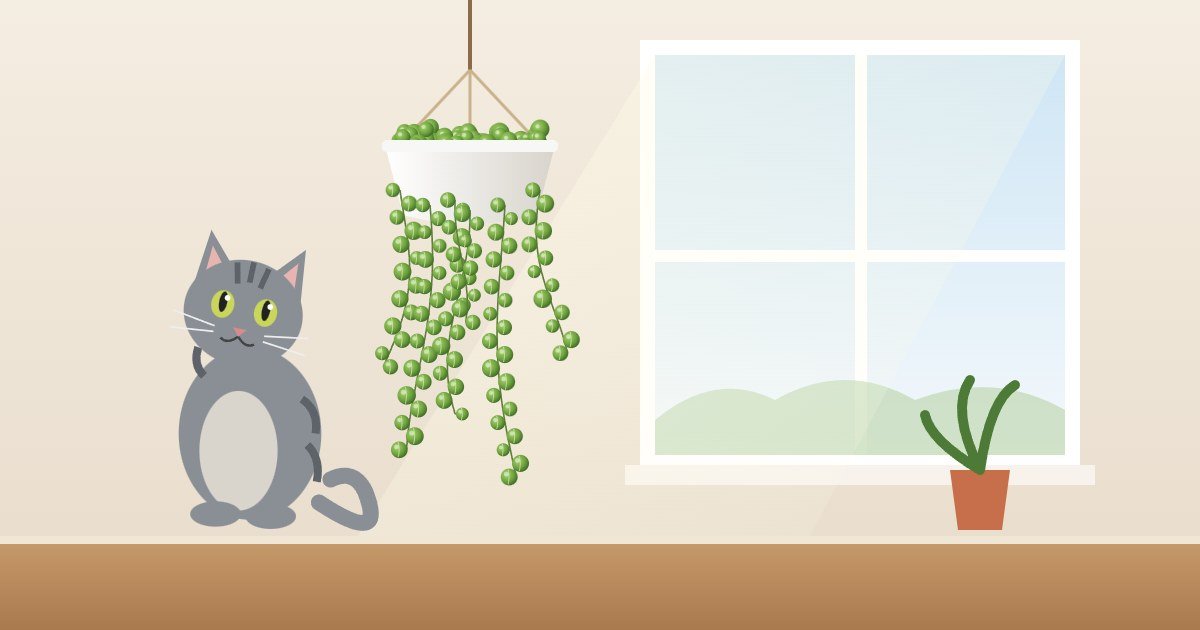
String of pearls (Senecio rowleyanus) is one of the most popular trailing succulents, and its dangling strands of green beads look a lot like a cat toy. This guide explains what makes it risky, which symptoms to watch for, exactly what to do if your cat ate some, how to display it safely, and five cat-safe trailing plants you can grow instead.
Is string of pearls toxic to cats? The short answer
Yes. The ASPCA’s guide to succulents and pets names string of pearls as a plant to keep away from pets, noting that eating it can cause stomach upset, predominantly vomiting, and lethargy. The Pet Poison Helpline, writing for PetMD, also lists it among the common poisonous succulents.
So if you are asking “can cats eat string of pearls,” the answer is no. A nibble is unlikely to be an emergency for a healthy adult cat, but it is not a safe snack, and a cat that keeps coming back to the plant can keep making itself sick.
Why string of pearls is risky for cats
String of pearls belongs to the Senecio genus. Many plants in this group contain pyrrolizidine alkaloids, which the Merck Veterinary Manual describes as liver toxins that usually cause problems after repeated exposure rather than a single bite. That research is mostly about livestock grazing on wild Senecio, and the exact compound behind string of pearls’ effect on cats has not been confirmed. What vets do agree on is the practical part: it upsets the stomach, and repeated chewing is worth preventing.
The plant also has a few features that make it more tempting than most succulents:
- The round “pearls” move and swing when touched, which triggers a cat’s play instinct.
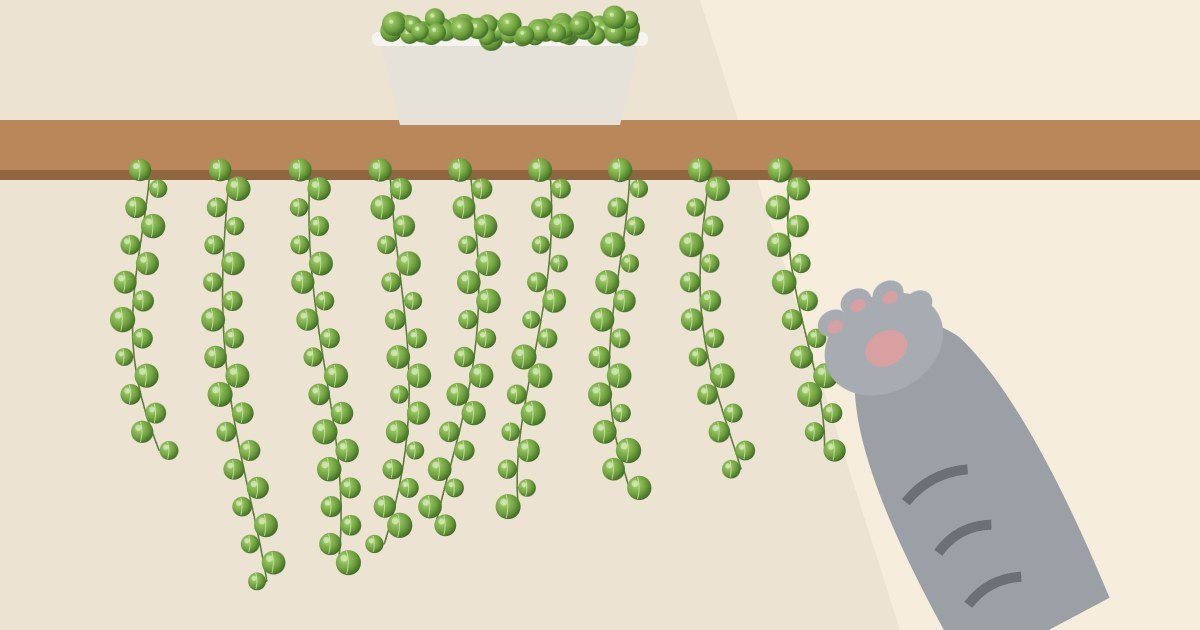
- Long strands often hang down to cat height from shelves and window sills.
- The beads are small and easy to bite off and swallow.
- The sap can irritate skin, so a cat that chews the stems may also paw at its mouth.
Symptoms of string of pearls poisoning in cats
Most cats show signs within a few hours of chewing the plant. Here is what to look for, in plain words.
| What you might see | What it means | How worried to be |
|---|---|---|
| Vomiting (sometimes with green bits) | The stomach is reacting to the plant | Call your vet for advice, especially if it repeats |
| Drooling or pawing at the mouth | Sap is irritating the mouth | Rinse gently and watch closely |
| Lethargy, hiding, low energy | Common after the stomach upset | Call your vet if it lasts beyond a day |
| Diarrhea | Gut irritation | Keep water available and call your vet |
| Not eating for 24 hours or more | A sign the cat feels unwell | See a vet, cats should not go long without food |
| Repeated vomiting, weakness or collapse | A more serious reaction | Treat as an emergency and go to a vet now |
Kittens, senior cats and cats with existing liver or kidney problems can react more strongly, so be quicker to call the vet with them.
What to do if your cat ate string of pearls
- Move your cat away from the plant and pick up any loose pearls or broken strands from the floor.
- Check the mouth. Gently remove any plant pieces you can see and wipe the lips and gums with a damp cloth.
- Do not try to make your cat vomit. Home remedies like salt or hydrogen peroxide can hurt cats.
- Call your vet or a pet poison line. The ASPCA Animal Poison Control Center is (888) 426-4435 and the Pet Poison Helpline is (855) 764-7661. Both may charge a consultation fee.
- Have the details ready: your cat’s weight, roughly how much was eaten, when it happened, and any symptoms so far.
- Watch your cat for the next 24 hours. Note any vomiting, diarrhea or changes in appetite and energy, and follow your vet’s advice.
Bring a photo of the plant or a small piece in a bag if you go to the clinic. It helps the vet confirm what your cat ate.
How to keep string of pearls away from cats
You do not have to give up the plant, but it needs to live somewhere your cat truly cannot reach. Cats are excellent jumpers, so “high up” has to mean high.
Hang it from the ceiling, not a shelf
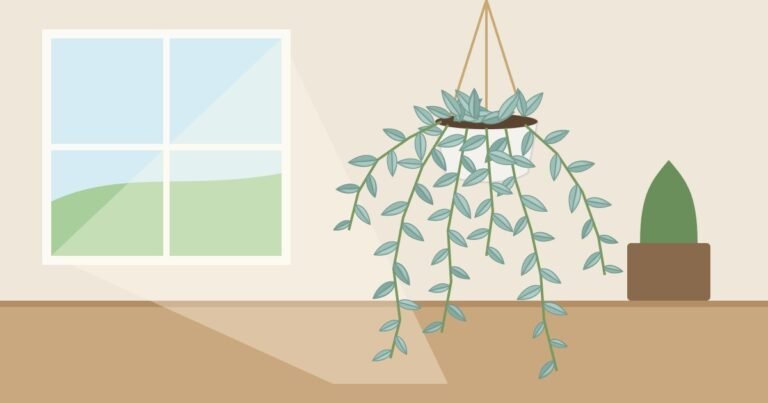
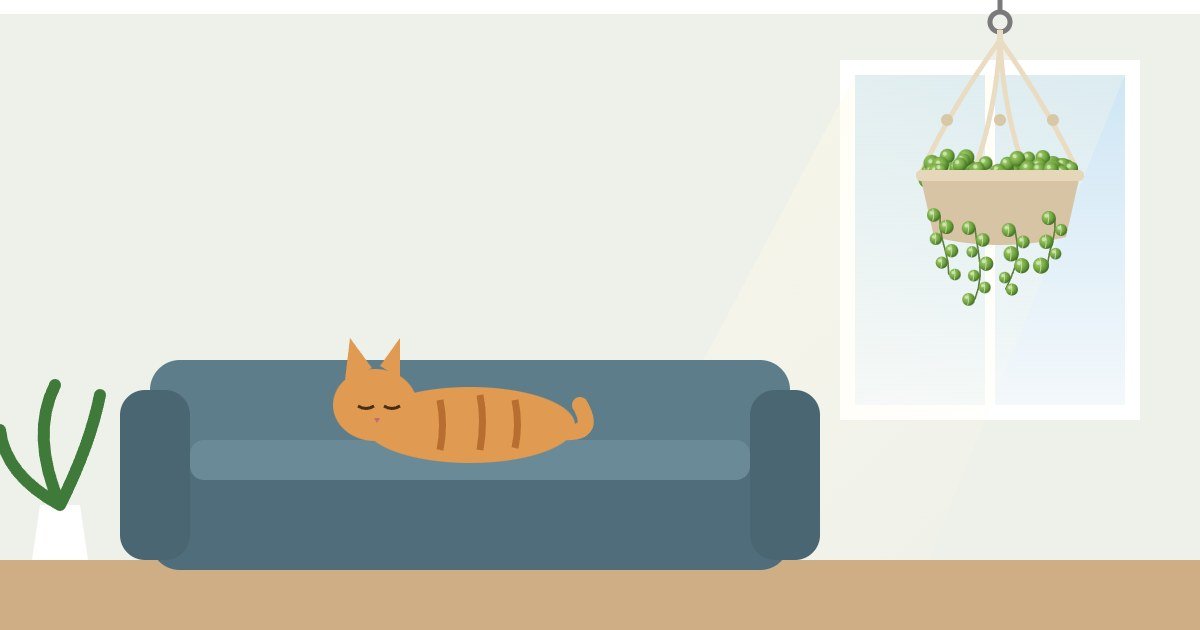
A ceiling hook with a hanging planter is the best option. Place it at least a few feet away from sofas, bookcases, cat trees and window sills, because cats use furniture as a launch pad. A bright spot near a window suits string of pearls well anyway.
Keep the strands trimmed
Long strands are the problem. Trim them so they stay well above any surface your cat can stand on. You can root the cuttings in another pot for a room your cat never enters.
Clean up dropped pearls
Ripe pearls fall off as the plant grows. Check the floor under the planter every few days so your cat does not find them first.
Make the area less interesting
A pet-safe cat deterrent spray on nearby surfaces can discourage climbing. Giving your cat its own cat grass and plenty of play time also reduces the urge to chew houseplants.
5 cat-safe trailing plants to grow instead
If you want the same cascading look without the worry, these trailing plants are listed as non-toxic to cats by the ASPCA or university extension services such as UF/IFAS and UT Extension.
| Plant | Why it works | Light |
|---|---|---|
| Burro’s tail (Sedum morganianum) | Chunky trailing succulent stems, very similar vibe to string of pearls | Bright light |
| Hoya (wax plant) | Long vining stems and waxy leaves, the ASPCA lists it as non-toxic | Bright, indirect light |
| Swedish ivy (Plectranthus) | Fast growing and trails nicely from a hanging pot | Medium to bright, indirect light |
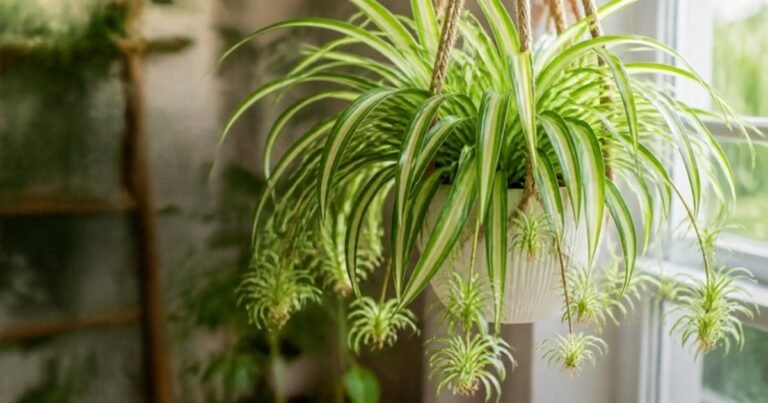
| Spider plant | Arching leaves and dangling babies, very easy for beginners | Medium to bright, indirect light |
| Boston fern | Full, lush fronds that spill over a hanging basket | Bright, indirect light and humidity |
Spider plants are a good starting point, and you can grow more from the little offsets. See our guide to spider plant babies. Keep in mind that “non-toxic” means not poisonous, not edible. A cat that eats a lot of any plant can still vomit, so it is smart to hang these too.
Common mistakes cat owners make with string of pearls
- Putting it on a high shelf and calling it safe. Strands grow down, and cats climb up. Shelves rarely work.
- Assuming a cat will “learn.” Many cats keep batting at moving strands no matter how often they get sick.
- Forgetting the fallen pearls. Loose beads on the floor are the easiest ones for a cat to eat.
- Waiting to see if symptoms pass. A quick call to your vet costs little and gets you real advice for your cat.
- Mixing it up with other “string of” plants. Different trailing plants have different safety ratings, so check each one by its scientific name.
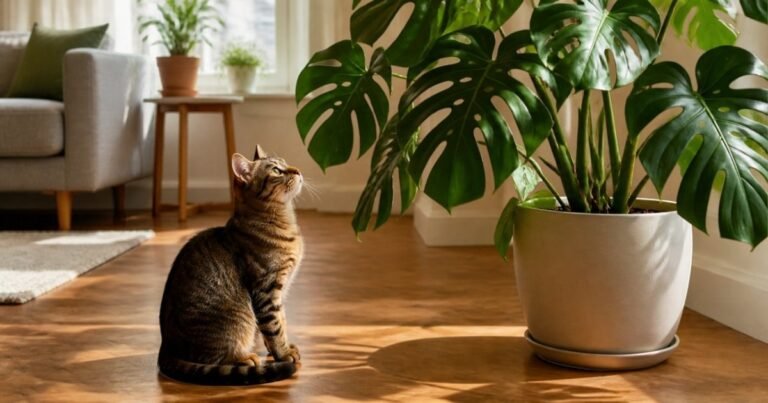
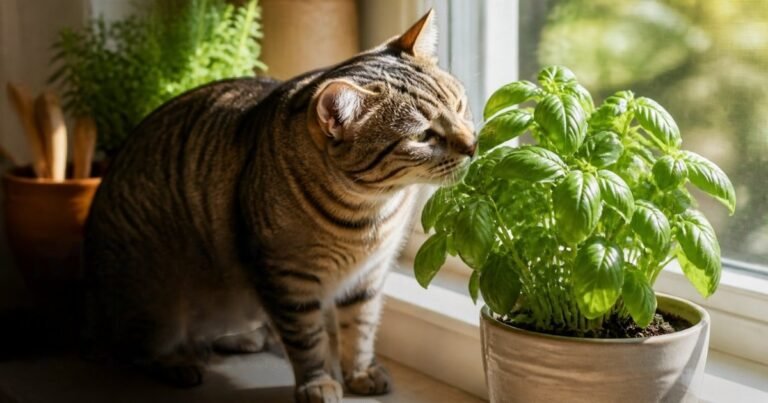
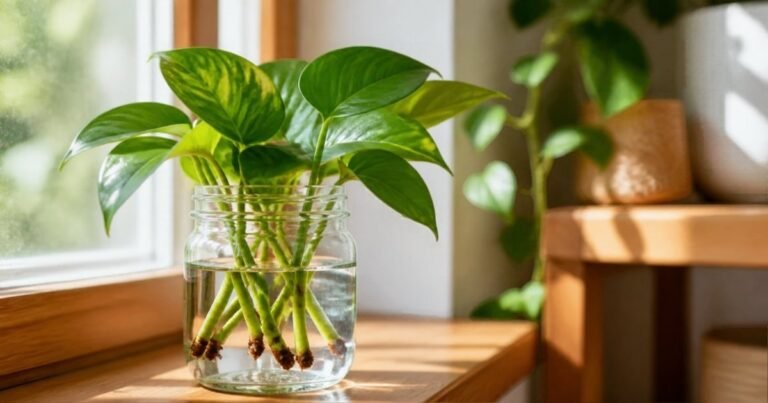
If you have other plants in the house, check them too. We cover whether pothos is toxic to cats, monstera and cats, and whether basil is safe for cats. You can find more in our houseplant care guides.
FAQ
Is string of pearls toxic to cats if they only lick it?
Licking is less likely to cause problems than chewing, but the sap can irritate the mouth. Wipe your cat’s mouth with a damp cloth and watch for drooling or vomiting. Call your vet if anything seems off.
Can a cat die from eating string of pearls?
Serious reactions are uncommon. Sources like the ASPCA describe mainly vomiting and lethargy. Still, very young, old or sick cats, or cats that eat a large amount, can get dehydrated from vomiting, so always contact a vet.
How long do symptoms last?
Mild stomach upset often settles within a day. If vomiting continues, your cat stops eating, or it seems weak, take it to a vet rather than waiting.
Is string of pearls toxic to dogs too?
Yes. The ASPCA groups it with succulents to keep away from pets in general, and dogs can show the same vomiting and lethargy.
Is string of turtles safe for cats?
String of turtles is a different plant from string of pearls. It is a peperomia (Peperomia prostrata), and peperomias are listed as non-toxic by UF/IFAS and UT Extension. Always check a specific plant by its scientific name before bringing it home.