Genovese Basil vs Other Basil Types (Which to Grow Indoors)
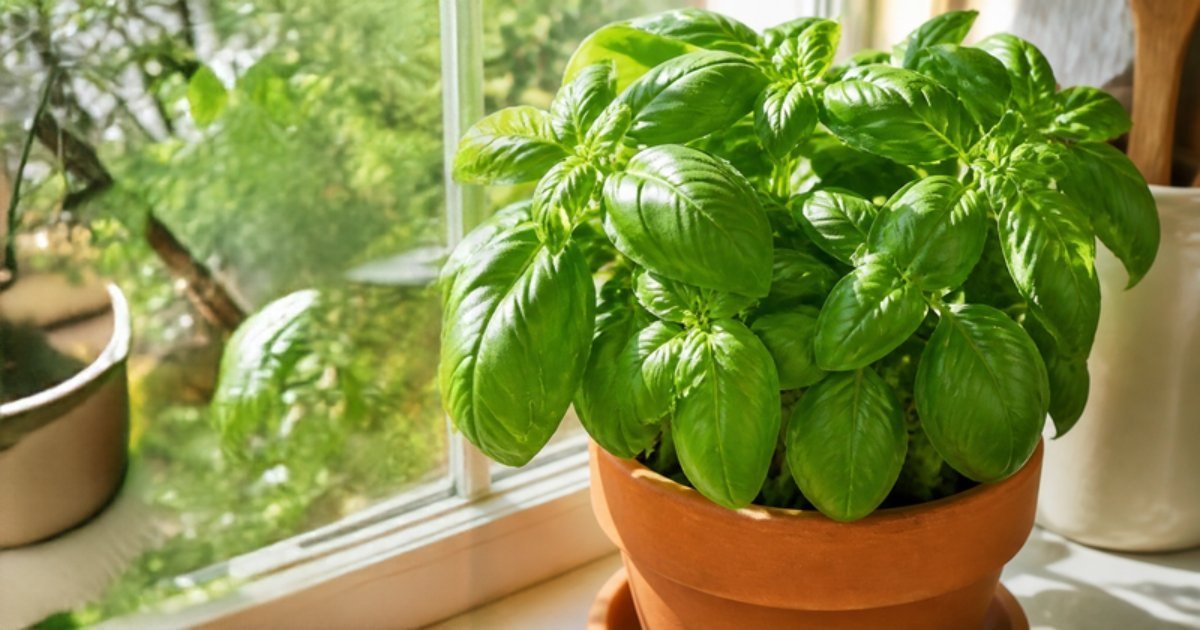
Genovese basil is the classic Italian strain of sweet basil, the one with big, glossy, slightly cupped leaves that cooks use for pesto. For most people growing herbs indoors, it is the best basil to start with because it has the flavor you expect from “basil” and grows fast in a sunny window. If your space is tight or your light is weak, a compact Greek basil is the easier choice, and purple or Thai types are worth adding once you have the basics down.
Below I compare Genovese with the other basil types you will see on seed racks, so you can pick the right one for a windowsill, a grow light shelf or a small balcony.
What Is Genovese Basil?
Genovese basil is a cultivar of sweet basil (Ocimum basilicum) that comes from Italy and takes its name from Genoa, the home of pesto alla Genovese. In Italy, basil grown around Genoa under strict rules is sold under a protected name, Basilico Genovese DOP, but the seeds you buy in the US labeled “Genovese” are simply this traditional Italian type.
Here is what sets it apart:
- Leaves: bright green, shiny and cupped, often up to about 3 inches long, according to Gardening Know How.
- Flavor: sweet and peppery with a hint of clove and anise. It is a little more aromatic than generic “sweet basil.”
- Size: 2 to 3 feet tall outdoors in good soil. In a pot indoors it usually stays smaller, especially if you harvest often.
- Time to harvest: you can pick a few leaves once the plant has several sets of true leaves, and full size takes roughly 60 to 90 days from seed.
Genovese Basil vs Sweet Basil: Are They the Same?
Mostly, yes. “Sweet basil” is the common name for the whole species Ocimum basilicum, and Genovese is one named variety inside it. When a seed packet just says “sweet basil,” you get a general Italian type that may be a little less uniform. When it says “Genovese,” you get a selected strain known for large leaves, strong pesto flavor and less bitterness as it ages.
For cooking, you can swap them one for one. For growing, a named Genovese variety gives you more predictable plants, which matters when you only have room for one or two pots.
Basil Types Compared for Indoor Growing
This is the table I wish more basil guides had. It focuses on what matters in a small space: how big the plant gets, how much light it wants and what you would actually cook with it.
| Basil type | Leaves | Flavor | Typical size | Indoor fit | Best for |
|---|---|---|---|---|---|
| Genovese | Large, glossy, cupped, bright green | Sweet, peppery, clove | 2 to 3 ft (smaller in pots) | Good with 6+ hours of strong light or a grow light | Pesto, caprese, pasta |
| Generic sweet basil | Medium to large, green | Classic mild basil | 18 in to 3 ft | Good, similar to Genovese | Everyday cooking |
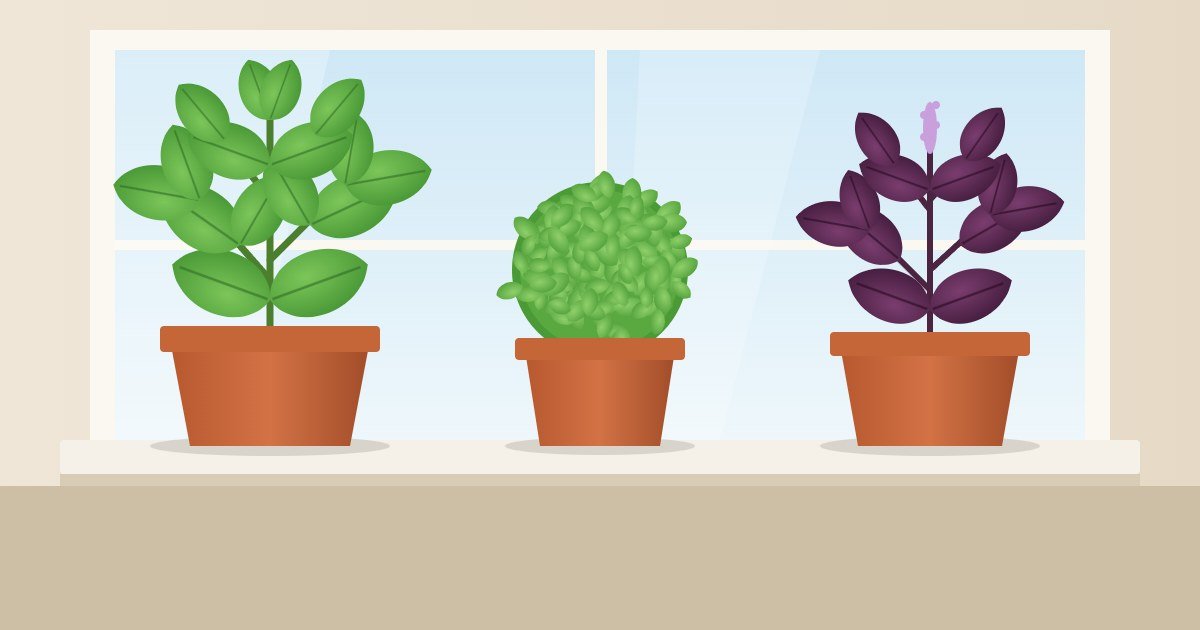
| Greek / dwarf bush basil (such as ‘Spicy Globe’) | Tiny, dense, mounded | Strong, slightly spicy | About 1 ft | Excellent, fits a narrow sill | Sprinkling whole leaves on salads, tomatoes, pizza |
| Purple basil (‘Dark Opal’, ‘Purple Ruffles’) | Dark purple, smooth or ruffled | Similar to sweet basil, a bit milder | 18 to 24 in | Fair, often slower and needs bright light to keep its color | Garnish, salads, herb vinegar |
| Thai basil (‘Siam Queen’) | Narrower, green with purple stems | Licorice, anise | About 2 ft | Good | Curries, stir fries, pho |
| Lemon or lime basil | Small, narrow, light green | Citrus | 1 to 2 ft | Good | Fish, tea, dressings |
| Cinnamon basil (‘Mexican Spice’) | Green with purple stems | Warm, cinnamon | 1 to 2 ft | Good | Fruit, baking, tea |
Variety descriptions and heights come from the Clemson Cooperative Extension basil fact sheet and the University of Florida IFAS basil guide.
Greek Basil: The Small-Space Pick
Greek basil (often sold as ‘Dwarf Greek’ or listed as Ocimum basilicum var. minimum) grows into a tight, round mound of tiny leaves about a foot tall. It does not sprawl or flop toward the window as much as Genovese, so it suits narrow sills and small apartments. The tradeoff is harvesting: you snip whole sprigs rather than picking big leaves, and it takes a lot of them to make pesto.
Purple Basil and Its Flower
Purple basil varieties like ‘Dark Opal’ and ‘Purple Ruffles’ look great in a pot and taste close to sweet basil. Indoors they tend to grow a little slower, and in weak light the leaves can turn greenish. Like all basils, they send up flower spikes, usually in shades of pink to lavender. The purple basil flower is edible and pretty in a salad, but once a plant starts flowering it puts less energy into leaves, so pinch most spikes off if you grow it for cooking.
What About Wild Basil?
“Wild basil” usually refers to Clinopodium vulgare, a wildflower in the mint family with pinkish purple flowers, native to Britain and much of Eurasia, as described by the RHS. Despite the name, it is not a true basil (it is not in the genus Ocimum), and it is grown for wildlife gardens rather than for the kitchen. If you want basil flavor, stick with the types in the table above.
Which Basil Should You Grow Indoors?
- You want pesto and big leaves: Genovese basil. Give it your sunniest spot or a grow light.
- You have a narrow or partly shaded sill: Greek or another dwarf bush basil. It stays compact and is less likely to flop over than large-leaf types.
- You cook a lot of Southeast Asian food: Thai basil, alongside one Genovese pot.
- You want something decorative: a purple basil, kept in your brightest window.
If you have room for only one pot, I would pick Genovese. It covers the most recipes and is the type most guides and seed companies are built around. When you shop for seeds, look for a named Genovese strain from a reputable seed company, and if downy mildew has been a problem for you before, choose a resistant variety such as ‘Prospera’, which Clemson Extension lists as resistant.
How to Grow Genovese Basil Indoors
New to indoor herbs? My beginner indoor herb garden guide covers pots, soil and setup. For Genovese basil specifically, follow these steps:
- Pick a pot with drainage. A 6 to 8 inch pot works for one plant. Use a light, fresh potting mix, not garden soil.
- Sow seeds shallowly. Press 3 to 4 seeds onto the surface and cover with a thin layer of mix. At around 70°F, seeds usually sprout in 5 to 10 days (Clemson Extension). Thin to the strongest seedling once it has true leaves.
- Give it a lot of light. Basil wants 6 to 8 hours of direct sun. A south-facing window is best. In winter or in a dim apartment, put it 6 to 12 inches under an LED grow light for about 12 to 14 hours a day.
- Keep it warm. Daytime temperatures in the 70s and nights above 50°F keep it growing. Cold drafts and chilly glass in winter slow it down, and UF IFAS notes that many basils blacken and drop leaves below 40°F.
- Water when the top inch is dry. Water at the base until it drains, then empty the saucer. Soggy soil is a quick way to lose basil.
- Feed lightly. A half-strength balanced liquid fertilizer every 3 to 4 weeks is plenty. Too much fertilizer gives big, bland leaves.
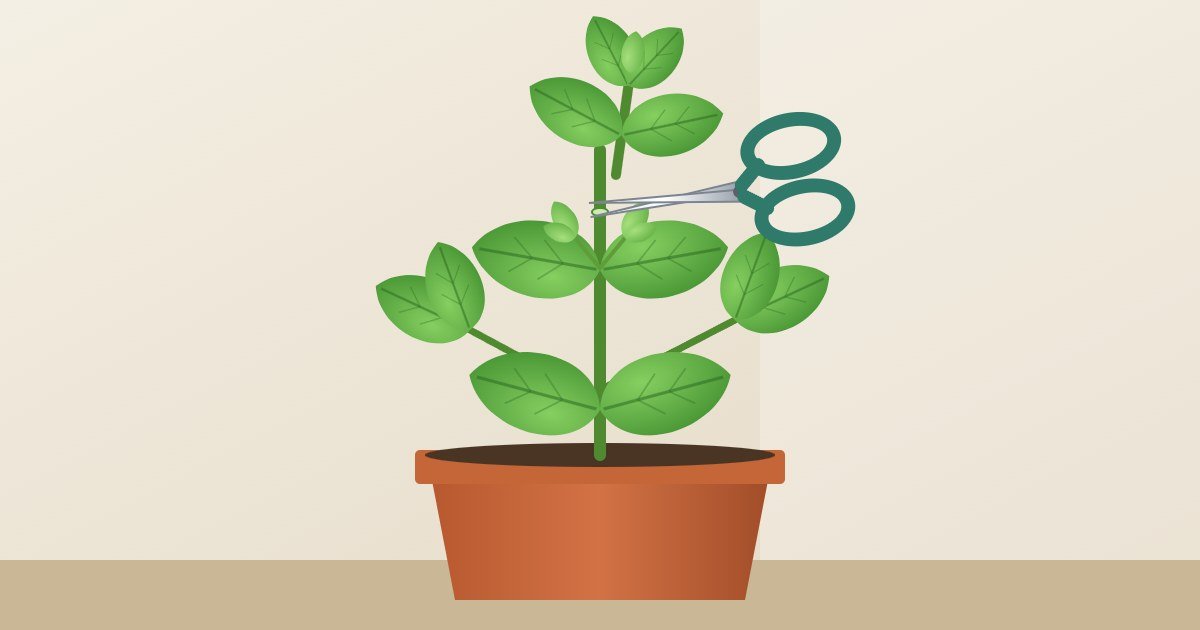
- Pinch and harvest from the top. Once the plant is about 6 inches tall, cut the stem just above a pair of leaves (see below).
How to Pinch Genovese Basil for a Bushy Plant
Look at the stem and find a pair of leaves with two tiny shoots tucked in where the leaves meet the stem. Cut or pinch just above that pair. Those two shoots grow into two new stems, so every cut doubles your branches. Keep doing this every week or two and pinch off any flower buds as soon as you see them, which both Clemson and UF recommend for the best leaf flavor. Never strip more than about a third of the plant at once.
Common Mistakes With Indoor Basil
- Not enough light. Tall, floppy stems with big gaps between leaves mean the plant is stretching. Move it closer to the window or add a grow light.
- Picking single leaves from the bottom. This leaves a bare stem with a tuft on top. Harvest from the top, above a leaf pair, instead.
- Letting it flower. Flowering shortens the plant’s life and can make leaves less pleasant. Pinch buds early.
- Overwatering. Wilting in wet soil, yellow lower leaves or a sour smell point to too much water. If roots turn brown and mushy, read my guide to fixing root rot in indoor plants.
- Keeping it on cold glass. In winter, pull the pot a few inches back from the window at night.
- Ignoring gray fuzz under leaves. Yellowing leaves with gray or purplish fuzz underneath can be downy mildew. UF IFAS notes that sweet basils are very susceptible, while red, Thai and lemon types are less so. Remove affected leaves, improve airflow and keep leaves dry.
Is Genovese Basil Safe Around Cats and Dogs?
Yes. The ASPCA lists basil (Ocimum basilicum) as non-toxic to cats and dogs, and Genovese is a variety of that species. That is good news if your herbs share a windowsill with pets, though concentrated essential oils are a different story. See is basil toxic to cats for the full breakdown of which herbs are safe and which to avoid.
FAQ
Is Genovese basil the same as regular basil?
Genovese is a specific variety of sweet basil, which is what most people mean by “regular basil.” It has larger, glossier leaves and a slightly stronger, more aromatic flavor than generic sweet basil.
What is Genovese basil best used for?
Pesto is the classic use. It is also the go-to basil for caprese salad, tomato sauces, pizza and anything where you want fresh leaves added at the end of cooking.
Can you grow Genovese basil indoors all year?
Yes, if it gets enough light and warmth. A sunny south window can work in summer, but most homes need a grow light in winter to keep it from getting leggy. Many growers start a fresh pot every few months so they always have a young, productive plant.
Does Genovese basil come back every year?
No. It is grown as an annual and is very sensitive to cold. Outdoors it dies with the first frost. Indoors it can live longer, but it tends to get woody and flower over time, so replacing it with new seedlings or rooted cuttings works better.
What is the difference between Greek basil and Genovese basil?
Greek basil forms a small, dense mound about a foot tall with tiny leaves and a stronger, slightly spicy taste. Genovese grows much taller with large leaves. Greek basil is easier to fit on a small sill, while Genovese gives you more leaf per plant for pesto.
Can you eat basil flowers?
Yes, basil flowers are edible and taste like a stronger version of the leaves, so use them sparingly. Just keep in mind that letting the plant flower reduces new leaf growth.
Want more herb guides like this one? Browse the herb gardening section, or see my tips for growing food in an apartment.