Dracaena Care Guide: Light, Water, Varieties and Common Problems
A dracaena is one of the easiest floor plants you can grow indoors: give it bright, indirect light, let the top 2 inches of soil dry before watering, keep it above 60°F and water with filtered or rain water to avoid brown tips. Most problems come from too much water or from fluoride and salts in tap water, not from neglect.
This dracaena care guide covers everything in one place: a care-at-a-glance table, how to tell the popular varieties apart (corn plant, Janet Craig, marginata, Lemon Lime and Warneckii), a seasonal watering plan, why the tips turn brown, pet safety and a problem index you can use when something goes wrong.
Dracaena care at a glance
If you only read one section, make it this one. These ranges come from the Royal Horticultural Society, the University of Washington’s Miller Horticulture Library and grower guidance, and they suit every common indoor dracaena.
| Need | What dracaena wants | Quick tip |
|---|---|---|
| Light | Bright, indirect light; tolerates medium light | Keep out of hot afternoon sun, which scorches leaves |
| Water | When the top 1 to 2 inches of soil are dry | Water less in winter; never leave it in a full saucer |
| Water type | Filtered, distilled or rain water | Tap water fluoride and salts cause brown tips |
| Temperature | 65°F to 80°F is ideal | Avoid drafts and anything below about 55°F |
| Humidity | Average home humidity is fine; 40% or more is better | Group plants or use a pebble tray in dry winter air |
| Soil | Loose, fast-draining indoor potting mix | Mix in orchid bark for drainage |
| Fertilizer | Diluted liquid feed in spring and summer | Skip feeding in fall and winter |
| Repotting | Every 2 to 3 years, in spring | Go up only 1 to 2 inches in pot size |
| Pets | Toxic to cats and dogs (ASPCA) | Keep out of reach of chewers |
How to take care of a dracaena plant: the basics
Light
Dracaenas grow best in bright, indirect light, such as a few feet back from an east or west window or beside a south window with a sheer curtain. They are famous for coping with lower light, which is why you see corn plants in offices, but low light means slow growth, smaller new leaves and faded stripes on variegated types. Direct summer sun through glass can bleach or scorch the leaves, so avoid parking one right against a hot window.
A good rule: if you can comfortably read a book at that spot in the middle of the day without turning on a lamp, a dracaena will be happy there. Varieties with bold yellow or white stripes, like Lemon Lime and Warneckii, need the brighter end of the range to keep their color.
Water
Water when the top 1 to 2 inches of soil feel dry. Push a finger into the mix, or use a cheap moisture meter if you find it hard to judge. Water slowly until a little runs out of the drainage hole, then empty the saucer after 15 minutes. Dracaenas store water in their thick canes and roots, so they forgive a missed watering far more readily than soggy soil.
Temperature and humidity
Normal room temperatures between 65°F and 80°F suit dracaena well. Keep plants away from cold drafts, exterior doors in winter and heating vents that blast hot dry air. Average indoor humidity is fine, but very dry winter air can make leaf tips crispier. Grouping plants or setting the pot on a tray of wet pebbles helps a little; misting does very little and is not needed.
Soil and pot
Use a loose, fast-draining indoor potting mix and a pot with a drainage hole. Adding a handful of orchid bark opens up the mix so the roots get air. A note on perlite: the University of Missouri IPM program points out that perlite contains fluoride, which dracaenas are sensitive to. If your plant keeps getting brown tips, choose a perlite-free mix with bark or coarse coir for drainage instead.
Fertilizer
Feed once a month in spring and summer with a balanced liquid houseplant fertilizer mixed at half strength. Stop in fall and winter when growth slows. Overfeeding is a common cause of tip burn because extra fertilizer salts build up in the soil, so less is more with this plant.
Watering dracaena by season
Watering by the calendar is the fastest way to rot a dracaena. Use this as a starting point, then always check the soil before you water.
| Season | Typical frequency (medium pot, bright room) | What to watch for |
|---|---|---|
| Spring | Every 7 to 10 days | New leaves emerging; the plant starts using more water |
| Summer | Every 6 to 9 days | Faster drying in warm rooms and brighter light |
| Fall | Every 10 to 14 days | Growth slows; start stretching the gap |
| Winter | Every 2 to 3 weeks | Cool rooms dry slowly; soggy soil now is the main root rot risk |
Larger pots, cooler rooms and lower light all stretch these intervals. Small pots, terracotta and sunny rooms shorten them. When in doubt, wait two more days.
Why dracaena tips turn brown (fluoride, salts and dry air)
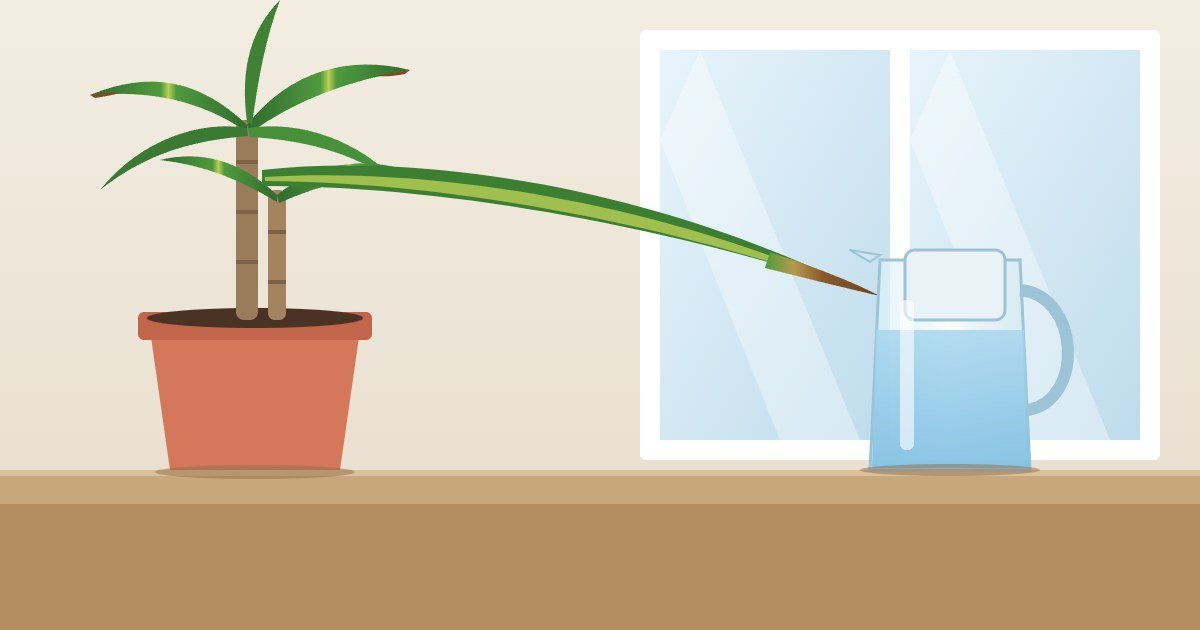
Brown, dry leaf tips are the most common dracaena complaint, and it is usually not a disease. The University of Missouri lists three main causes of tip burn: too much fertilizer, improper watering and fluoride toxicity. Dracaenas are unusually sensitive to fluoride, which is added to many US municipal water supplies, and to the salts that build up from tap water and fertilizer.
How to stop it:
- Switch your water. Use distilled water, rain water or water from a filter pitcher. Missouri Extension specifically recommends rain or distilled water for fluoride-sensitive plants. Never use water from a softener, which adds sodium.
- Flush the soil. Every few months, run plenty of water through the pot in the sink or shower to wash out built-up salts. A white crust on the soil or pot rim is a sign it is time.
- Feed less. Stick to half strength and only during the growing season.
- Avoid perlite in the potting mix if tips keep browning.
- Water evenly. Letting the plant swing between bone dry and soaked also browns the tips.
Brown tips will not turn green again. You can trim them off with clean scissors, following the natural pointed shape of the leaf and leaving a thin line of brown so you do not cut into healthy tissue.
Dracaena varieties: how to identify the common types
Dracaena is a big genus, and botanists have since moved snake plants into it too (the snake plant is now Dracaena trifasciata, covered in our snake plant benefits guide). These are the varieties you are most likely to find at a US garden center:

| Variety | How to recognize it | Care notes |
|---|---|---|
| Corn plant (Dracaena fragrans ‘Massangeana’) | Thick woody canes topped with wide, arching leaves that have a yellow-green stripe down the center, like a corn stalk | The classic office plant; very tolerant of medium light |
| Janet Craig (D. fragrans ‘Janet Craig’) | Solid, deep glossy green leaves with no stripes | The best choice for lower light; dust the wide leaves often |
| Lemon Lime (D. fragrans ‘Lemon Lime’) | Bright chartreuse edges with a darker green center stripe | Needs brighter light to keep the neon color |
| Warneckii (D. fragrans ‘Warneckii’) | Gray-green leaves with fine white pinstripes | Similar care to Janet Craig; good in medium light |
| Dragon tree (Dracaena marginata) | Thin, stiff, spiky leaves in tufts on slim bare trunks, often with red edges | Likes it slightly drier; ‘Tricolor’ and ‘Colorama’ have pink stripes |
| Lucky bamboo (Dracaena sanderiana) | Bamboo-like green stalks, often sold in water | Very sensitive to chlorine and fluoride; use filtered water |
Dracaena fragrans care
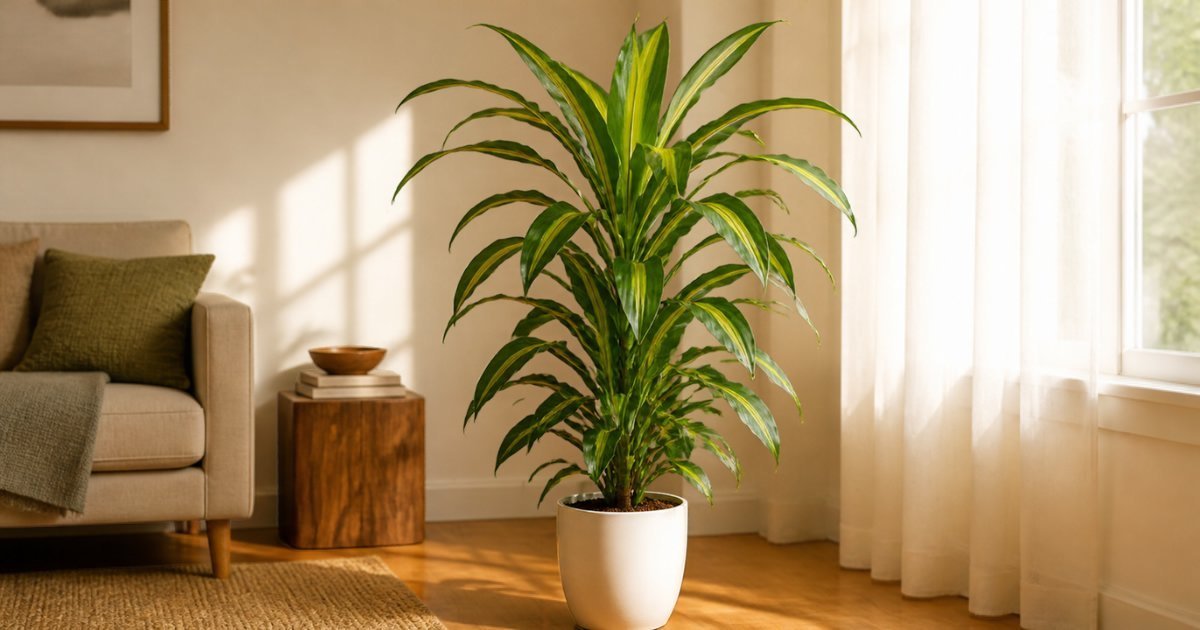
Dracaena fragrans covers the corn plant, Janet Craig, Lemon Lime and Warneckii. These all have wider, softer leaves and are the most forgiving of lower light. They can occasionally bloom indoors with clusters of small white, very fragrant flowers, which is where the name fragrans comes from. Follow the care table above, keep them out of direct sun and focus on not overwatering.
Dracaena massangeana care
Massangeana is the striped corn plant, usually sold as two or three canes of different heights in one pot. Care is the same as any fragrans, with two extras: give it enough light to keep the central stripe bright, and do not panic when the lowest leaves yellow and drop now and then. Losing one or two old leaves at a time is normal as the cane grows taller.
Dracaena Janet Craig care
Janet Craig is the toughest of the group for dim corners and handles medium light well. Its broad, dark leaves collect dust, which blocks light, so wipe them with a damp cloth every few weeks. It is just as prone to brown tips as other dracaenas, so filtered water still pays off.
Is dracaena toxic to cats and dogs?
Yes. The ASPCA lists dracaena as toxic to both dogs and cats. The plant contains saponins, and the ASPCA lists signs including vomiting (sometimes with blood), depression, loss of appetite, drooling and, in cats, dilated pupils.
If you have a pet that chews plants, keep dracaenas on a high stand or in a room the pet cannot reach, or pick a pet-safe plant instead. If you think your pet has eaten some, call your vet or the ASPCA Animal Poison Control Center right away.
Pruning, repotting and propagating dracaena
Pruning a tall or leggy plant
If a cane gets too tall or bare at the bottom, you can cut it at any height in spring or early summer. The stump will usually sprout one or more new heads of leaves just below the cut. Use clean, sharp pruners, and the top piece you removed can be rooted as a new plant.
Repotting
Repot every 2 to 3 years in spring, or when roots circle the bottom of the pot. Move up only 1 to 2 inches in diameter, because a much bigger pot holds extra wet soil that the roots cannot use. Water lightly after repotting and give it a week out of bright light to settle.
Propagating from cuttings
- Cut a 6 to 8 inch top piece or a section of cane with clean pruners.
- Strip the lower leaves so only the top tuft remains.
- Stand it in a jar of filtered water or a pot of moist, fast-draining mix.
- Keep it warm and in bright, indirect light, changing water weekly.
- Pot it up once the roots are a couple of inches long.
Cane sections can also be laid on moist mix and will sprout from the nodes. Keep track of which end was the top, because cane pieces only root from the bottom end.
Dracaena problem index: symptoms, causes and fixes
Use this table to match what you see to the most likely cause. Overwatering is the most common cause of serious trouble, so check the soil first.
| Symptom | Most likely cause | Fix |
|---|---|---|
| Brown, dry tips | Fluoride or salts in water, overfeeding, uneven watering | Filtered water, flush soil, feed less |
| Yellow lower leaves, one or two at a time | Normal aging | Pull them off once fully yellow |
| Many yellow leaves, soggy soil | Overwatering | Let soil dry, check roots, water less |
| Mushy, dark cane base or bad smell | Root or stem rot | Remove rotten parts and repot; see our root rot rescue guide |
| Droopy, curling leaves, dry soil | Underwatering | Water thoroughly and keep a steadier schedule |
| Pale or faded stripes, slow growth | Too little light | Move closer to a bright window |
| Bleached or scorched patches | Direct hot sun | Move back from the glass or add a sheer curtain |
| Fine webbing, speckled leaves | Spider mites | Rinse leaves, then treat with insecticidal soap |
| White cottony spots in leaf joints | Mealybugs | Dab with rubbing alcohol, then insecticidal soap or neem |
| Sudden leaf drop | Cold draft or a big move | Keep above 60°F and away from vents and doors |
Common mistakes with dracaena
- Watering on a fixed weekly schedule. Check the soil first, especially in winter.
- Using a pot without a drainage hole. Water pools at the bottom and rots the roots.
- Blaming the plant for brown tips. In most cases it is the tap water or too much fertilizer.
- Choosing a pot far too big. Go up only one size at a time.
- Putting it in a hot, sunny window. Bright and indirect is the sweet spot.
- Forgetting about pets. Dracaena is toxic to both cats and dogs.
Dracaena marginata made the honorable mentions in our list of the easiest indoor plants to keep alive, and once you sort out water quality, any dracaena is one of the most low-maintenance plants you can own. For more beginner guides, browse our houseplant care section.
Dracaena FAQ
How often should I water a dracaena?
Water when the top 1 to 2 inches of soil are dry. In a typical home that is roughly every 7 to 10 days in spring and summer and every 2 to 3 weeks in winter, but always check the soil rather than the calendar.
Can dracaena grow in low light?
Dracaena tolerates low to medium light better than most houseplants, with Janet Craig the toughest. It will grow slower and variegated types lose color, so bright, indirect light is still best.
Why are my dracaena leaves turning yellow?
One or two yellowing lower leaves is normal aging. Lots of yellow leaves at once, especially with wet soil, usually means overwatering. Let the soil dry and check the roots for rot.
Should I cut the brown tips off my dracaena?
You can. Brown tips will not recover, so trim them with clean scissors, following the leaf’s natural shape and leaving a thin brown edge so you do not wound healthy tissue.
Is dracaena a good indoor plant for beginners?
Yes. It handles medium light, missed waterings and average humidity well. The two things to get right are not overwatering and using filtered or rain water to prevent brown tips.
How big does a dracaena get indoors?
Corn plants and marginata can reach 5 to 6 feet or more indoors over several years. You can control height by cutting the canes, which also makes the plant bushier.