Orchid Roots: Healthy vs Rotting, Aerial Roots and What to Trim
Healthy orchid roots are firm and plump, silvery white when dry and bright green when wet. Roots that are brown, black, mushy or hollow are dead or rotting, and roots that are papery and flat have dried out. Aerial roots growing out of the pot are normal for most home orchids, so leave them alone unless they are dead.
This guide covers how to read your orchid roots at a glance, what aerial roots are for, when and how to trim, how to repot into bark, and a step-by-step rescue plan for an orchid that has lost most of its roots. It is written mainly for the moth orchid (Phalaenopsis), the one sold in most US grocery stores and garden centers.
What healthy orchid roots look like
Most orchids sold as houseplants are epiphytes. In the wild they grow on tree bark, not in soil, and their roots hang in the air or cling to branches. The Chicago Botanic Garden notes that about 70 percent of orchid species grow this way, which is why their roots look and behave so differently from a pothos or a peace lily.
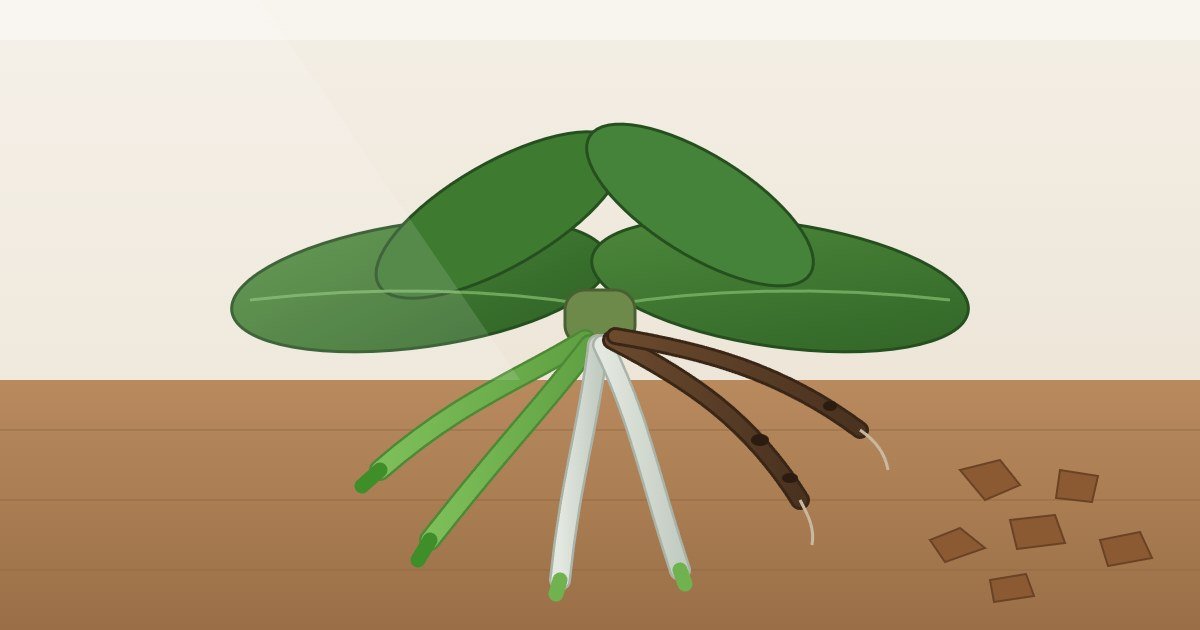
Each root is wrapped in a spongy, multi-layered skin called the velamen. The American Orchid Society describes it as dead but still working tissue that soaks up water quickly, holds it, and protects the thin living core inside. That skin is what changes color:
- Dry and healthy: silvery white or gray-green, firm and round.
- Freshly watered and healthy: bright green within a minute or two as the velamen fills with water.
- Growing tip: a shiny green, pink or reddish tip at the end of the root. A long tip means the root is actively growing.
Healthy roots feel like a firm noodle that has not been cooked yet. If you squeeze one gently, it should not collapse.
Healthy vs rotting vs dried orchid roots
Use this table when you have the plant out of its pot or can see the roots through a clear pot.
| Root condition | Color | How it feels | What it means | What to do |
|---|---|---|---|---|
| Healthy, dry | Silver, white or gray-green | Firm and round | Ready for water | Water if the bark is also dry |
| Healthy, wet | Bright green | Firm and plump | Recently watered | Let it turn silver again before the next watering |
| Growing tip | Green, pink or red tip | Smooth and glossy | Active new growth | Do not touch or bend it |
| Rotting | Brown, black or tan | Mushy, slimy, may smell sour | Too wet for too long, or old broken-down bark | Cut it off and repot into fresh bark |
| Hollow | Tan or brown, skin intact | Collapses flat when pinched | Core has died | Trim it off |
| Dried out | Pale beige to brown | Thin, papery, wiry | Underwatering, very dry air, or old age | Trim only if it is fully crispy |
| Silver for months, no growth | Dull silver | Firm | Often a resting root, not a dead one | Leave it and check again in a few months |
The pinch test is the quickest way to sort them. A firm root is alive, even if it looks dull. A root that squashes flat between your fingers, or whose outer skin slides off and leaves only a thin wire, is dead. The AOS recommends removing those hollow roots when you repot.
A note on silvery roots
Silver is not a warning sign by itself. It just means the velamen is dry. A plant with all-silver roots that are still firm simply needs water. Roots can also look whitish and dull during the shorter days of fall and winter while growth slows, so give them the squeeze test before you decide they are dead.
Orchid aerial roots: what they do and why you should not cut them
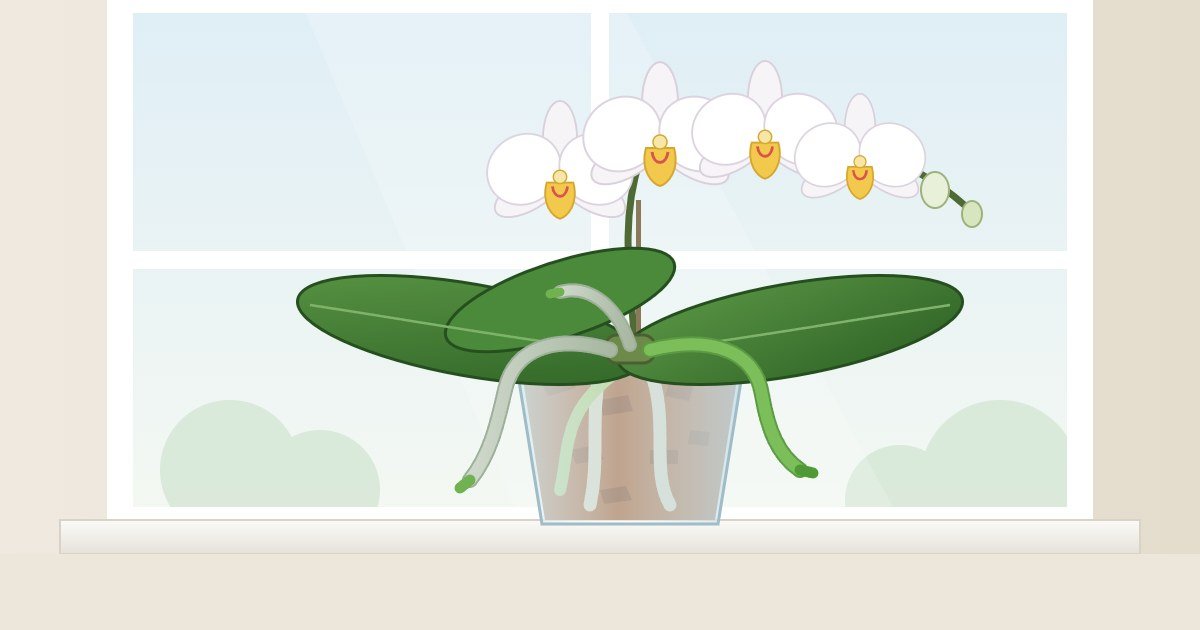
Orchid aerial roots are the ones that grow up and out of the pot instead of down into the bark. New orchid owners often think something is wrong, but for a Phalaenopsis this is normal behavior. In nature these roots grip tree bark and pull moisture from humid air and rain running down the trunk.
Aerial roots still help the plant:
- They anchor the plant and keep it steady.
- They take in water and some nutrients when you water or when humidity is high.
- Their green tissue can carry out a small amount of photosynthesis.
The University of Maryland Extension is clear on this: do not cut off healthy aerial roots. Removing living roots takes away part of the plant’s water supply and gives it an open wound for no benefit.
What you can do instead:
- Leave them where they are. It is fine for them to wander over the rim.
- Wet them when you water. Run water over them in the sink along with the rest of the pot. UMD notes they shift from dull silver to pale green when they are getting enough water.
- Do not force them into the pot. Bending a stiff aerial root to bury it can snap it, and roots that grew in open air can rot if suddenly packed in wet bark. When repotting, you can guide flexible ones loosely onto the surface of the bark.
A sudden flush of many aerial roots can be a hint that the potting mix has broken down or stayed too wet, and the plant is growing roots where there is air. Check the roots inside the pot if you see this.
When to trim orchid roots
Only trim orchid roots that are clearly dead: mushy, hollow, black, or completely dried and crispy. Firm silver or green roots stay, even if they are long and messy.
The best time to trim is during repotting, when you can see the whole root system. Many growers also tidy up after flowering, when the plant is starting new leaves and roots. If you find a rotting root, do not wait for a better season. Rot spreads, so deal with it now.
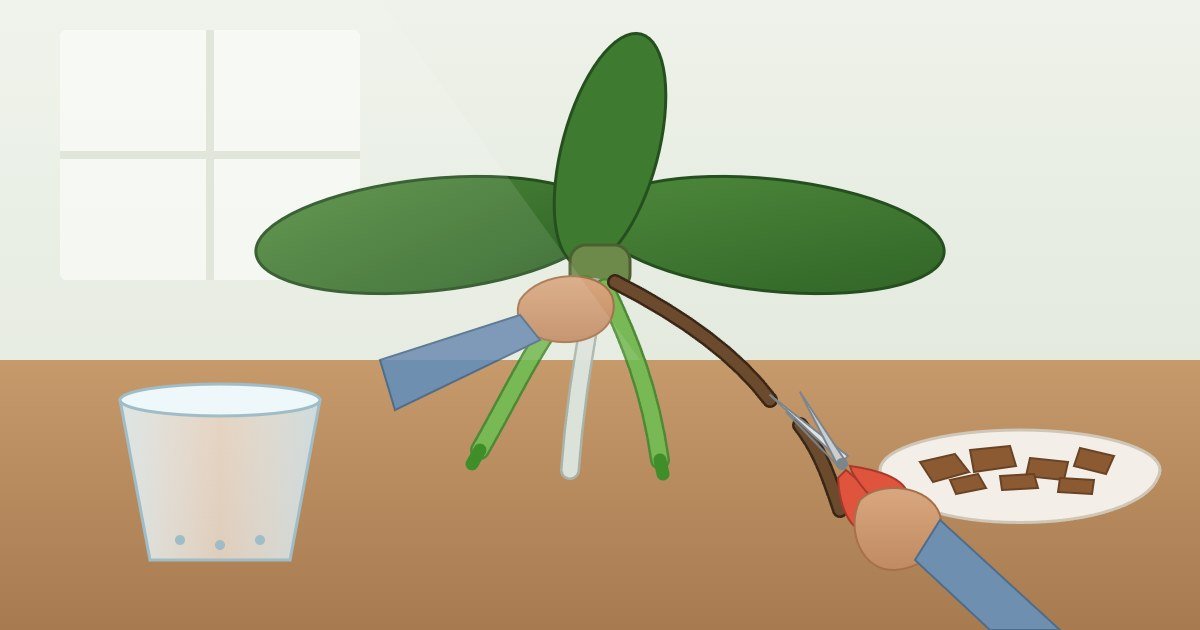
How to trim orchid roots safely
- Sterilize your tool. Wipe scissors or pruners with rubbing alcohol, or dip them in a diluted bleach solution and rinse. Orchid viruses spread easily on dirty blades.
- Remove the plant and loosen old bark. Soaking the pot for a few minutes in room-temperature water helps roots that are stuck to the sides let go.
- Pinch each root. Keep the firm ones, mark the mushy or hollow ones.
- Cut back to healthy tissue. Cut just above the point where the root turns firm and clean again. On a partly dead root, the AOS notes you can peel off loose dead velamen and keep any firm living section.
- Wipe the blade between cuts when you are removing rot, so you do not spread it.
- Let the cuts dry for an hour or so before repotting.
Repotting orchid roots into bark
Orchid roots need air as much as water. The UConn Home and Garden Education Center puts it simply: the roots like air and rot if kept soggy. That is why orchids grow in chunky bark, not potting soil.
When to repot:
- Every one to two years, or when the bark looks dark, soft and soil-like.
- When roots are rotting, or you can see mostly brown roots through a clear pot.
- Ideally after flowering, when new roots are starting. UMD suggests timing it with new growth rather than waiting strictly for blooms to finish.
What you need:
- A medium-grade orchid bark mix (fir bark, often with some perlite or charcoal).
- A clear plastic orchid pot with plenty of drainage holes. Clear pots let you watch the roots and see when they turn silver, which takes the guesswork out of watering. Slotted pots or unglazed terracotta work too.
- Clean scissors.
Steps:
- Soak the bark in water for 20 minutes to an hour so it holds some moisture.
- Take the orchid out, shake off all the old mix and trim dead roots as described above.
- Choose a pot that just fits the root mass. Orchids prefer a snug pot. A pot that is too big holds extra wet bark around the roots.
- Hold the plant so the base of the leaves sits at or just below the rim. Fill bark in around the roots, tapping the pot to settle it. Do not pack it down hard.
- Leave aerial roots on top or outside the pot.
- Water lightly or wait a few days before the first full watering so cut roots can seal over.
If you are shopping for supplies, a bag of orchid bark and a couple of clear orchid pots are the two items worth keeping on hand. Regular potting soil is the most common reason store-bought orchids end up with root rot.
Orchid root rot rescue plan
Root rot is the number one way people lose orchids, and it nearly always comes from water sitting around the roots: too-frequent watering, old broken-down bark, or the pot left in a decorative cover with water pooling at the bottom. Our general guide to fixing root rot in indoor plants covers the basics. Here is how it works for orchids specifically.
Signs your orchid has root rot:
- Roots that are brown, black or mushy through a clear pot.
- Leaves that turn soft, limp and wrinkled even though the bark is wet. Dead roots cannot take up water, so the plant looks thirsty when it is actually drowning.
- A sour or musty smell from the pot.
Rescue steps:
- Unpot right away and remove all old mix.
- Rinse the roots so you can see them clearly.
- Trim every mushy or hollow root back to firm tissue with a sterilized blade.
- Let the plant air dry for a few hours.
- Count what is left. If several firm roots remain, repot into fresh bark in a small clear pot and water sparingly until new root tips appear. If only one or two roots remain, or none, pot it into a small pot of slightly damp sphagnum moss, or keep the base just above a little water in a jar so it sits in humid air without touching the water. Keep it in bright, indirect light and be patient. New roots can take several weeks to appear.
- Hold off on fertilizer until the plant is growing new roots. UConn advises against feeding diseased plants.
- Going forward, water only when most roots have turned silver and the bark is close to dry.
Common mistakes with orchid roots
- Cutting healthy aerial roots because they look untidy.
- Watering on a schedule instead of checking the roots. Use root color through a clear pot as your guide.
- Using ice cubes or tiny sips that never soak the whole root system, then leaving the roots dry for weeks.
- Leaving water in the cache pot. Always let the pot drain fully before putting it back in a decorative cover.
- Repotting into soil or a huge pot. Both hold too much water around the roots.
- Throwing out a plant with silver roots, thinking they are dead. Do the pinch test first.
- Using dirty scissors, which can spread disease between plants.
FAQ
Are orchid aerial roots dead?
Usually not. Firm silver or green aerial roots are alive and doing their job. Only roots that are shriveled, papery or mushy are dead.
Should I cut off orchid aerial roots?
No, not if they are firm and healthy. Cut an aerial root only if it is fully dried, hollow or rotting. Healthy ones help the plant take in water.
What color are healthy orchid roots?
Silvery white when dry and bright green when wet, with a green, pink or reddish growing tip. Brown or black usually means rot.
Can I put orchid aerial roots in the pot?
You can guide flexible ones onto the bark surface when repotting, but do not force or bury stiff ones. They can snap or rot.
Why are my orchid roots turning brown?
Brown, soft roots are almost always rotting from too much water or old bark. Brown, dry and papery roots have dried out. Trim the dead ones and fix the watering or potting mix.
Can an orchid survive with no roots?
Sometimes. If the leaves are still firm and the stem is healthy, keeping it in humid conditions over damp moss or just above water can encourage new roots, but it takes patience and does not always work.
For more help with struggling plants, browse our houseplant problems guides.