Snake Plant Benefits: What’s Real and What’s Myth
The real snake plant benefits are simple: it is one of the hardest houseplants to kill, it handles low light and missed waterings, and having plants around is linked to feeling calmer. The famous claim that one snake plant will purify the air in your room is a myth. The lab studies behind it don’t match a real home, and you would need a small jungle to make a measurable difference.
That doesn’t make the snake plant a bad choice. It makes it a great plant for the right reasons. Below I’ve split the snake plant benefits into what holds up, what doesn’t, and how to get the most out of one in your bedroom or office, plus the pet safety note most lists skip.
Snake plant benefits at a glance: real vs myth
| Claim | Verdict | What’s actually true |
|---|---|---|
| Purifies the air in your home | Mostly myth | Removes some chemicals in sealed lab chambers, but the effect in a real room is tiny compared with opening a window |
| Releases oxygen at night | Half true | It takes in carbon dioxide at night, but one plant won’t change the oxygen level of a bedroom |
| Very easy to care for | True | Tolerates low light, dry air and infrequent watering better than almost any houseplant |
| Grows in low light | True, with limits | Survives dim rooms but grows best in bright, indirect light |
| Boosts mood and reduces stress | Plausible | Studies link indoor plants and plant care to feeling more relaxed, though not snake plants specifically |
| Safe for pets | False | The ASPCA lists it as toxic to cats and dogs (mild stomach upset) |
| Cures allergies or headaches | Myth | There is no good evidence for any medical benefit from keeping one |
The proven benefits of a snake plant
1. It is almost impossible to kill
This is the biggest real benefit, and the reason the snake plant shows up on every beginner list, including our own guide to the easiest indoor plants to keep alive. Its thick, upright leaves store water, so it shrugs off a forgotten watering or a week away. The University of Connecticut Home and Garden Education Center notes that overwatering is the most common way people kill them, and suggests watering only about once a month in winter.
2. It copes with low light
Snake plants are on the University of Illinois Extension list of low-light houseplants, and they also do well in bright rooms. That flexibility is useful in apartments where the only free spot is a hallway, a bathroom shelf or a corner far from the window. Just know that “tolerates” isn’t the same as “thrives”. In a very dark spot it will hold on but barely grow. Bright, indirect light gives you the fastest, healthiest growth.
3. It takes up very little floor space
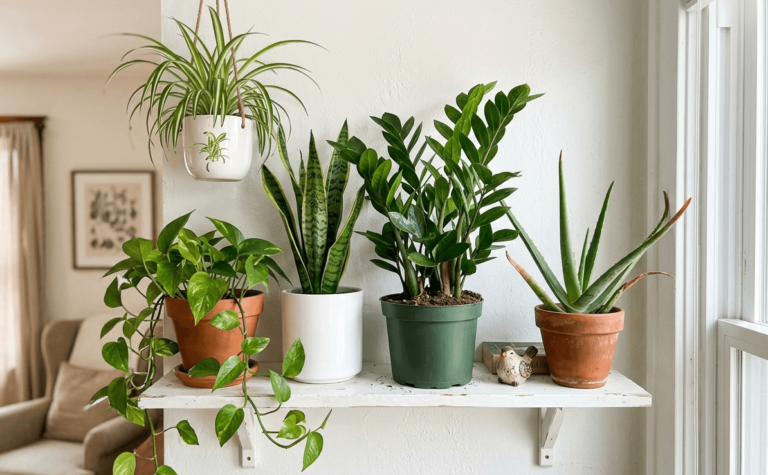
Because the leaves grow straight up, a snake plant gives you a lot of green in a small footprint. A 6 inch pot can sit on a nightstand, a windowsill or the corner of a desk. For small-space growers this is one of the most practical snake plant benefits, and it’s why it pairs well with trailing plants like pothos on a shelf. You can find more ideas in our houseplant care guides.
4. It may help you feel calmer
There is reasonable evidence that living with plants is good for your mood. One 2015 study in the Journal of Physiological Anthropology found that young adults who spent 15 minutes repotting a houseplant felt more relaxed and had lower diastolic blood pressure than after 15 minutes of computer work. That study didn’t use snake plants, and it was small, so treat it as a general plant benefit rather than a snake plant superpower. Still, a plant you can keep alive is a plant you get to enjoy for years.
5. It is cheap and easy to multiply
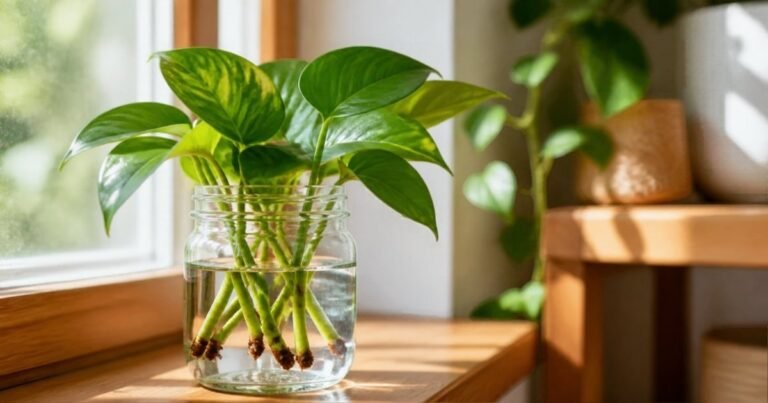
Snake plants spread by underground rhizomes that send up new pups. When you repot, you can divide the clump into two or three plants, or root single leaf cuttings in water or soil. One plant can turn into gifts for friends without spending a cent.
Snake plant air purifier claims: what the NASA study really said
Most “10 benefits of snake plant” lists lean on the 1989 NASA Clean Air Study. In that research, plants were placed in small sealed chambers and measured as they removed chemicals like benzene and formaldehyde. The snake plant did remove some of these chemicals, which is where the “air purifier” reputation comes from.
The problem is that a sealed test chamber is nothing like your living room, where air is constantly swapped with the outdoors. In 2019, researchers at Drexel University reviewed 12 studies covering about 30 years of this work. They estimated that you would need 10 to 1,000 plants per square meter of floor space to match the air cleaning of a building’s ventilation system, or even a couple of open windows in a house.
So here is the honest version. A snake plant will not replace an air purifier, a range hood or opening a window. If air quality is your main goal, ventilation and a HEPA air purifier do far more. Buy a snake plant because it looks good and survives anything, not as a health device.
Does a snake plant give off oxygen at night?
Partly. Snake plants use a type of photosynthesis called CAM, which many succulents share. They keep their pores closed during the hot day to save water and open them at night to take in carbon dioxide. That is real and it’s why the plant is so drought tolerant. But the amount of gas one plant exchanges is very small compared with the volume of air in a bedroom, so it won’t noticeably change how you breathe or sleep.
Snake plant in the bedroom: is it a good idea?
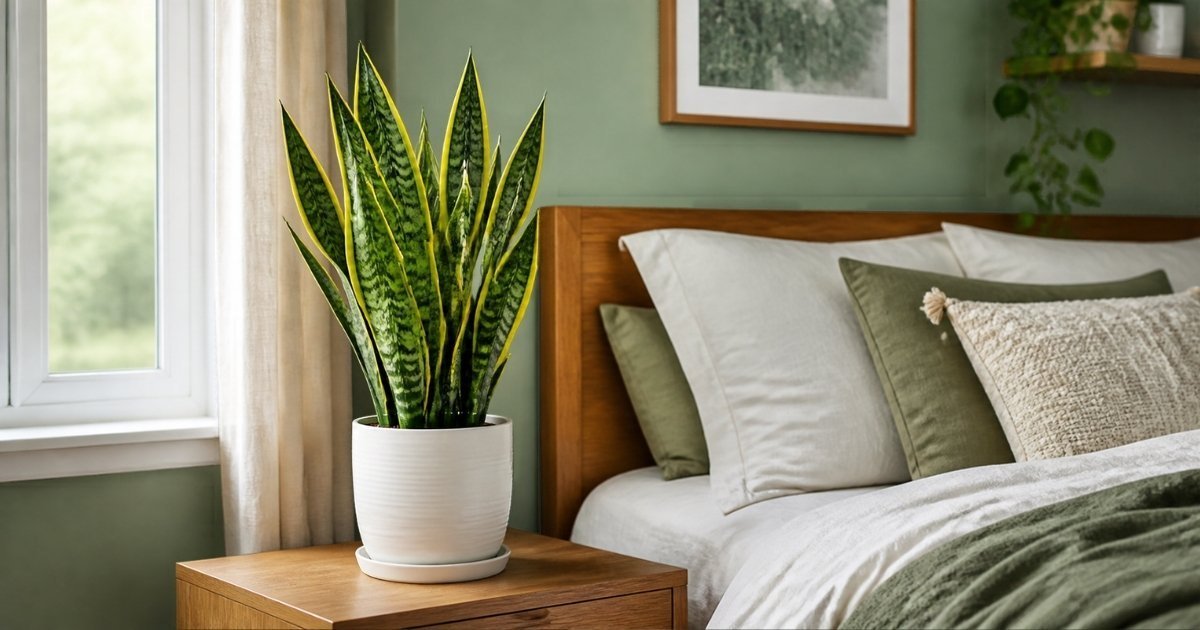
Yes, a snake plant in the bedroom is a good choice, just for practical reasons rather than oxygen ones. It doesn’t mind the lower light most bedrooms get, it doesn’t need daily attention, and its upright shape fits on a dresser or in a corner. A few tips:
- Put it within a few feet of a window if you can. A north or east window is fine.
- Keep it off the radiator and away from cold drafts. UConn recommends keeping snake plants above 55°F.
- Water only when the soil is completely dry, usually every 2 to 3 weeks in summer and about monthly in winter.
- If you have a cat or dog that sleeps in the bedroom, put the plant on a high dresser or plant stand they can’t reach.
Snake plant in the office
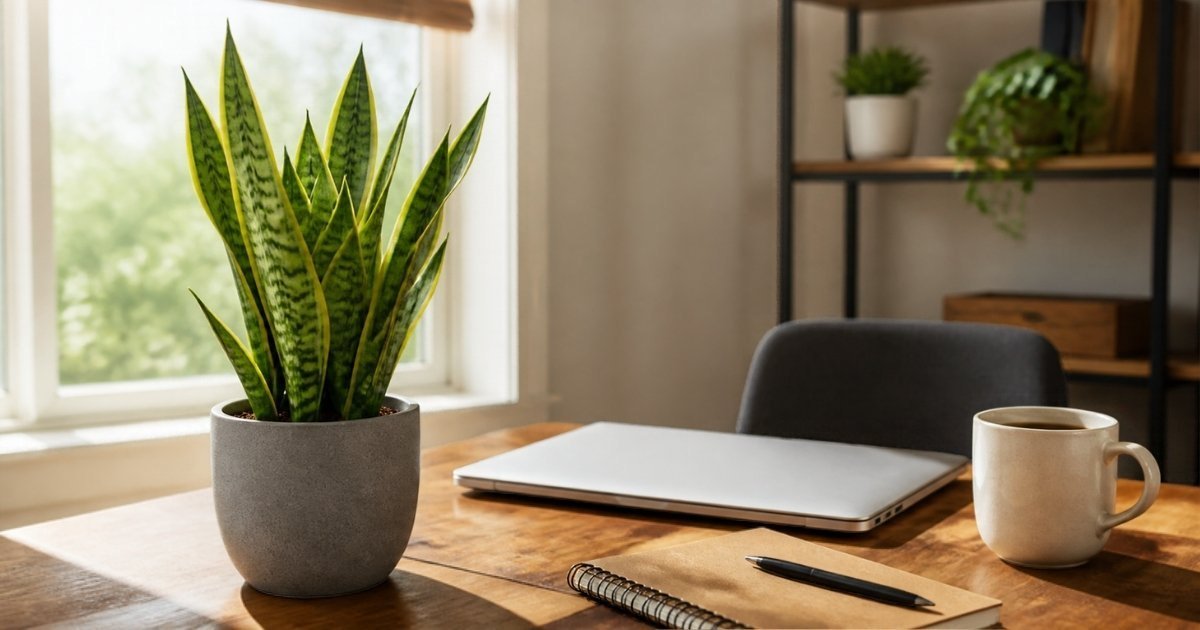
A snake plant office setup is one of the best uses for this plant. Office lighting is often weak and you might be away for long weekends or holidays, which is exactly what this plant handles well. Under bright fluorescent or LED office lights it will grow slowly but steadily.
- Choose a small pot (4 to 6 inches) so it fits on a desk without crowding your keyboard.
- If your desk is far from any window, a small clip-on LED grow light on a timer helps a lot.
- Leave a sticky note with the watering rule if coworkers like to “help”. Overwatering is the main risk.
- Wipe the flat leaves with a damp cloth every few weeks. UConn notes they collect dust easily.
Are snake plants safe for pets?
No. The ASPCA lists the snake plant as toxic to both cats and dogs. It contains saponins, which can cause nausea, vomiting and diarrhea if a pet chews or eats the leaves. It is usually a mild stomach upset rather than an emergency, but it’s still a good reason to keep the plant out of reach.
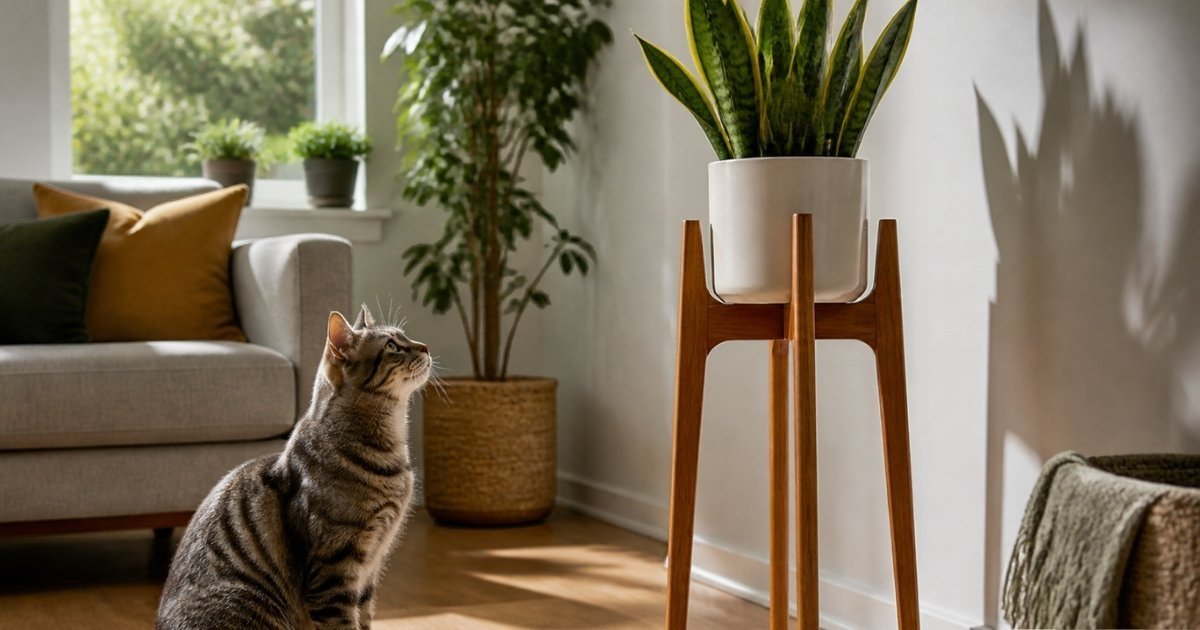
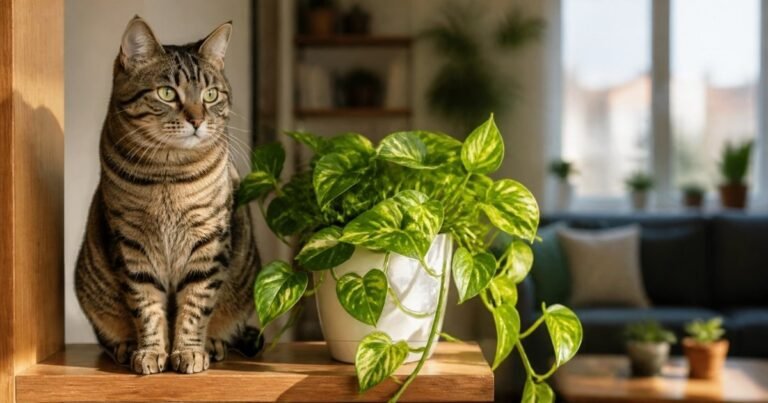
If your pet has eaten part of a snake plant and seems unwell, call your vet or the ASPCA Animal Poison Control Center at (888) 426-4435 (a consultation fee may apply). Our guide on whether pothos is toxic to cats has more tips on cat-proofing plant shelves, and the same tricks work here: high shelves, hanging planters and a citrus-scented deterrent spray around the pot.
How to get the most benefit from your snake plant
The more your plant thrives, the longer you get to enjoy it. These basics cover nearly everything:
| Care need | What to do |
|---|---|
| Light | Bright, indirect light is best; low light is tolerated |
| Water | Only when the soil is dry all the way down; roughly monthly in winter |
| Soil | Fast-draining cactus or succulent mix, or regular potting mix with added perlite |
| Pot | Must have a drainage hole; terracotta or plastic both work |
| Temperature | Keep above 55°F and away from cold windows in winter |
| Feeding | A diluted houseplant fertilizer 2 or 3 times in spring and summer is plenty |
If you’re buying one, look for a plant with firm, upright leaves and no soft or mushy spots at the base. A medium plant in a pot with a drainage hole is the easiest starting point. Popular types like ‘Laurentii’ (yellow edges) and compact ‘Hahnii’ (bird’s nest) have the same benefits and care.
Common mistakes that cancel out the benefits
- Watering on a schedule. Watering every week no matter what is the number one killer. Check the soil first.
- Using a pot without drainage. Water pools at the bottom and the roots rot. If you see mushy, yellowing leaves at the base, follow our step-by-step root rot rescue guide.
- Putting it in total darkness. A windowless bathroom with the light off all day will slowly starve it.
- Leaving it by a cold window in winter. Cold damage shows up as soft, scarred leaves.
- Buying it only to clean the air. You’ll be disappointed. Enjoy it for what it really does well.
Snake plant benefits FAQ
What are the main benefits of a snake plant?
The main snake plant benefits are that it’s very hard to kill, tolerates low light and irregular watering, takes up little space, and like other houseplants can make a room feel calmer. Its air purifying effect in a real home is very small.
Is a snake plant really an air purifier?
Not in any meaningful way. It removed some chemicals in sealed NASA lab chambers, but a 2019 Drexel University review found you’d need 10 to 1,000 plants per square meter to match normal ventilation.
Is it good to keep a snake plant in your bedroom?
Yes. It’s low maintenance and handles bedroom light well. Just keep it out of reach of pets, since it’s toxic to cats and dogs.
Where should I put a snake plant in my house?
A spot with bright, indirect light, such as a few feet from an east or north window, is ideal. It also does fine in a hallway, office or bathroom with some daylight.
Are snake plants toxic to cats and dogs?
Yes. According to the ASPCA, snake plants contain saponins and can cause vomiting, nausea and diarrhea in cats and dogs if eaten.
How often should I water a snake plant?
Water when the soil is completely dry, which is usually every 2 to 3 weeks in warm months and about once a month in winter. When in doubt, wait a few more days.