How to Propagate Pothos: 3 Easy Methods (With Root Timeline)
Here is how to propagate pothos the easy way: cut a 4 to 6 inch piece of vine just below a node, strip the bottom leaf and stand it in a jar of water in bright, indirect light. Roots usually show up in 1 to 3 weeks and are ready to pot once they reach 1 to 2 inches. You can also root pothos cuttings straight in soil or in damp sphagnum moss, and this guide walks through all three methods with a week-by-week root timeline.
Pothos propagation is one of the best first projects for a new plant owner. The plant roots readily, you need almost no equipment, and a single trimmed vine can turn into a full new pot. The only part people get wrong is where to cut, so we will start there.
What you need to propagate pothos
- A healthy pothos with at least one vine longer than 8 inches
- Clean, sharp scissors or pruning snips (wipe the blades with rubbing alcohol first)
- A clear glass jar or bottle for water rooting, or a small pot with drainage holes for soil
- Fresh potting mix with extra perlite, or a handful of sphagnum moss
- Optional: powdered rooting hormone. Pothos roots fine without it, but it can help soil cuttings
If you like seeing roots form, a propagation station (a small wooden stand that holds glass test tubes) is a tidy way to keep several cuttings upright on a shelf. A regular jam jar does the same job.
Where to cut pothos to propagate
Every new root on a pothos grows from a node. A node is the slightly swollen bump on the vine where a leaf joins the stem. Most nodes also have a small brown nub, which is an aerial root waiting for moisture. A piece of stem with no node will not root, no matter how long you leave it in water.
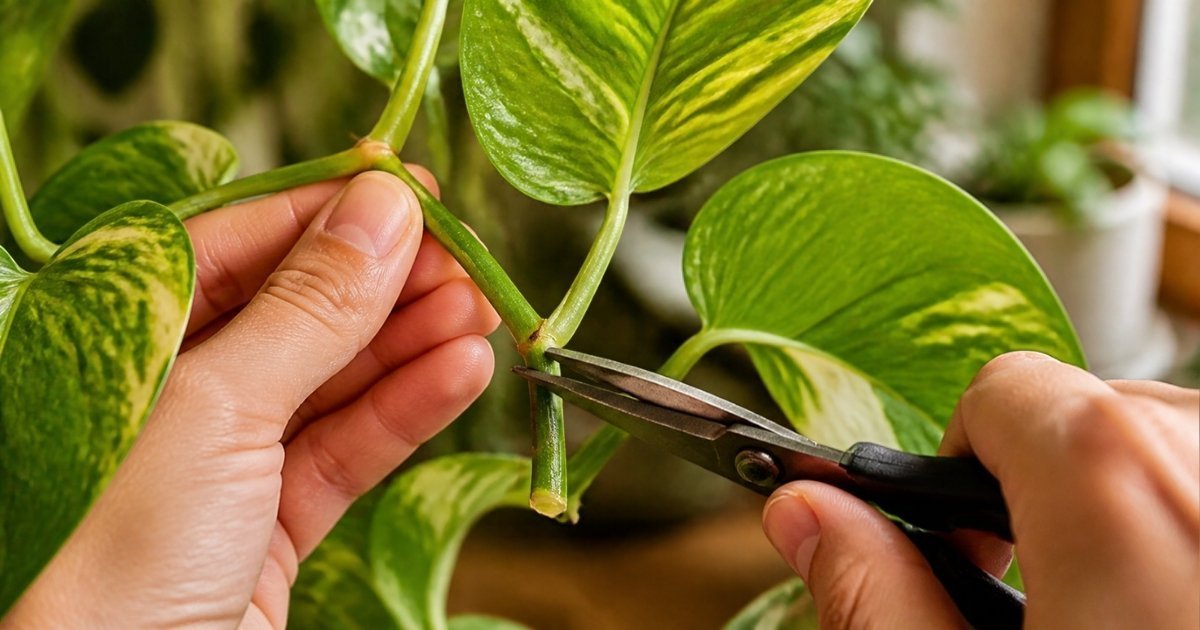
Here is exactly where to cut pothos to propagate in water or soil:
- Pick a healthy vine with firm, green leaves and no yellowing.
- Count back from the tip so your cutting has 3 to 4 leaves. That is usually 4 to 6 inches of stem.
- Make your cut about a quarter inch below the lowest node on that section. A short stub below the node is fine.
- Remove the lowest leaf so the node underneath is bare. That bare node is what goes in the water or soil.
- If the vine is long, cut it into several pieces, each with at least one node and one leaf. Single-node cuttings root well but grow more slowly at first.
Where to cut pothos to propagate in water is the same as for soil. The difference is only in what you put the node into next.
Method 1: How to propagate pothos in water
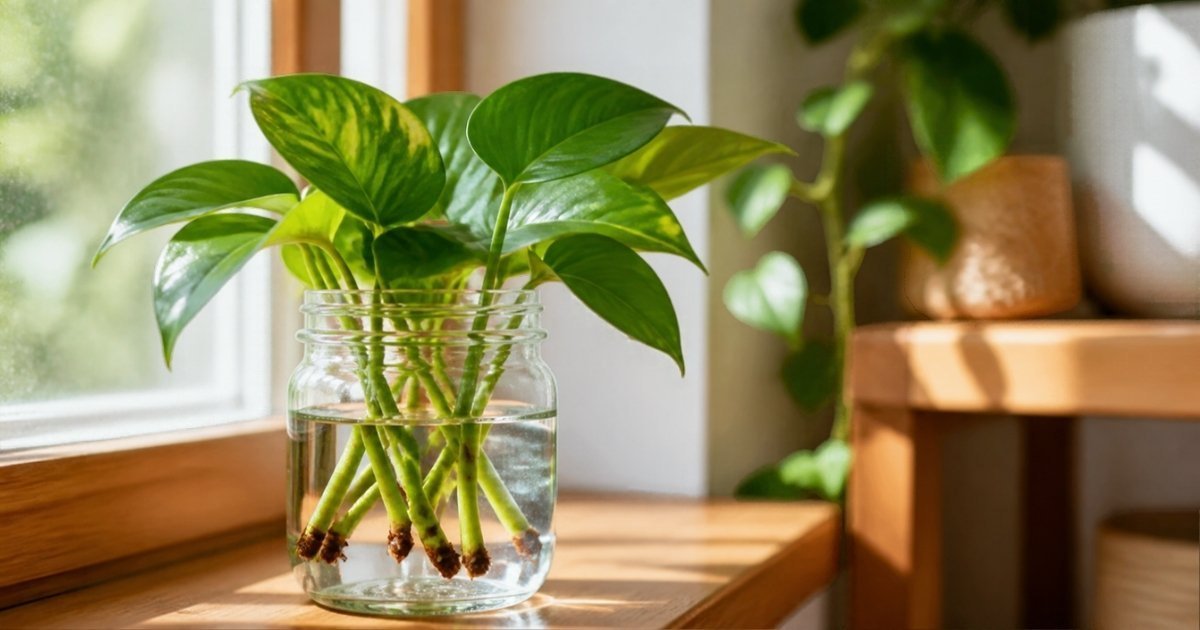
Water propagation is the most popular way to propagate pothos because you can watch the roots grow and spot problems early.
- Fill a clear jar with room temperature water. Tap water is fine for most homes. If yours is heavily chlorinated, let it sit out overnight first.
- Stand the cutting in the jar so the bare node is under water and every leaf stays above the waterline. Leaves sitting in water rot fast.
- Place the jar in bright, indirect light, such as a few feet back from an east or west window. Avoid direct afternoon sun, which heats the water.
- Top up the water as it evaporates and change it completely once a week, or sooner if it turns cloudy.
- Pot the cutting into soil once the roots are 1 to 2 inches long, ideally with a few small side roots branching off.
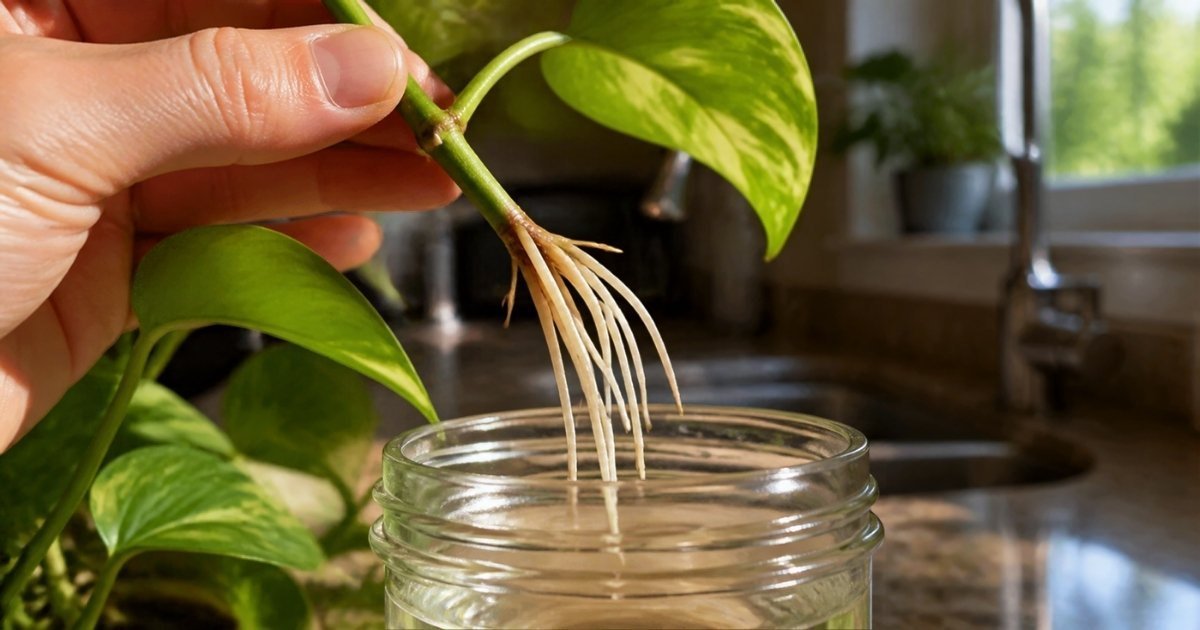
Pothos can actually live in water long term, but cuttings that move to soil usually grow fuller and faster. The longer the roots stay in water, the harder the switch becomes, so do not wait until the jar is packed with roots.
Method 2: Propagating pothos in soil
Rooting directly in soil skips the transplant step. Roots that form in soil are tougher, so the young plant settles in with less shock. The trade-off is that you cannot see what is happening.
- Fill a small pot (3 to 4 inches) with light potting mix. Mixing in a handful of perlite helps it drain.
- Water the mix until it is evenly damp, then let the excess drain away.
- Dip the bare node in rooting hormone if you are using it, tapping off the extra powder.
- Push the node about an inch into the mix and firm the soil around the stem. Several cuttings can share one pot for a bushier plant.
- Keep the soil lightly moist, never soggy, in bright, indirect light. A clear plastic bag loosely over the pot raises humidity; open it daily so condensation does not build up.
- After 3 to 4 weeks, give a cutting a very gentle tug. If it resists, roots have formed. New leaf growth is the other sign.
Method 3: Rooting pothos in sphagnum moss
Sphagnum moss holds moisture and air at the same time, which makes it a forgiving middle ground between water and soil. It is a good choice if your water cuttings keep rotting.
- Soak a handful of sphagnum moss in water for 10 minutes, then squeeze it until it is damp, not dripping.
- Loosely pack the moss into a clear cup or small container.
- Tuck the bare node of each cutting into the moss so the leaves sit above it.
- Cover the container loosely with plastic or keep it somewhere humid, and mist the moss if the top dries out.
- Once roots are 1 to 2 inches long, move the cutting into potting mix. You can plant it with the moss still attached.
Water vs soil vs moss: which method is best?
| Method | Best for | Typical first roots | Ready to pot | Main risk |
|---|---|---|---|---|
| Water | Beginners who want to see progress | 1 to 3 weeks | 3 to 6 weeks | Rot if leaves sit in water or water goes stale |
| Soil | Skipping the transplant step | 3 to 4 weeks (hidden) | Already potted | Overwatering before roots form |
| Sphagnum moss | Cuttings that keep rotting in water | 1 to 3 weeks | 3 to 5 weeks | Moss drying out |
Timelines vary with warmth and light. Cuttings root fastest in late spring and summer at normal room temperature, and noticeably slower in a cool winter room.
Pothos propagation root timeline (week by week)
This is what a typical water cutting looks like as it roots in a warm, bright room. Use it as a guide rather than a deadline.
| Time | What you should see | What to do |
|---|---|---|
| Days 1 to 7 | No visible change. The aerial root nub may look slightly plumper | Keep leaves out of the water and the jar out of direct sun |
| Week 2 | Small white bumps or a short root tip appear at the node | Change the water weekly and leave the cutting alone |
| Weeks 3 to 4 | Main roots reach about 1 inch, side roots start to branch | Get your pot and potting mix ready |
| Weeks 4 to 6 | Roots are 1 to 2 inches or longer, and a new leaf may unfurl | Pot up into soil now |
| First 2 weeks in soil | Leaves may droop slightly as roots adjust | Keep soil lightly moist and light bright but indirect |
If you see nothing after 4 weeks, the room is probably too cool or too dark. Move the jar somewhere brighter and warmer before giving up on it.
How to pot up rooted pothos cuttings
- Choose a small pot with drainage holes. A 4 inch pot suits 3 to 5 cuttings.
- Fill it partly with fresh, well draining potting mix.
- Set the cuttings in so the roots are spread out and the nodes sit just below the soil surface.
- Fill in around them, firm gently, and water well.
- For the first two weeks, keep the soil a little more moist than you would for a mature pothos, then let the top inch dry between waterings.
Water-grown roots are softer than soil roots, so a slight droop in the first week is normal. Avoid fertilizing for the first month while the roots toughen up. For general care once your new plant is established, browse our houseplant care guides.
Common mistakes and why pothos cuttings rot
| Problem | Likely cause | Fix |
|---|---|---|
| Stem turns brown and mushy at the waterline | Leaves or extra stem sitting in stale water | Cut above the soft part, keep only the node submerged, change water weekly |
| No roots after 4 to 6 weeks | No node on the cutting, or too cold and dark | Check there is a node, then move to a brighter, warmer spot |
| Leaves turn yellow | The cutting is using stored energy, or one leaf is too many to support | Remove the yellow leaf; the cutting will usually carry on |
| Cutting wilts after potting | Transplant shock from water roots | Keep soil evenly moist for two weeks and avoid direct sun |
| Soil cutting rots | Mix kept soggy before roots formed | Use a lighter mix with perlite and water only when the surface starts to dry |
Rot is the number one reason pothos cuttings fail. If you find soft, brown, smelly roots on a cutting or on the parent plant, our guide on how to fix root rot in indoor plants covers how to trim and save it.
A safety note if you have pets
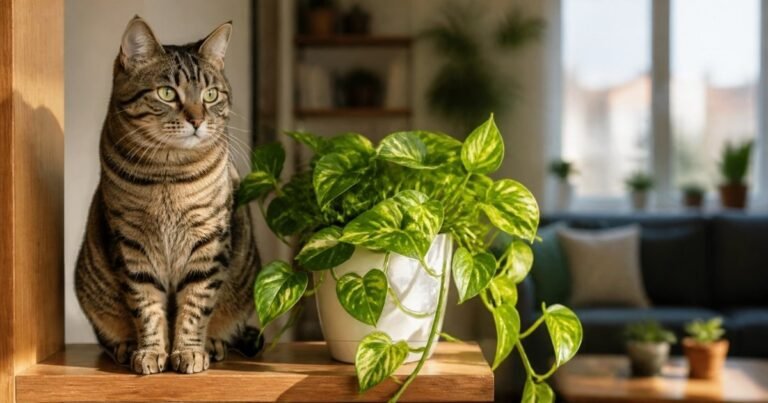
Pothos is toxic to cats and dogs. The ASPCA lists golden pothos as toxic because it contains insoluble calcium oxalate crystals, which can cause mouth irritation, drooling, vomiting and trouble swallowing. The University of Florida IFAS Extension notes the same crystals and symptoms. Jars of cuttings on a low windowsill are easy for a curious cat to reach, so keep them up high and wash your hands after handling the sap. If you think your pet has chewed pothos, call your vet or the ASPCA Animal Poison Control Center. For the full symptom timeline and step-by-step first aid, read are pothos toxic to cats.
Frequently asked questions
How long does it take to propagate pothos in water?
Most pothos cuttings show their first roots in 1 to 3 weeks and are ready to pot in about 4 to 6 weeks. Warm rooms and bright, indirect light speed it up; cool, dim rooms slow it down.
Can you propagate pothos without a node?
No. Roots only grow from nodes, so a leaf or a stem piece without a node may stay green in water for weeks but will never become a new plant. Always include at least one node.
Can you propagate pothos from a single leaf?
Only if the leaf still has a piece of stem with a node attached. A leaf snapped off at its stalk has no node and will not root.
Is it better to propagate pothos in water or soil?
Water is easier for beginners because you can watch the roots and change the water if something goes wrong. Soil avoids transplant shock. Both work well, so pick the one that suits how you like to check on your plants.
Do I need rooting hormone for pothos cuttings?
No. Pothos roots easily on its own. Rooting hormone can give soil cuttings a small head start, but it is optional.
Why is my pothos cutting not rooting?
The most common reasons are a missing node, low light, a cold room or stale water. Check the cutting has a bare node under water, move it somewhere bright and warm, and change the water weekly.