Snake Plant With Yellow Edges: Variety or Problem?
A snake plant with yellow edges is usually perfectly healthy. Many popular varieties, especially ‘Laurentii’, are bred to have a crisp golden stripe along each leaf margin. The time to worry is when the yellow spreads into the green center, the leaf turns soft or mushy, or the color looks faded and blotchy instead of neat and even.
This guide shows you how to tell natural variegation from a real problem in about a minute, what causes problem yellowing, and exactly how to fix it.
Why Does My Snake Plant Have Yellow Edges?
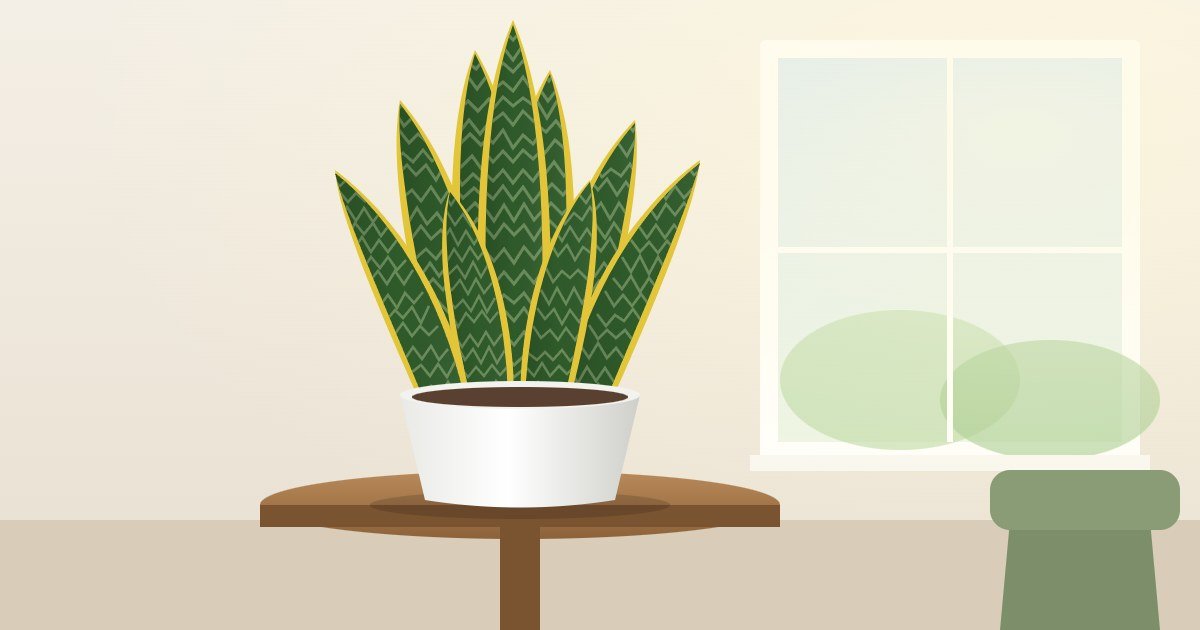
Most of the time, it is the variety. The snake plant (now classified as Dracaena trifasciata, still sold as Sansevieria) comes in many cultivars, and several are defined by their yellow margins. NC State Extension describes ‘Laurentii’ as dark green with zigzag bands of lighter green and yellow edges, and lists other yellow-edged types such as ‘Black Gold’, ‘Futura Superba’ and ‘Golden Flame’.
If your plant came from a store with a gold stripe on every leaf, including the newest ones, you have a variegated variety. That yellow is pigment-free tissue that is supposed to be there. It will not spread, and it does not mean anything is wrong.
Common Snake Plant Varieties With Yellow Edges
| Variety | What the yellow looks like | Size |
|---|---|---|
| ‘Laurentii’ | Bright yellow stripe on both edges, banded dark green center | Tall, often 2 to 4 ft indoors |
| ‘Futura Superba’ | Yellow margin on gray-green, slightly wider leaves | Medium, compact |
| ‘Black Gold’ | Narrow gold edge on very dark green leaves | Tall |
| ‘Golden Flame’ | Yellow-gold streaks and edges, more yellow on new growth | Medium |
| ‘Black Jack’ | Yellow-green margins on dark leaves | Compact |
| ‘Golden Hahnii’ | Broad yellow stripes on a short rosette | Dwarf, under 1 ft |
Natural Yellow Edges vs. a Yellowing Problem
Look closely at the yellow on a few leaves, old and new. These signs separate healthy variegation from trouble:
| Check | Healthy yellow edges | Problem yellowing |
|---|---|---|
| Where the yellow is | A clean stripe along the edges only | Spreads into the green center or covers the whole leaf |
| Shape of the border | Sharp, even line from base to tip | Fuzzy, blotchy or patchy |
| Leaf texture | Firm, stiff and upright | Soft, wrinkled, mushy or bending over |
| New leaves | Also have yellow edges | Come out pale or yellow overall |
| Base of the leaf | Firm and green | Brown, soft or smelly at soil level |
| How fast it changes | Stays the same for months | Gets worse over days or weeks |
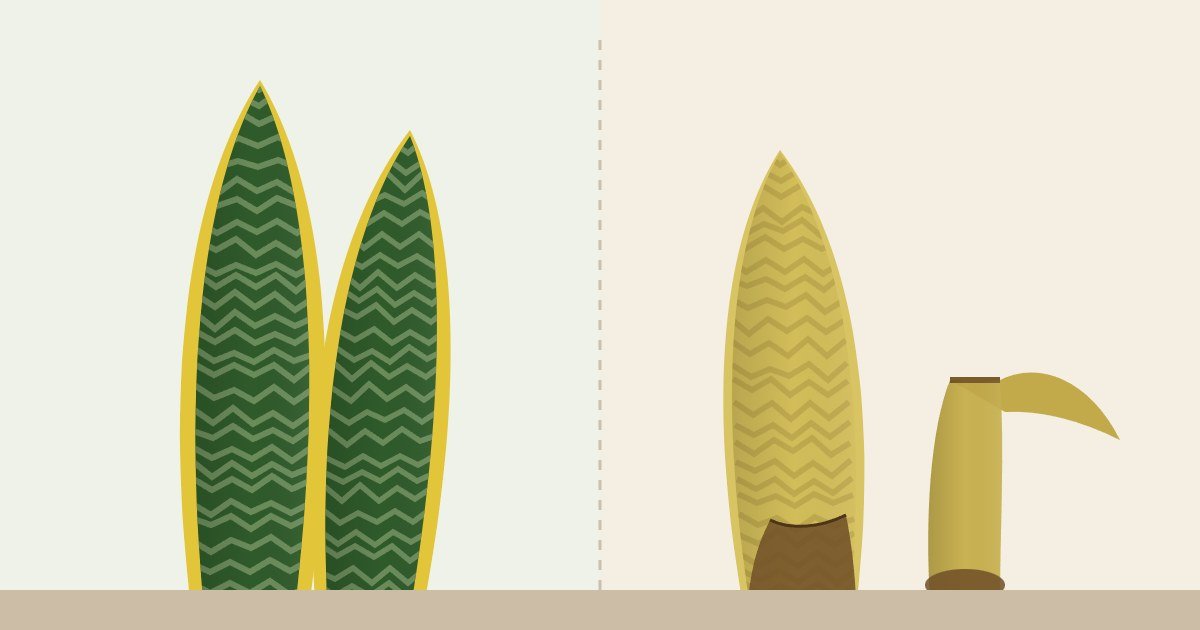
Quick test: gently squeeze a leaf near the base. A healthy snake plant leaf feels like a firm cucumber. If it feels squishy or the leaf flops when you touch it, read on.
What Causes Snake Plant Leaves to Turn Yellow?
1. Overwatering (the most common cause)
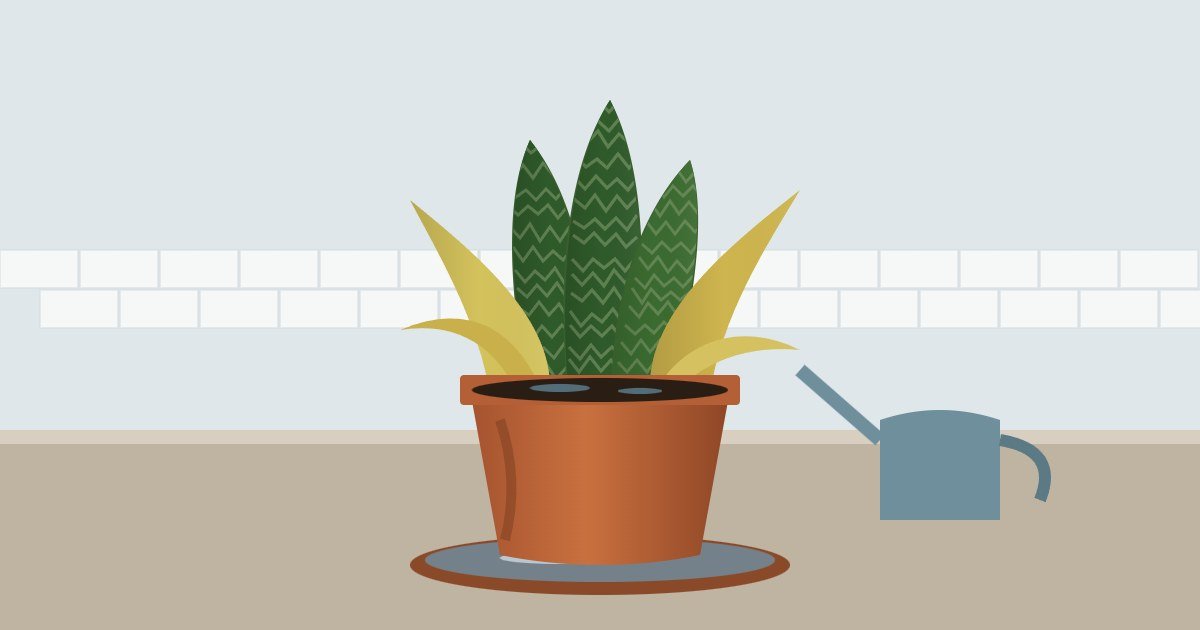
Snake plants store water in their thick leaves and hate wet soil. NC State Extension warns against overwatering and notes it can lead to root rot. The signs are yellow leaves that feel soft, a mushy or brown base, and soil that stays damp for days. If you see this, our guide to fixing root rot in indoor plants walks through the rescue step by step.
2. Poor drainage or the wrong soil
Even careful watering causes problems if the pot has no drainage hole or the soil is a dense, moisture-holding mix. Water pools around the roots and the lower leaves yellow first.
3. Too little light
Snake plants tolerate low light, but in a dark corner for a long time the leaves can look pale and the variegation becomes washed out. This is slow and uniform, not mushy.
4. Too much harsh sun or cold
A plant moved straight from a dim room into hot afternoon sun can get pale yellow or bleached patches, often with brown, crispy spots. Cold drafts below about 50°F, such as a winter windowsill, can cause yellow, water-soaked marks.
5. Old leaves
One outer leaf slowly yellowing and drying while the rest of the plant looks great is often just age. You can trim it off at the base.
How to Fix a Snake Plant With Yellowing Leaves
- Stop watering and check the soil with your finger. If it is wet 2 inches down, let it dry completely before watering again.
- Check the roots if the base is soft. Slide the plant out of the pot. Healthy roots are firm and pale; rotten roots are brown, mushy and smell bad.
- Cut away damage with clean scissors: remove mushy roots and any leaf that is soft at the base. Yellow leaves will not turn green again.
- Repot into fresh, fast-draining soil such as a cactus and succulent mix in a pot with a drainage hole. Terracotta helps the soil dry faster.
- Move it to bright, indirect light and wait a week or two before the first light watering.
- Water less from now on. Let the soil dry out fully between waterings, then soak and drain. NC State Extension suggests watering only every one to two months in winter.
If you want a plant that is even more forgiving while yours recovers, see our list of the easiest indoor plants to keep alive.
Common Mistakes
- Cutting off healthy yellow edges. On a ‘Laurentii’, the yellow stripe is the variety. Trimming it only leaves an ugly wound.
- Watering on a schedule. Watering every week no matter what is the fastest way to rot a snake plant. Go by the soil, not the calendar.
- Using a cachepot with no drainage and forgetting to empty it after watering.
- Expecting leaf cuttings to keep the yellow edge. Iowa State University Extension explains that variegated types like ‘Laurentii’ lose their coloring when grown from leaf cuttings. Divide the plant instead to keep the yellow margins.
- Moving a dim-light plant into full sun overnight. Increase light gradually over a couple of weeks.
Snake Plants and Pets
Yellow edges or not, snake plants are listed as toxic to cats and dogs by the ASPCA. They contain saponins, which can cause nausea, vomiting and diarrhea if chewed. Keep the plant out of reach of curious pets. If you like this plant for its toughness, you can read more about it in our post on snake plant benefits.
FAQ
Can yellow snake plant leaves turn green again?
No. A leaf that has yellowed from overwatering or rot will not regain its green color. Fix the cause and the new leaves will grow in healthy. Natural yellow edges on a variegated variety stay yellow, which is normal.
Should I cut off yellow snake plant leaves?
Remove leaves that are fully yellow, soft or mushy, cutting at the soil line with clean scissors. Leave firm leaves that only have yellow edges alone.
Why are the edges of my snake plant turning yellow and brown?
Yellow that turns brown and crispy at the edges or tips usually points to harsh direct sun, very dry air combined with long underwatering, or cold damage. Yellow that turns brown and soft points to overwatering.
How often should I water a snake plant?
Only when the soil is completely dry. In a typical home that is often every 2 to 4 weeks in spring and summer and much less in winter. Bright light and terracotta pots dry out faster than dim rooms and plastic pots.
What is the snake plant with yellow edges called?
The most common one is Dracaena trifasciata ‘Laurentii’, sometimes sold as the variegated or yellow-edged snake plant. ‘Futura Superba’, ‘Black Gold’ and ‘Golden Flame’ also have yellow margins.
For more help with leaves that look wrong, browse our houseplant problems guides.