Are Monstera Plants Toxic to Cats? Symptoms, First Aid and Safe Swaps
Are monstera plants toxic to cats? Yes. The ASPCA lists Monstera deliciosa as toxic to cats and dogs because it contains insoluble calcium oxalates, which cause intense mouth burning, drooling, vomiting and trouble swallowing. Most cats need prompt advice rather than panic, but if your cat has chewed a leaf, call your vet or a pet poison hotline now.
This guide explains what the crystals do, which symptoms are urgent, what to do in the first few minutes, and how to keep a monstera in a cat home if you decide to keep it at all. One note on sources: I am a gardening writer, not a vet, so the medical details below come from the ASPCA, Pet Poison Helpline and the Merck Veterinary Manual, all linked. Your own vet’s advice always comes first.
| Quick question | Short answer |
|---|---|
| Is monstera toxic to cats? | Yes, per the ASPCA |
| What is the toxin? | Insoluble calcium oxalate crystals |
| Main symptoms | Mouth pain, drooling, vomiting, trouble swallowing |
| Who to call | Your vet, ASPCA Poison Control (888) 426-4435 or Pet Poison Helpline (855) 764-7661. Both hotlines may charge a fee. |
| Emergency sign | Any trouble breathing: go to an emergency vet immediately |
Are Monstera Plants Toxic to Cats? Calcium Oxalate in Plain Words
Monstera belongs to the aroid family, Araceae. Its tissue contains tiny, needle-like crystals of calcium oxalate. When a cat bites a leaf or stem, those crystals are released into the mouth and irritate the lips, tongue and throat. That is why the reaction shows up where the plant touched, rather than somewhere deep in the body.
The Pet Poison Helpline describes the usual result as irritation and pain, with severe throat swelling and breathing difficulty being rare. How bad it gets depends on factors such as how much was eaten, the size of the pet and any allergies.
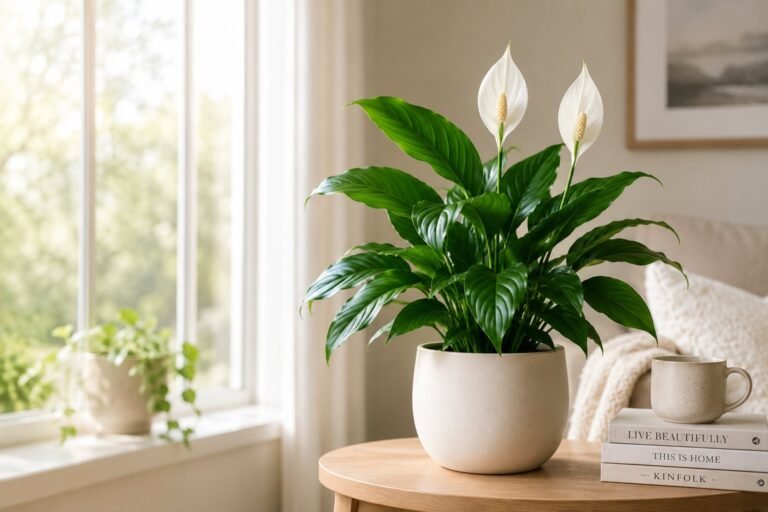
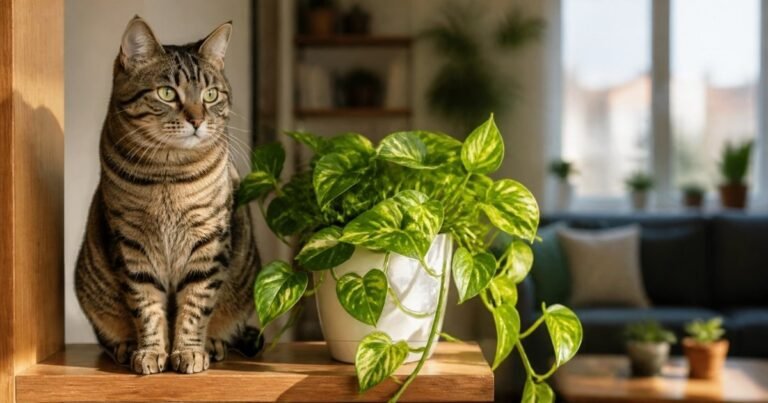
You may also see this plant sold under other names. The ASPCA lists Swiss cheese plant, split-leaf philodendron, cutleaf philodendron, hurricane plant, window leaf plant, ceriman and Mexican breadfruit as the same plant, so a shop tag that does not say “monstera” does not make it safe. The same crystals are also found in relatives such as pothos, philodendron, peace lily and dieffenbachia.
Monstera Poisoning Symptoms in Cats: How Serious Is It?
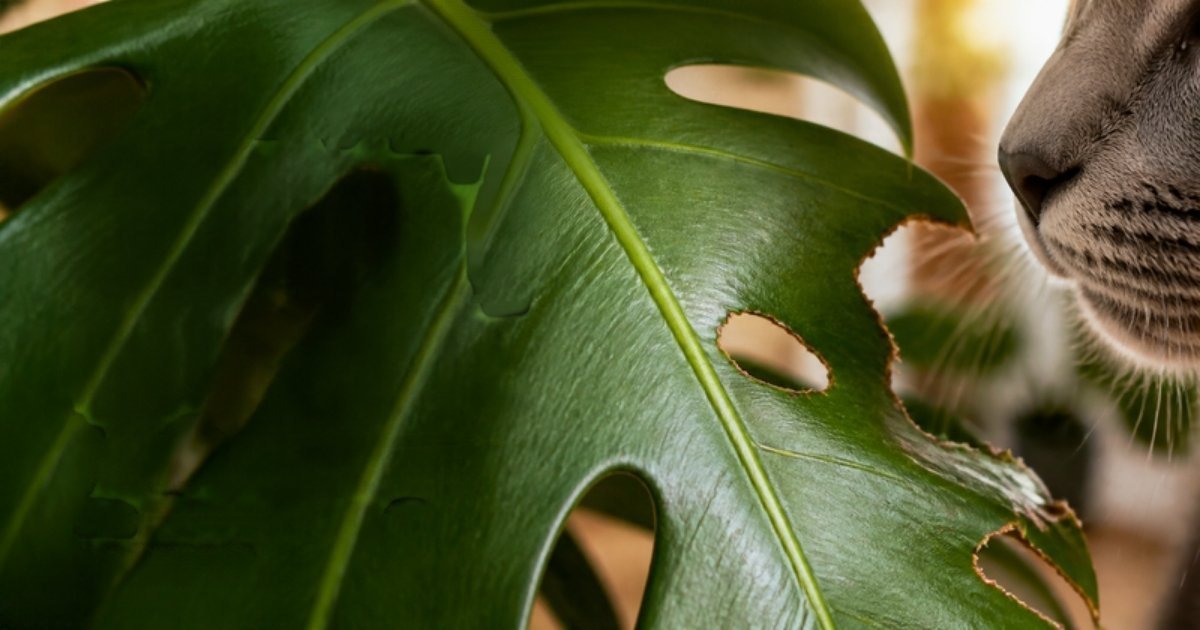
The ASPCA’s listed signs are oral irritation, intense burning of the mouth, tongue and lips, excessive drooling, vomiting and difficulty swallowing. The table below groups those signs by how quickly to act. The grouping is a practical guide built from those sources, not a diagnosis.
| What you see | What it may mean | What to do |
|---|---|---|
| Bite marks on a leaf, cat acting normal | Possible exposure, signs may still appear | Check the mouth, remove the plant, call your vet or a hotline for advice |
| Drooling, pawing at the mouth, shaking the head, refusing food | Mouth irritation from the crystals | Call your vet or a hotline now |
| Vomiting or trouble swallowing | Stronger irritation that can stop a cat eating or drinking | Same-day vet advice, do not wait it out |
| Swollen mouth or throat, noisy or labored breathing | Rare but serious airway swelling | Emergency vet immediately |
For timing, Vetster’s guide to plant oxalate poisoning says signs begin within two hours and often clear within 24 hours. That guide is written for dogs, so use it as a rough idea only. If your cat seems worse rather than better, or is not eating, call again.
My Cat Ate Monstera: What to Do Right Now
- Move your cat and the plant apart. Take any leaf pieces out of reach, and gently remove what you can see around the mouth if your cat allows it.
- Check breathing first. If breathing looks labored or the throat looks swollen, skip the rest of this list and go to an emergency vet.
- Call for advice. Ring your vet, ASPCA Poison Control at (888) 426-4435, or Pet Poison Helpline at (855) 764-7661. Have your cat’s approximate weight and age ready, plus when it happened and how much is missing from the plant.
- Ask about rinsing the mouth. Vetster suggests water or milk to help remove leftover crystals. Never force liquid into a cat that is struggling, because a stressed cat can choke, and follow what your vet tells you.
- Do not make your cat vomit. Do not give hydrogen peroxide, salt or activated charcoal at home unless a vet tells you to.
- Keep a sample. Take a photo of the plant, or bag a leaf, and bring it with you. Mention any recent pesticide or leaf-shine product you have used on it.
- Watch closely for the next day. Note drooling, appetite, vomiting and how your cat is breathing, and report any change.
Vet care for this kind of exposure is usually supportive. The Merck Veterinary Manual lists symptomatic treatment for philodendron and dieffenbachia, two close relatives of monstera.
Can You Keep a Monstera in a Home With Cats?
You can reduce the risk, but only a closed door truly removes it. If your cat is a determined plant chewer, a kitten, or has had trouble with plants before, rehoming the monstera or choosing a safe swap is the easiest answer. If you decide to keep it, try this setup:
| Option | How well it works | Watch out for |
|---|---|---|
| Closed room your cat cannot enter | Best protection | Doors left open, and cats that slip in behind you |
| Hanging planter away from furniture | Good for small plants | Trailing leaves and nearby shelves that work as launch pads |
| Tall plant stand | Weak by itself, because cats jump | Tipping, so use a heavy, stable stand only as part of the plan |
| Bitter deterrent spray made for pets | Varies by cat | Never rely on it alone, and test it on one leaf first |
| Cat grass nearby | May give a chewer a safer target | It does not make the monstera safe |
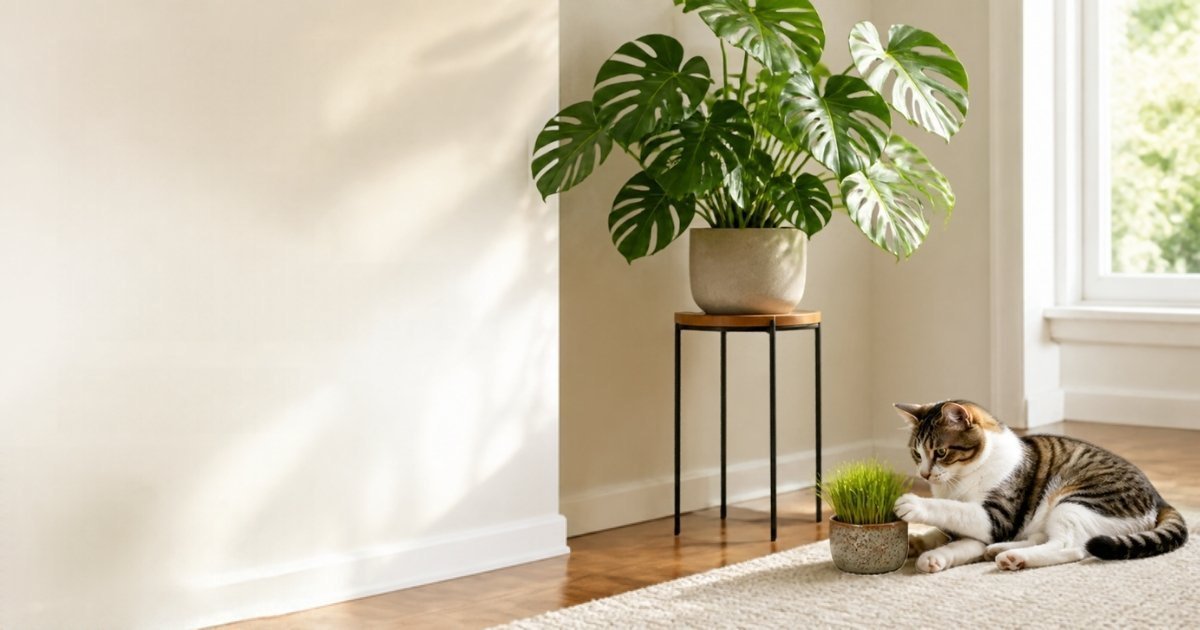
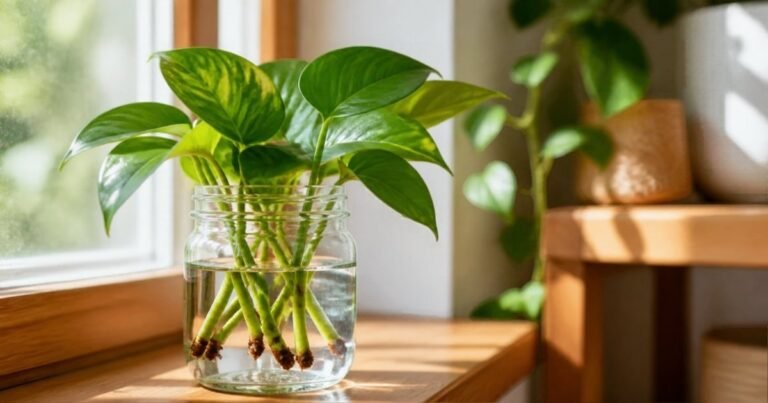
Monsteras get big, which is the real problem. Leaves that start out of reach eventually drop to cat height, so trim them back as the plant grows and put every pruned leaf straight into a lidded bin. The same goes for cuttings. A jar of rooting stems on a low windowsill is easy for a cat to reach, so keep any propagation projects, like the ones in our pothos propagation guide, behind a closed door.
Cat-Safe Plants to Grow Instead of Monstera
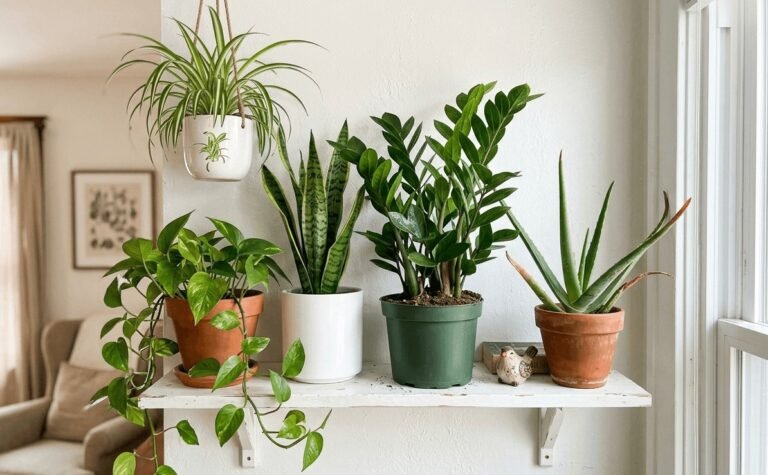
If you love big tropical leaves but want less worry, these plants are all marked non-toxic to cats on the ASPCA’s plant list. None has quite the same split leaves, but several give a similar jungle feel.
| Plant | ASPCA listing | Why it works as a swap |
|---|---|---|
| Areca palm (Dypsis lutescens) | Non-toxic to cats | Tall, feathery floor plant for a bright room |
| Parlor palm (Chamaedorea elegans) | Non-toxic to cats | Compact, soft fronds, handles lower light |
| Boston fern (Nephrolepis exaltata) | Non-toxic to cats | Lush, full shape for a hanging basket |
| Cast iron plant (Aspidistra elatior) | Non-toxic to cats | Big dark leaves and very forgiving care |
| Rattlesnake plant (Calathea insignis) | Non-toxic to cats | Bold patterned leaves for a statement look |
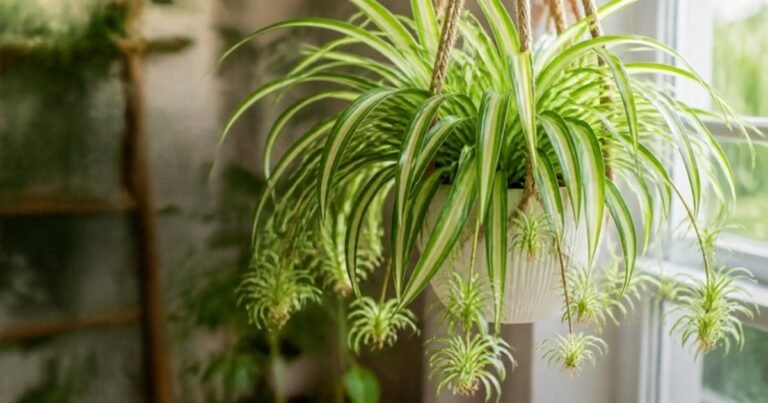
| Spider plant (Chlorophytum comosum) | Non-toxic to cats | Easy, and easy to multiply with spider plant babies |
Two small cautions. Non-toxic does not mean your cat can snack freely, since any plant eaten in quantity can upset a stomach. The ASPCA’s own houseplant article also groups spider plant with plants that can cause nausea and vomiting if eaten, so keep it hanging out of reach too. Looking for more easy options? Our list of the easiest indoor plants to keep alive and the houseplant care section are good next stops, and always check a new plant against the ASPCA list before buying.
Common Mistakes Cat Owners Make With Monstera
- Waiting for symptoms before calling. Bite marks are enough reason to get advice, and a hotline call can tell you whether to stay home.
- Assuming a single bite is always harmless. The pain often stops a cat from eating much, but a cat’s size and health change the risk, so get advice rather than guessing.
- Treating a high shelf as safe. Cats climb. Think about the route up, not just the height.
- Forgetting the leaves on the floor. Fallen leaves and pruned stems are still plant material your cat can chew.
- Trusting a “pet friendly” tag. Check the plant’s botanical name against the ASPCA list instead of relying on a store label.
FAQ: Monstera and Cats
Is monstera toxic to cats if they just lick it?
Licking an intact leaf should release far fewer crystals than chewing, because biting is what breaks the plant tissue open. Sap on the surface or on a torn leaf can still irritate, so check for bite marks, wipe your cat’s fur if needed, and call your vet if you see any drooling or mouth discomfort.
How much monstera is toxic to a cat?
There is no safe published amount to go by. Even a small bite can cause mouth pain because the crystals act on contact. Pet Poison Helpline says effects depend on the amount eaten, the pet’s size and allergies, so call for advice rather than trying to estimate it yourself.
Can monstera kill a cat?
Serious outcomes are not the usual picture. Pet Poison Helpline describes the typical effects as irritation and pain, and notes that severe throat swelling with breathing trouble is rare. Merck’s entry for dieffenbachia, a relative, calls death infrequent and says the immediate pain limits how much is eaten. However, Merck also lists kidney failure among possible philodendron effects, plus nervous system signs in cats, so treat any exposure seriously and call your vet.
Is Monstera adansonii toxic to cats?
Treat it the same way. The ASPCA’s entry names Monstera deliciosa, but Monstera adansonii, the Swiss cheese vine, is in the same genus, and aroids commonly carry calcium oxalates. Keep it away from cats and call for advice if yours chews it.
Is monstera pet safe for dogs?
No. The ASPCA lists Monstera deliciosa as toxic to dogs as well as cats, with the same signs. It is not a pet safe houseplant, though it can be managed with careful placement.
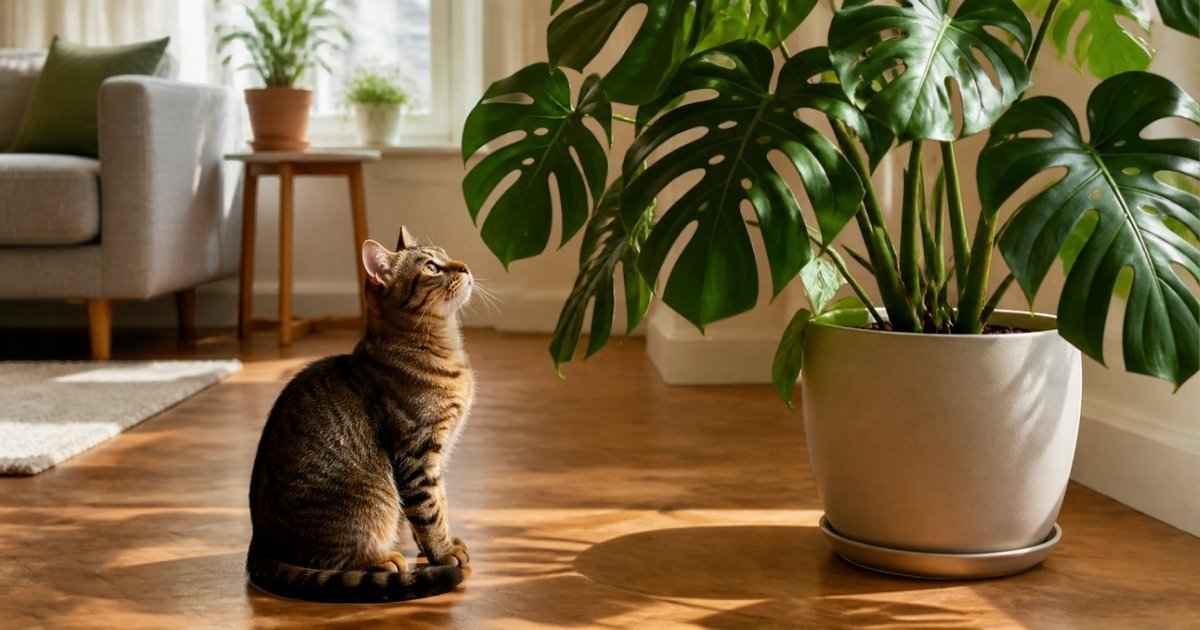
Why does my cat keep chewing my monstera?
Cats can be drawn to moving leaves, new textures or simple boredom, and some cats just like chewing greens. Offer cat grass, add play time, and put the plant somewhere your cat cannot reach. If the chewing is sudden or constant, mention it to your vet.