The 10 Easiest Indoor Plants That Survive Anything
Walk into any garden centre, and the labels all say the same thing: “easy care.” But easy for whom? Some of those plants need humidity levels you’d only find in a rainforest. Others need repotting every six months, or they sulk. After testing dozens of varieties in real home conditions — small rooms, north-facing windows, forgotten waterings — these ten are the ones that genuinely deliver on that promise.
Not the way plant influencers live — with south-facing glass walls and a misting schedule. The way real people live: forgetting to water for ten days, keeping the curtains half-closed, and moving flats every couple of years.
This list is built on that question. Every plant here has survived neglect, low light, irregular watering, and beginner mistakes. If you’ve struggled with houseplants before, start here.
How I Picked These Plants
Every plant on this list meets all four of these criteria:
- Survives irregular watering — at least two weeks without water without dying
- Tolerates low to medium light — no direct sun required
- Recovers from mistakes — drooping, yellowing, or being repotted badly won’t kill it
- Available almost everywhere — supermarkets, garden centres, online nurseries
Plants that need high humidity, very specific soil, or weekly attention didn’t make the cut. This list is for real homes, not greenhouses.
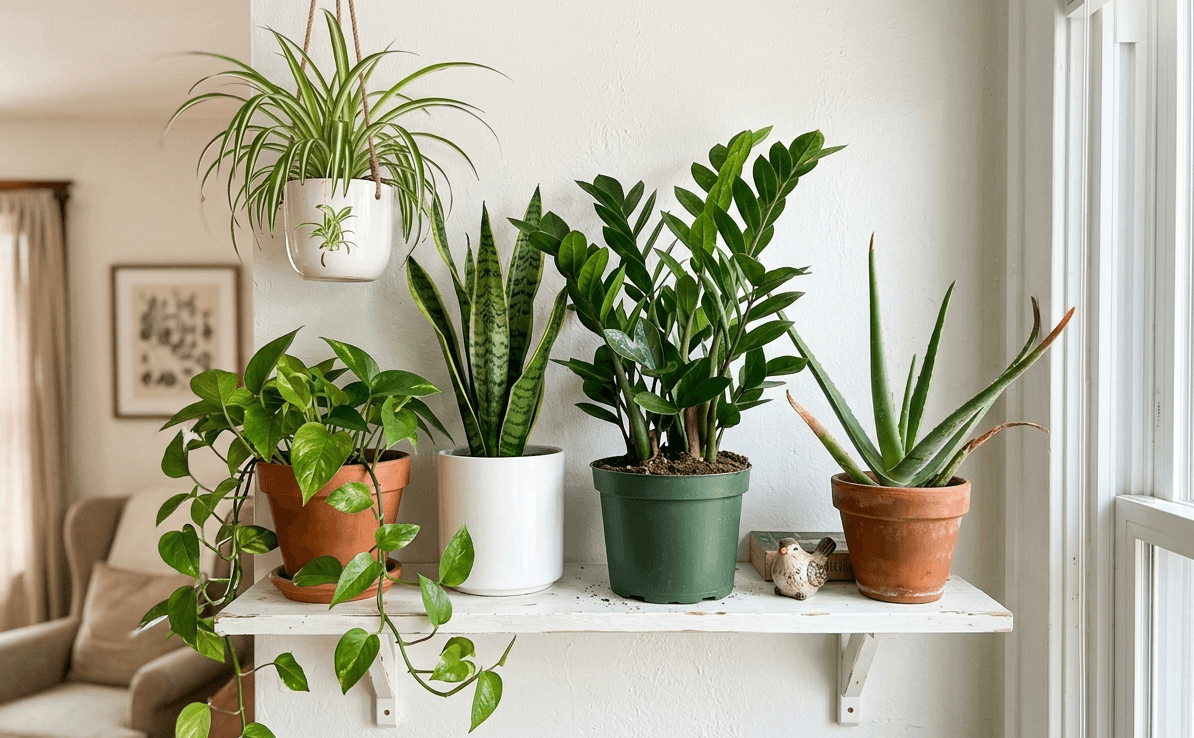
1. Pothos (Epipremnum aureum)
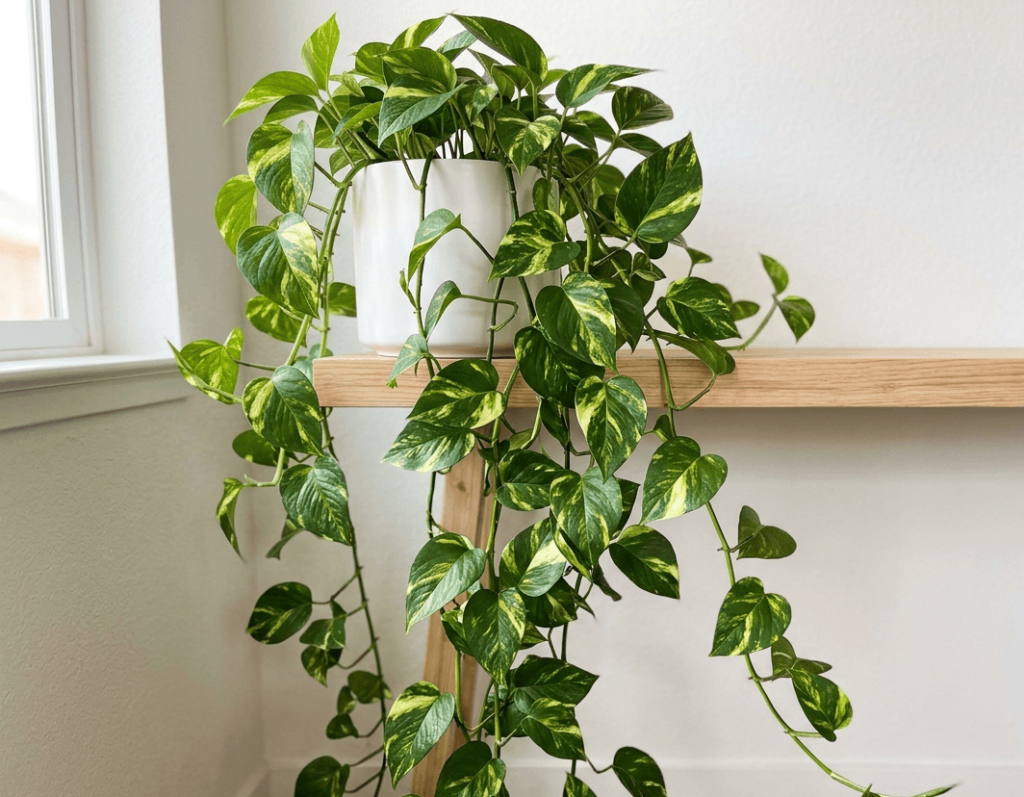
Why it survives: Pothos is arguably the hardest plant to kill in existence. It tolerates low light, drought, overwatering, and neglect. When it’s unhappy, it tells you clearly with yellowing leaves — and then bounces back the moment you fix the problem.
Light: Low to bright indirect. Will survive in a north-facing room, though it grows faster with more light.
Water: Every 1–2 weeks. Let the soil dry completely between waterings.
Best for: Shelves, hanging baskets, trailing from a bookcase.
Bonus: Propagates incredibly easily in water — one plant becomes ten within months.
Beginner tip: If the leaves are pale green or the vines look leggy with large gaps between leaves, it needs more light. Move it closer to a window.
2. Snake Plant (Sansevieria / Dracaena trifasciata)
Why it survives: Snake plants store water in their thick leaves. They can go three to four weeks without water, tolerate near-darkness, and actively prefer to be left alone. They’re one of the few plants that continue photosynthesising at night, making them popular in bedrooms.
Light: Almost any light condition. Will survive very low light, though growth slows.
Water: Every 2–4 weeks in summer, once a month or less in winter.
Best for: Bedrooms, dark corners, offices, hallways.
Beginner tip: The only way to reliably kill a snake plant is root rot from overwatering. If in doubt, don’t water it. This plant would rather be too dry than too wet.
3. ZZ Plant (Zamioculcas zamiifolia)
Why it survives: ZZ plants have underground rhizomes — thick, potato-like roots that store water and nutrients. They can survive weeks of drought, months of low light, and being completely ignored. Growth is slow but steady.
Light: Low to medium indirect light. One of the best plants for offices or rooms with small windows.
Water: Every 2–3 weeks. Allow soil to dry completely.
Best for: Offices, rooms with limited natural light, anyone who travels frequently.
Beginner tip: ZZ plants are toxic to cats and dogs. If you have pets that chew plants, keep this one out of reach.
4. Spider Plant (Chlorophytum comosum)
Why it survives: Spider plants are adaptable to a wide range of conditions and are almost impossible to kill through neglect. They produce small “spiderettes” — miniature offshoots that hang down on long stems — which you can propagate into new plants for free.
Light: Medium to bright indirect light. Tolerates low light but loses its variegation (the white stripe on leaves) in the dark.
Water: Every 1–2 weeks. Tolerates both over and underwatering better than most plants.
Best for: Hanging baskets, shelves, kitchens, bathrooms with natural light.
Beginner tip: Brown leaf tips are common and usually caused by fluoride in tap water or low humidity. Trim the tips with scissors and use filtered or rainwater if it bothers you. It won’t harm the plant.
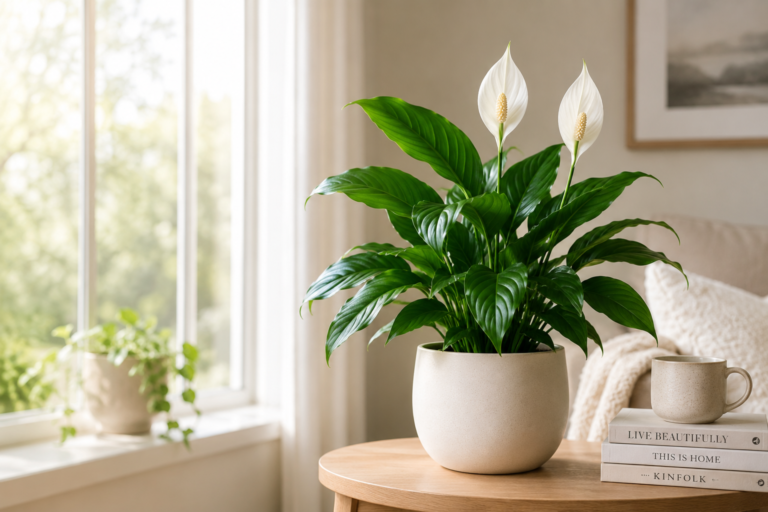
5. Peace Lily (Spathiphyllum)
Why it survives: Peace lilies are one of the few flowering plants that genuinely thrive in low light. They’re dramatic communicators — when they need water, they droop visibly, then perk back up within hours of being watered. This makes them ideal for beginners who aren’t sure when to water.
Light: Low to medium indirect light. One of the best flowering plants for shady rooms.
Water: Every 1–2 weeks. The plant will tell you when it’s thirsty by drooping.
Best for: Living rooms, bedrooms, rooms with limited windows.
Beginner tip: Peace lilies are toxic to pets and can cause skin irritation in some people. Wash your hands after handling and keep away from animals.
6. Rubber Plant (Ficus elastica)
Why it survives: Rubber plants are bold, architectural, and surprisingly forgiving. They prefer to dry out between waterings, recover quickly from being moved, and adapt to a range of light conditions. Their large, glossy leaves wipe clean with a damp cloth — no misting or humidity needed.
Light: Medium to bright indirect light. Can handle some direct morning sun.
Water: Every 1–2 weeks. Allow top 2–3 cm of soil to dry before watering again.
Best for: Living rooms, corners that get some natural light, anyone who wants a statement plant.
Beginner tip: If you notice the leaves getting dusty, wipe them with a damp cloth. Dust blocks light absorption and slows growth.
7. Aloe Vera
Why it survives: Aloe is a succulent — it stores water in its thick, fleshy leaves and can survive weeks of drought. It needs very little attention, grows slowly, and is practically indestructible in a sunny spot. As a bonus, the gel inside the leaves soothes minor burns and skin irritation.
Light: Bright indirect to direct light. One of the best plants for a sunny windowsill.
Water: Every 2–3 weeks in summer, once a month in winter.
Best for: Sunny windowsills, kitchens, anyone who forgets to water regularly.
Beginner tip: Aloe’s biggest enemy is overwatering. If the leaves turn brown and mushy rather than drying out and shrivelling, the roots are rotting. Let the soil dry completely between every watering.
8. Cast Iron Plant (Aspidistra elatior)
Why it survives: The name says it all. Cast iron plants tolerate deep shade, drought, dust, temperature fluctuations, and severe neglect. They grow slowly but live for decades. If you want a plant that will outlast everything else in your home, this is it.
Light: Very low light. One of the only plants that genuinely thrives in near-darkness.
Water: Every 2–3 weeks. Extremely drought tolerant.
Best for: Dark hallways, north-facing rooms, anyone who wants truly zero-maintenance greenery.
Beginner tip: Cast iron plants are slow growers, so don’t panic if yours doesn’t seem to change much. It’s fine. It’s just very patient.
9. Heartleaf Philodendron (Philodendron hederaceum)
Why it survives: Similar to pothos in care requirements, heartleaf philodendrons trail beautifully, tolerate low light, and recover quickly from neglect. The leaves are a rich, deep green and the plant grows enthusiastically even in less-than-ideal conditions.
Light: Low to bright indirect light.
Water: Every 1–2 weeks. Allow top layer of soil to dry.
Best for: Shelves, hanging baskets, trailing from plant stands.
Beginner tip: Heartleaf philodendron and pothos look similar but are different plants. Both are excellent for beginners — if one is available and the other isn’t, either will do well under the same care.
10. Chinese Evergreen (Aglaonema)
Why it survives: Chinese evergreens come in dozens of colour varieties — deep green, silver, pink, red — and all of them are remarkably tolerant of low light, irregular watering, and indoor air conditions. They’re one of the most adaptable houseplants available and rarely suffer from pests.
Light: Low to medium indirect light. The darker green varieties tolerate lower light; the pink and red varieties need slightly more.
Water: Every 1–2 weeks. Tolerates some drought and occasional overwatering.
Best for: Living rooms, offices, any room that needs colour without high maintenance.
Beginner tip: Avoid cold drafts and temperatures below 15°C — Chinese evergreens are tropical and don’t like the cold, even briefly.
Honourable Mentions
These three plants almost made the list and are worth considering once you have one or two of the above thriving:
Monstera deliciosa — beautiful and forgiving, but needs more light and space than most beginners expect.
Haworthia — even easier than aloe, perfect for very sunny spots, but smaller and less dramatic.
Dracaena marginata — tolerates neglect extremely well but sensitive to fluoride in tap water.
Quick Comparison: Which Plant Is Right for You?
| Plant | Light needed | Watering frequency | Pet safe? | Best for |
|---|---|---|---|---|
| Pothos | Low–bright indirect | Every 1–2 weeks | No | Trailing, shelves |
| Snake plant | Very low–bright indirect | Every 2–4 weeks | No | Bedrooms, corners |
| ZZ plant | Low–medium indirect | Every 2–3 weeks | No | Offices, low light |
| Spider plant | Medium–bright indirect | Every 1–2 weeks | Yes | Hanging, bathrooms |
| Peace lily | Low–medium indirect | Every 1–2 weeks | No | Shady rooms |
| Rubber plant | Medium–bright indirect | Every 1–2 weeks | No | Statement plant |
| Aloe vera | Bright–direct | Every 2–3 weeks | No | Sunny windowsills |
| Cast iron plant | Very low | Every 2–3 weeks | Yes | Dark hallways |
| Heartleaf philodendron | Low–bright indirect | Every 1–2 weeks | No | Trailing, shelves |
| Chinese evergreen | Low–medium indirect | Every 1–2 weeks | No | Colour, low light |
Where to Start If You’ve Killed Plants Before
Begin with just one plant, not ten. Pick based on your light situation:
- Good natural light (south or east window): Start with pothos or aloe vera
- Limited light (north window or no windowsill): Start with a snake plant or ZZ plant
- You travel a lot or forget to water: Start with a ZZ plant or cast iron plant
- You have pets: Start with a spider plant (one of very few on this list that’s non-toxic)
Get comfortable with one plant for a month. Learn what it looks like when it’s happy versus when it’s struggling. Then add a second. Building slowly gives you confidence and keeps you from being overwhelmed.
Frequently Asked Questions
What is the single easiest indoor plant to keep alive? The snake plant and ZZ plant are the most consistently recommended for complete beginners because they tolerate the two most common beginner mistakes: overwatering and low light. If you can only keep one plant alive, start with one of these two.
Are there indoor plants that don’t need any sunlight? No plant can survive with zero light indefinitely — they need light to photosynthesize. However, snake plants, ZZ plants, cast iron plants, and peace lilies can thrive in very low natural light conditions that would kill most other houseplants.
How do I know if my plant is dying or just dormant? Check the stems. If they’re still firm and green when you scratch the surface gently with a fingernail, the plant is alive. If the stems are mushy, brown all the way through, and smell unpleasant, the plant is likely dying from root rot.
Do low maintenance plants still need fertilizer? They benefit from it but don’t need it to survive. A diluted liquid fertilizer applied once a month in spring and summer is enough for all the plants on this list. Skip fertilizing entirely in autumn and winter.
Can I keep all of these plants in the same room? Yes — most of these plants have compatible care requirements. The exception is aloe, which needs significantly more light than the others. Keep aloe on a sunny windowsill and the rest can share a medium-light room comfortably.